


Replacing your furnace feels overwhelming, especially when conflicting advice floods online forums and sales pitches promise unrealistic savings. Many Durham homeowners delay this decision until their furnace fails on the coldest night of winter, forcing rushed choices and premium emergency rates. The truth is simpler than most contractors admit: recognising the right time to replace your furnace, understanding your options, and following a clear installation process protects your comfort and budget. This guide cuts through the confusion with practical insights on when to replace, how to choose the right system, what the process involves, and what you’ll actually spend.
Table of Contents
- Key takeaways
- When to consider replacing your furnace
- Choosing the right furnace for your home
- Furnace replacement process explained step by step
- Estimating furnace replacement costs and long-term savings
- How Red Seal Mechanical Services can help with your furnace replacement
- Frequently asked questions
Key Takeaways
| Point | Details |
|---|---|
| Replacement timing | Consider replacing your furnace when it reaches 15 to 20 years of age and watch for uneven heating, rising energy costs, frequent repairs, or unusual noises. |
| Maintenance benefits | Regular autumn inspections help extend the furnace life and allow you to plan replacement before winter emergencies. |
| Furnace type choice | Gas furnaces dominate Durham installations because natural gas costs less, while electric, oil, and propane options may suit different properties and budgets. |
| Efficiency matters | Higher AFUE ratings reduce operating costs, with moving from 80 percent to 95 percent AFUE often saving about 300 to 500 dollars annually. |
| Sizing matters | Properly sizing the furnace matters for comfort and long term efficiency. |
When to consider replacing your furnace
Your furnace won’t last forever, and waiting too long creates expensive problems. Most furnaces operate efficiently for 15 to 20 years before age catches up with performance. After this point, components wear out faster, efficiency drops noticeably, and repair costs climb steeply.
Watch for these warning signs that replacement makes more financial sense than another repair. Uneven heating across rooms suggests your furnace struggles to distribute warmth properly. Rising energy bills without increased usage indicate declining efficiency as older furnaces lose efficiency and can increase energy bills. Frequent repairs, especially multiple service calls within a single heating season, signal systemic deterioration rather than isolated problems. Strange noises like banging, screeching, or rattling often mean mechanical components are failing.
Ignoring these symptoms leads to dangerous situations. A failing furnace might produce carbon monoxide, crack heat exchangers, or create fire hazards through electrical malfunctions. Emergency replacements during peak winter demand cost 20 to 30 percent more than planned installations, and you’ll have limited time to research options or compare quotes.
Regular maintenance extends furnace life and catches small issues before they escalate. Annual inspections, filter changes, and tune-ups keep systems running smoothly. However, maintenance can’t reverse fundamental wear on aging equipment. When signs your HVAC needs repair appear frequently despite proper care, replacement becomes the smarter investment.
Pro Tip: Schedule a professional inspection each autumn before heating season begins. Technicians can assess remaining lifespan and help you plan replacement timing to avoid winter emergencies.
Choosing the right furnace for your home
Selecting your next furnace requires balancing efficiency, fuel type, and upfront costs against long-term savings and home requirements. The wrong choice wastes money immediately and for years to come through higher energy bills or inadequate heating.
Furnace types differ significantly in operation and economics. Gas furnaces dominate Durham installations because natural gas costs less than electricity or oil per heating unit. Electric furnaces cost less upfront but run more expensively in regions with cold winters. Oil furnaces suit rural properties without gas line access. Propane furnaces offer flexibility but require tank installation and refills.
Efficiency ratings determine how much fuel converts to usable heat versus waste. AFUE (Annual Fuel Utilisation Efficiency) percentages show this conversion rate. A furnace rated at 95 percent AFUE converts 95 percent of fuel to heat, wasting only 5 percent. High-efficiency furnaces reduce energy costs significantly compared to older models rated at 60 to 70 percent AFUE. The efficiency jump from 80 percent to 95 percent AFUE typically saves Durham homeowners $300 to $500 annually on heating bills.
| Furnace type | Fuel source | Typical AFUE | Upfront cost range | Average lifespan |
|---|---|---|---|---|
| Standard gas | Natural gas | 80-85% | $2,500-$4,000 | 15-20 years |
| High-efficiency gas | Natural gas | 90-98% | $3,500-$6,500 | 15-25 years |
| Electric | Electricity | 95-100% | $1,500-$3,500 | 20-30 years |
| Oil | Heating oil | 80-90% | $3,000-$5,500 | 15-25 years |
| Propane | Propane | 80-95% | $2,800-$5,000 | 15-20 years |
Proper sizing matters more than most homeowners realise. An oversized furnace cycles on and off frequently, wearing components faster and creating temperature swings. An undersized unit runs constantly without achieving comfortable temperatures. Professional load calculations account for square footage, insulation quality, window efficiency, ceiling height, and Durham’s climate patterns.
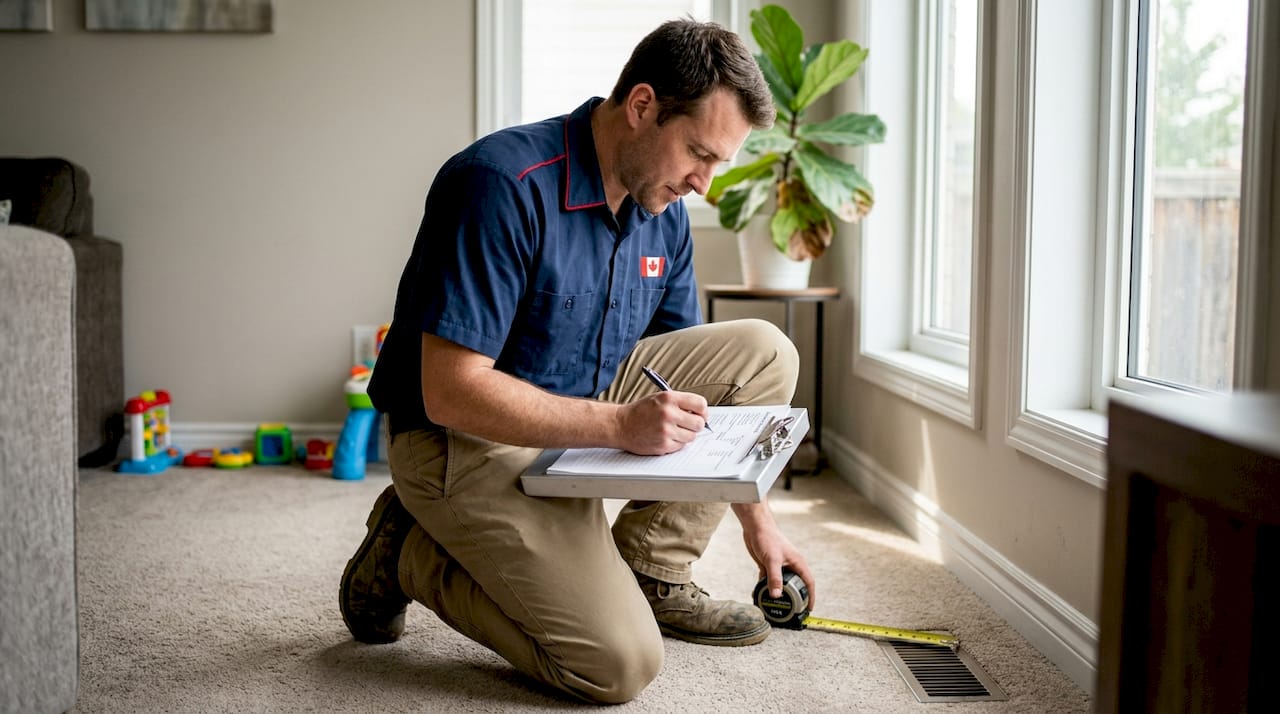
Exploring furnace installation options helps you understand which systems suit your home’s layout and existing ductwork. Single-stage furnaces run at full capacity whenever operating. Two-stage models offer high and low settings for better efficiency. Modulating furnaces adjust output continuously for optimal comfort and fuel use.
Pro Tip: Consult an HVAC professional to perform a Manual J load calculation before purchasing. This industry-standard assessment ensures your new furnace matches your home’s specific heating requirements, and helps you choose an HVAC contractor who follows proper sizing protocols.
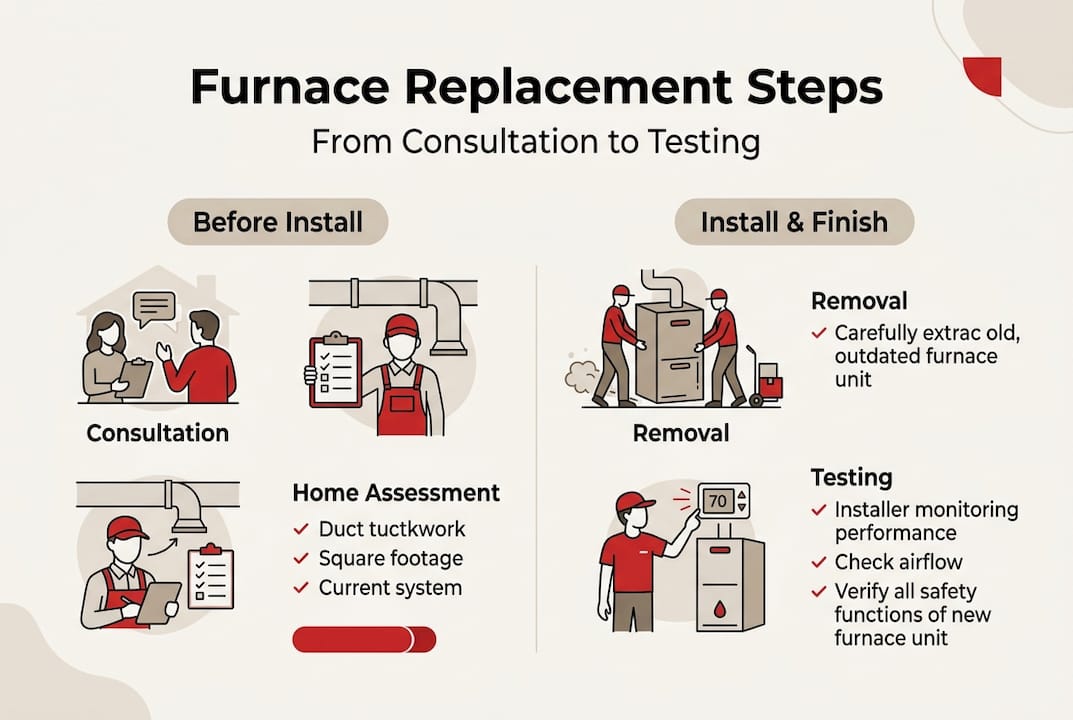
Furnace replacement process explained step by step
Understanding what happens during replacement removes uncertainty and helps you prepare properly. Professional installations follow a systematic approach that protects your home and ensures the new furnace operates safely.
Step one involves consultation and selection. Your contractor assesses your current system, measures your home, reviews your heating preferences, and recommends appropriate furnace options. This visit typically takes 60 to 90 minutes and includes discussing timeline, costs, and any necessary upgrades to ductwork or electrical systems.
Step two covers scheduling and preparation. Once you’ve selected your furnace, the contractor schedules installation, obtains required permits, and orders equipment. You’ll need to clear the furnace area of stored items and ensure technicians can access your electrical panel and gas line. Most installations require four to eight hours, though complex jobs might extend to two days.
Step three focuses on safely removing your old furnace. Technicians shut off gas and electrical connections, disconnect ductwork and venting, and carefully extract the old unit. Proper disposal follows environmental regulations for refrigerants and other materials. This phase typically takes one to two hours.
Step four comprises installing your new furnace. The furnace installation process includes positioning the unit, connecting gas lines with proper sealing, wiring electrical components to code, attaching supply and return ductwork, and installing venting systems. High-efficiency furnaces require PVC venting rather than traditional metal flues. Contractors may need to modify ductwork for optimal airflow or add humidifiers and air cleaners during this stage.
Step five involves comprehensive testing and walkthrough. Technicians start the system, check for gas leaks, verify proper combustion, test safety controls, measure airflow at registers, and confirm the thermostat responds correctly. They’ll explain operation, show you filter locations, review maintenance requirements, and answer questions. Professional installations include documentation of work completed and warranty registration.
Pro Tip: Ask your installer about expected timeline and potential disruptions beforehand. Prepare a clear path to your furnace area and arrange to be home during installation so you can ask questions and learn about your new system’s operation.
Estimating furnace replacement costs and long-term savings
Budgeting accurately for furnace replacement requires understanding both obvious and hidden costs. Durham homeowners typically invest between $3,000 and $7,000 CAD for complete replacement, though your specific situation might fall outside this range.
Multiple factors influence your final cost. Furnace type and efficiency rating create the largest price variation, with high-efficiency models commanding premium prices. Installation complexity matters significantly. Straightforward replacements where new furnaces fit existing spaces and connections cost less than installations requiring ductwork modifications, electrical upgrades, or venting changes. Home size affects furnace capacity requirements and corresponding equipment costs. Permit fees in Durham municipalities typically add $100 to $300. Seasonal timing impacts pricing, with autumn and winter installations often costing more due to high demand.
| Furnace type | Equipment cost | Installation cost | Total range | Annual energy savings vs. old furnace |
|---|---|---|---|---|
| Standard efficiency gas (80% AFUE) | $1,800-$3,200 | $1,200-$2,000 | $3,000-$5,200 | $200-$400 |
| High-efficiency gas (95% AFUE) | $2,800-$4,800 | $1,500-$2,500 | $4,300-$7,300 | $400-$700 |
| Electric | $1,000-$2,500 | $800-$1,500 | $1,800-$4,000 | Varies by rates |
| Oil | $2,200-$4,000 | $1,200-$2,200 | $3,400-$6,200 | $300-$500 |
Energy savings over time often justify higher initial investments in efficient models. A homeowner replacing a 60 percent AFUE furnace with a 95 percent AFUE model typically recovers the price difference within five to eight years through reduced energy costs. After payback, savings continue for the furnace’s remaining lifespan.
Hidden costs catch unprepared homeowners off guard. Ductwork repairs or modifications add $500 to $2,500 depending on scope. Upgrading thermostats to programmable or smart models costs $150 to $400 installed. Humidifier additions range from $400 to $800. Old furnace disposal fees run $50 to $150. Gas line modifications for new connections cost $300 to $1,000. Electrical panel upgrades for higher-capacity furnaces add $800 to $2,000.
Government rebates and financing options reduce upfront burden. Federal and provincial programs occasionally offer $300 to $1,000 rebates for high-efficiency furnace installations. Many contractors provide financing plans spreading costs over 24 to 60 months. Understanding the benefits of furnace maintenance helps you protect your investment through regular servicing that maximises lifespan and efficiency.
How Red Seal Mechanical Services can help with your furnace replacement
When you’re ready to replace your furnace, working with experienced local professionals makes the process smoother and protects your investment. Red Seal Mechanical Services has served Durham Region homeowners since 2012, combining technical expertise with genuine commitment to customer satisfaction. Their team handles every aspect of furnace replacement, from initial assessment and equipment selection through professional installation and ongoing maintenance. You’ll receive honest recommendations tailored to your home’s specific needs rather than pressure to buy the most expensive option. Their reliable HVAC customer service in Durham ensures minimal disruption during installation and responsive support whenever questions arise. Exploring their detailed furnace installation process guide helps you understand what to expect, while their comprehensive furnace maintenance and services keep your new system running efficiently for years.
Frequently asked questions
How do I know when it’s time to replace my furnace?
Age over 15 years combined with frequent repairs signals replacement time. Rising energy bills, uneven heating, and strange noises indicate declining efficiency that maintenance can’t fix. If repair costs exceed 50 percent of replacement value, investing in a new furnace makes better financial sense.
Can I do furnace replacement myself to save money?
DIY furnace replacement isn’t recommended and may violate local building codes. Gas line connections, electrical wiring, venting requirements, and combustion safety all demand professional expertise and proper tools. Improper installation creates serious safety hazards including carbon monoxide leaks, fire risks, and system failures. Licensed contractors carry insurance protecting you from installation errors and ensure work meets Ontario building codes.
What is the average lifespan of a furnace before replacement?
Most furnaces last 15 to 20 years with proper maintenance, though some high-quality models reach 25 years. Electric furnaces typically outlast gas models by five to ten years due to simpler mechanics. Regular annual servicing extends lifespan by catching small problems early, but even well-maintained furnaces eventually require replacement as core components wear out.
How can I reduce furnace replacement costs?
Comparing detailed quotes from at least three licensed contractors reveals competitive pricing and prevents overpaying. Choosing a properly sized furnace with appropriate efficiency for your climate and fuel costs balances upfront investment against long-term savings. Scheduling installation during spring or summer often yields lower prices than peak autumn and winter demand. Research available government rebates for high-efficiency models and ask contractors about financing options that spread costs over manageable monthly payments.
