


Imagine hiring someone to service your furnace before a cold Durham winter, only to face a breakdown in January and a heating bill that’s jumped 25% higher than last year. This scenario plays out more often than you’d think, and uncertified HVAC work is frequently the cause. Uncertified HVAC work leads to higher energy bills, frequent breakdowns, safety hazards, and shortened system life. Many homeowners in the Durham Region don’t realise the risks until they’re already dealing with the consequences. This guide will walk you through exactly what certification means, why it matters for your home, and how to protect yourself when hiring an HVAC professional.
Table of Contents
- What does HVAC certification mean and why should you care?
- The risks of uncertified HVAC work: What’s at stake for your home?
- How certification drives energy efficiency and savings
- Selecting the right HVAC professional: What to ask and expect
- Why certification will matter even more in the years ahead
- Choose certified HVAC service for peace of mind
- Frequently asked questions
Key Takeaways
| Point | Details |
|---|---|
| Certification prevents costly mistakes | Only certified HVAC technicians can guarantee compliance, system safety, and your peace of mind. |
| Save on energy with certified service | Proper installation and maintenance by certified pros can lower your energy bills by up to 30%. |
| Protect your home and warranty | Non-certified work may void your warranty and expose your home to safety risks. |
| Easier, smarter technician selection | A simple checklist can help you confirm certification and avoid common homeowner pitfalls. |
What does HVAC certification mean and why should you care?
HVAC stands for heating, ventilation, and air conditioning. Certification in this field means a technician has completed formal training, passed industry-recognised exams, and demonstrated they can safely and correctly work on heating and cooling systems. In Canada, this typically includes Red Seal certification, which is a nationally recognised standard for skilled trades. Other bodies, such as NATE (North American Technician Excellence), also set rigorous testing benchmarks that verify a technician’s knowledge and practical skills.
To earn certification, a technician must complete an apprenticeship, pass written and practical assessments, and stay current with evolving codes and equipment. This isn’t a weekend course. It’s years of structured learning and hands-on experience.
Why does this matter to you as a homeowner? Here are the key protections certification provides:
- Code compliance: Certified technicians follow Ontario’s building and gas codes, keeping your home legally compliant.
- Insurance protection: Many home insurance policies require certified work. Uncertified repairs can void your coverage.
- Warranty validity: Manufacturer warranties on furnaces and air conditioners often require certified installation and service.
- Accurate diagnostics: Certified techs improve energy efficiency, indoor air quality, and provide accurate diagnostics for real cost savings.
A common misconception is that all HVAC technicians are equally qualified. They are not. Someone with a van and a toolbox is not the same as a Red Seal certified professional who understands refrigerant handling, gas line safety, and system balancing.
“Certification isn’t just a piece of paper. It’s the difference between a system that runs safely for 20 years and one that fails in year three.”
Pro Tip: When you’re researching local providers, look for HVAC certification in Durham as a starting point to understand what credentials to expect. Understanding HVAC’s role in home comfort can also help you ask better questions before you hire.
The risks of uncertified HVAC work: What’s at stake for your home?
Understanding certification is one thing, but what really happens when it’s ignored? Here’s what’s truly at stake if a technician isn’t certified.
The consequences of uncertified HVAC work aren’t just inconvenient. They can be dangerous and expensive. Poorly installed or serviced systems can leak carbon monoxide, a colourless and odourless gas that poses a serious health risk. Gas line errors can create fire hazards. And beyond safety, the financial damage adds up fast.
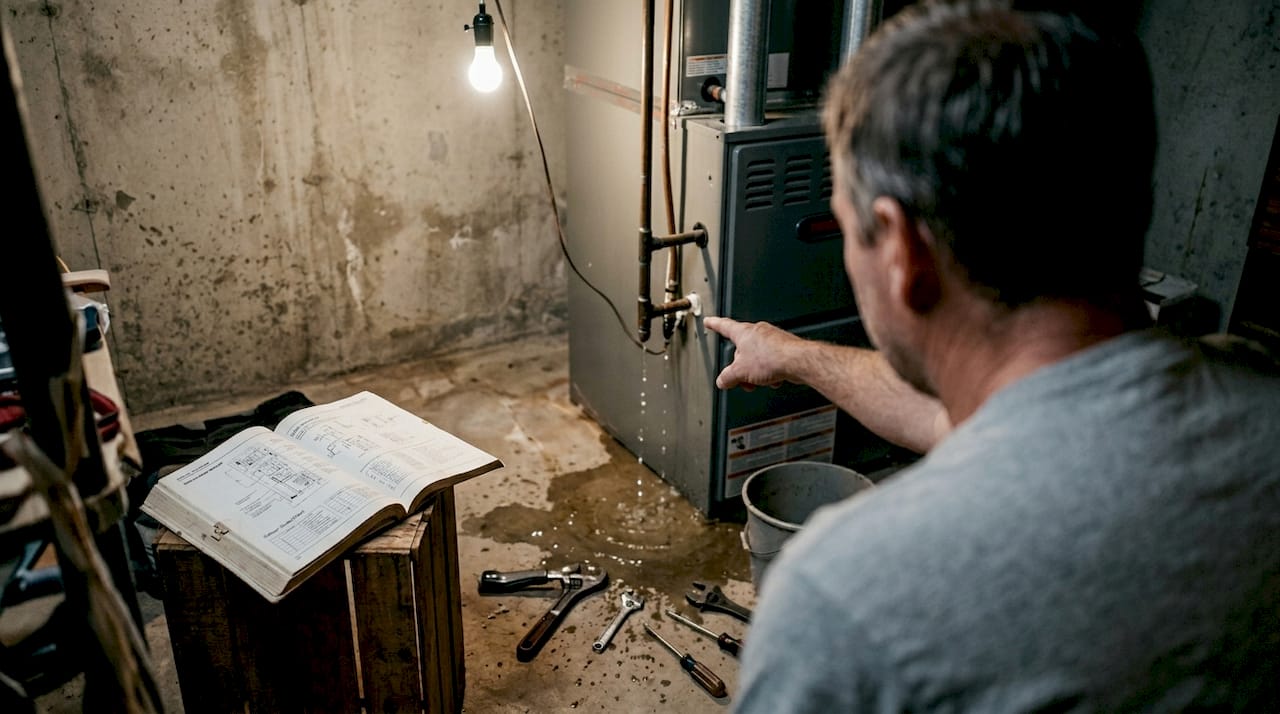
Neglected or poorly serviced systems waste up to 30% more energy than properly maintained ones. That’s hundreds of dollars a year leaving your pocket unnecessarily.
| Factor | Certified technician | Uncertified technician |
|---|---|---|
| Energy efficiency | Optimised, up to 30% savings | Reduced, higher monthly bills |
| System lifespan | 15 to 20 years with proper care | Often 8 to 12 years or less |
| Safety risk | Minimal, code-compliant work | Higher risk of gas leaks, CO exposure |
| Warranty status | Maintained | Frequently voided |
| Insurance coverage | Protected | Potentially invalidated |
Key risks of using an uncertified technician:
- Voided manufacturer warranty on your furnace or AC unit
- Home insurance claims denied due to non-compliant work
- Carbon monoxide leaks from improper gas connections
- Refrigerant mishandling leading to environmental fines
- Frequent system breakdowns and emergency repair costs
Reviewing an HVAC safety checklist before your next service call is a smart move. And if you’re already noticing higher bills, learning about cutting HVAC energy bills through professional repair can help you understand what’s possible with the right technician.
How certification drives energy efficiency and savings
With the dangers of uncertified work clear, let’s explore the positive impact certification brings, especially for those hoping to save money and reduce waste.
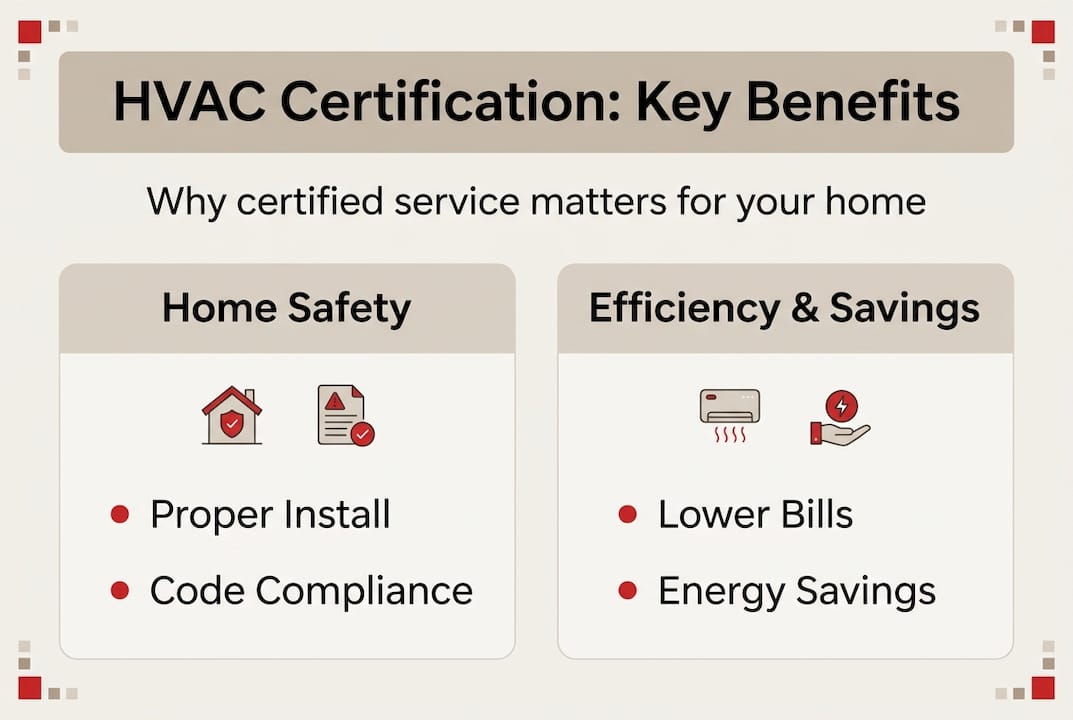
A certified technician doesn’t just fix what’s broken. They optimise your entire system. They check refrigerant levels, test airflow, calibrate thermostats, and inspect heat exchangers. Each of these steps contributes to a system that runs at peak performance rather than struggling along at reduced capacity.
Certified techs improve energy efficiency, indoor air quality, and deliver accurate diagnostics that translate directly into cost savings for homeowners. NATE-certified technicians, for example, are trained to boost system efficiency by up to 30% through proper installation and tuning.
“A well-calibrated HVAC system doesn’t just keep you comfortable. It works less to achieve more, and that shows up clearly on your energy bill.”
Here’s what a certified professional does during a typical service visit to ensure efficiency:
- Inspect and clean heat exchangers and coils to prevent energy loss.
- Check and adjust refrigerant charge to manufacturer specifications.
- Test and calibrate the thermostat for accurate temperature control.
- Inspect ductwork for leaks that waste conditioned air.
- Lubricate moving parts to reduce friction and motor strain.
- Verify electrical connections and controls are functioning safely.
| Service type | Potential annual savings |
|---|---|
| Certified furnace tune-up | Up to $150 to $300 |
| Certified AC installation | Up to 30% reduction in cooling costs |
| Duct sealing by certified tech | Up to $200 per year |
| Thermostat calibration | Up to $100 per year |
Exploring smart HVAC energy savings can show you even more ways to reduce costs. Pairing certified service with good HVAC maintenance habits keeps your system running efficiently between professional visits.
Selecting the right HVAC professional: What to ask and expect
Understanding the benefits is great, but how can you put this knowledge into action when hiring for your own home? Here’s a step-by-step approach.
Not every company that advertises HVAC services in the Durham Region holds the same credentials. Asking the right questions upfront protects you from costly mistakes down the road. Certified techs provide accurate diagnostics and measurable efficiency gains, so verifying credentials before work begins is essential.
Follow these steps when hiring an HVAC professional:
- Ask for proof of certification. Request to see their Red Seal or equivalent certification. A reputable technician will share this without hesitation.
- Confirm they carry liability insurance. This protects your home if something goes wrong during the job.
- Check for local reviews. Look at Google reviews or ask neighbours in the Durham Region for referrals.
- Ask about warranty on parts and labour. Certified professionals stand behind their work with clear warranty terms.
- Verify they pull permits when required. Major installations in Ontario require permits, and a certified tech will handle this properly.
- Ask how they stay current. Codes and equipment change. A good technician pursues ongoing training.
Pro Tip: You can verify a technician’s Red Seal status through the Ontario College of Trades website. It takes less than five minutes and gives you real confidence before anyone touches your system.
For a broader look at what to expect from the hiring process, our guide on choosing an HVAC contractor covers the full picture in plain language.
Why certification will matter even more in the years ahead
Our team has watched the HVAC industry change significantly since 2012, and one thing is clear: the gap between certified and uncertified technicians is only going to widen.
Ontario’s energy efficiency targets are becoming stricter. New refrigerant regulations, higher-efficiency equipment standards, and evolving building codes mean that the technical demands on HVAC professionals are increasing every year. A technician who isn’t keeping up with their certification and training simply won’t have the knowledge to work on modern systems correctly.
We’ve seen homeowners make the mistake of hiring a “handyman” for HVAC work to save a few dollars upfront. In a field that’s evolving this quickly, that shortcut carries real risk. The systems being installed today, including smart thermostats, variable-speed equipment, and heat pumps, require precision that only comes from proper training.
Homeowners who prioritise certification now are genuinely future-proofing their homes. They’re protecting their warranties, their insurance, and their comfort for years ahead. Staying informed about the future of energy-efficient HVAC is one of the smartest things you can do as a homeowner in 2026 and beyond.
Choose certified HVAC service for peace of mind
At Red Seal Mechanical Services, certification isn’t a marketing point. It’s the foundation of everything we do. Our team has proudly served Durham Region homeowners since 2012 with the credentials, experience, and honest approach that your home deserves.
Whether you need a new furnace, an AC tune-up, or a full system assessment, we’re here to help you make informed decisions. If you’re new to HVAC terminology, our guide on HVAC terms for homeowners is a great place to start. You can also browse our full list of HVAC services or learn about our furnace installation process before reaching out. Contact us today to schedule a service call with a certified professional you can trust.
Frequently asked questions
How can I verify if an HVAC technician is certified in Durham Region?
Ask to see their Red Seal or trade certification directly, and cross-reference their credentials through the Ontario College of Trades online registry. A certified technician will have no hesitation providing this information.
Will certified HVAC service really save me money?
Yes. Certified installation and repairs have been shown to boost efficiency by up to 30%, which translates directly into lower monthly energy bills and fewer costly repair calls.
Are uncertified HVAC technicians allowed to work in Ontario homes?
No. Major HVAC work in Ontario requires proper certification and licensing, and uncertified work can void your system warranty and potentially invalidate your home insurance coverage.
Does certification impact indoor air quality?
Absolutely. Certified technicians are trained to install and maintain systems that filter, ventilate, and circulate air properly, which supports healthier air throughout your home year-round.
Recommended
- HVAC certifications ensure quality service in Durham Region
- Enhance your HVAC with reliable customer service in Durham
- HVAC terminology explained for Durham Region homeowners
- Boost HVAC energy efficiency: Smart home savings guide
- 7 Reasons Why HVAC Maintenance Matters for Homeowners – HVAC Service and Repair | Louisville, KY | Project Heating & Cooling
- Choosing the Right HVAC Contractor for You
