


Skipping annual furnace maintenance can increase your heating bills by up to 15%. That’s money leaving your wallet every month during Durham’s cold winters. Understanding what furnace maintenance involves and when to schedule it protects your home’s safety, maximizes efficiency, and extends your heating system’s lifespan. This guide walks you through everything Durham Region homeowners need to know about proper furnace care.
Table of Contents
- Understanding Furnace Maintenance: Definition And Basics
- Why Furnace Maintenance Is Crucial: Safety, Efficiency, And Longevity
- Walkthrough: Typical Furnace Maintenance Checklist
- Common Misconceptions About Furnace Maintenance
- Professional Vs DIY Furnace Maintenance: What Homeowners Need To Know
- Recommended Maintenance Frequency For Durham Region Homeowners
- Identifying Furnace Maintenance Needs And Urgent Signs
- Ensure Your Furnace’s Health With Professional Maintenance
- Frequently Asked Questions
Key Takeaways
| Point | Details |
|---|---|
| Cost Savings | Annual maintenance reduces heating costs by up to 15% through improved efficiency. |
| Safety Priority | Regular inspections prevent carbon monoxide leaks and other dangerous hazards. |
| Filter Care | Replace or check filters every 3 months to maintain optimal airflow and performance. |
| Professional Service | Yearly professional inspection before heating season is essential for Durham’s climate. |
| DIY Limits | Homeowners handle basic tasks; professionals manage safety-critical components. |
Understanding Furnace Maintenance: Definition and Basics
Furnace maintenance consists of inspection, cleaning, and minor repairs to ensure safe and efficient operation. Think of it as preventative medicine for your heating system. Just like changing oil in your car prevents engine damage, routine furnace maintenance stops small issues from becoming expensive emergencies.
Your furnace has several components that need regular attention. The filter traps dust and allergens but clogs over time. The heat exchanger transfers warmth to your home’s air and must stay crack free to prevent carbon monoxide leaks. The blower motor circulates heated air throughout your ductwork. Your thermostat controls when the furnace runs and needs accurate calibration.
Gas lines deliver fuel safely to your burner assembly. Ductwork carries warm air to every room and can develop leaks or blockages. Each component plays a vital role in your comfort and safety.
Maintenance differs from repairs and replacement in important ways:
- Maintenance is scheduled, preventative work done before problems occur
- Repairs fix specific failures after something breaks down
- Replacement installs a completely new furnace when the old one reaches end of life
Regular maintenance is recurring. You schedule it annually or quarterly depending on the task. The goal is prevention and safety, not fixing what’s already broken. This proactive approach saves you money and stress in the long run.
Why Furnace Maintenance Is Crucial: Safety, Efficiency, and Longevity
Your furnace burns natural gas or propane to create heat. Without proper maintenance, combustion byproducts like carbon monoxide can leak into your living space. This odorless, colorless gas is deadly. Professional inspections catch cracks in heat exchangers and faulty venting before they become life threatening.
Proper maintenance improves furnace efficiency by up to 15%. When filters clog, your blower motor works harder to push air through. When burners get dirty, combustion becomes less complete. These inefficiencies force your furnace to run longer to reach desired temperatures. That extra runtime shows up directly on your utility bills.
Consider these concrete benefits of furnace maintenance:
- Lower monthly heating costs through optimized performance
- Reduced risk of midnight breakdowns during cold snaps
- Fewer emergency repair calls that cost premium rates
- Consistent comfort with even heating throughout your home
“Maintenance helps extend furnace lifespan from about 15 to over 20 years.” Routine Furnace Maintenance in Ontario
A well maintained furnace lasts five or more years longer than a neglected one. That’s significant when replacement costs $3,000 to $6,000. Annual maintenance costs a few hundred dollars. Over a furnace’s lifetime, regular service saves thousands compared to premature replacement.
The math is simple. Spend a little now on prevention or spend a lot later on repairs and replacement. Most Durham homeowners find this an easy decision once they understand the numbers.
Walkthrough: Typical Furnace Maintenance Checklist
Understanding what happens during a furnace maintenance appointment removes mystery and helps you make informed decisions. Here’s what comprehensive service includes:
-
Filter Replacement: Technicians install a fresh filter or clean your reusable one. This single task often provides the biggest performance boost. Clean filters improve airflow, reduce strain on your blower motor, and trap allergens effectively.
-
Heat Exchanger Inspection: Using mirrors and lights, professionals examine every section of the heat exchanger for cracks or corrosion. Even tiny cracks allow carbon monoxide into your home’s air supply. This check protects your family’s health.
-
Blower Motor Service: The motor and fan blades get cleaned of accumulated dust. Technicians check electrical connections, lubricate bearings if needed, and verify proper rotation speed. A well maintained blower distributes heat evenly.
-
Thermostat Calibration: Your thermostat tells the furnace when to run. If it reads temperatures inaccurately, you’ll be uncomfortable and waste energy. Calibration ensures it matches actual room temperature.
-
Gas Line Inspection: Professionals check all gas connections for leaks using specialized detectors. They verify proper gas pressure and inspect the burner assembly for clean, efficient combustion. Safety is paramount with gas appliances.
-
Ductwork Evaluation: Technicians inspect visible ductwork for leaks, disconnections, or blockages. They check that dampers operate correctly and airflow reaches all rooms. Sealed, clean ducts maximize efficiency.
Pro Tip: Keep your furnace area clear. Store nothing within three feet of your unit. This provides safe access for maintenance and prevents fire hazards.
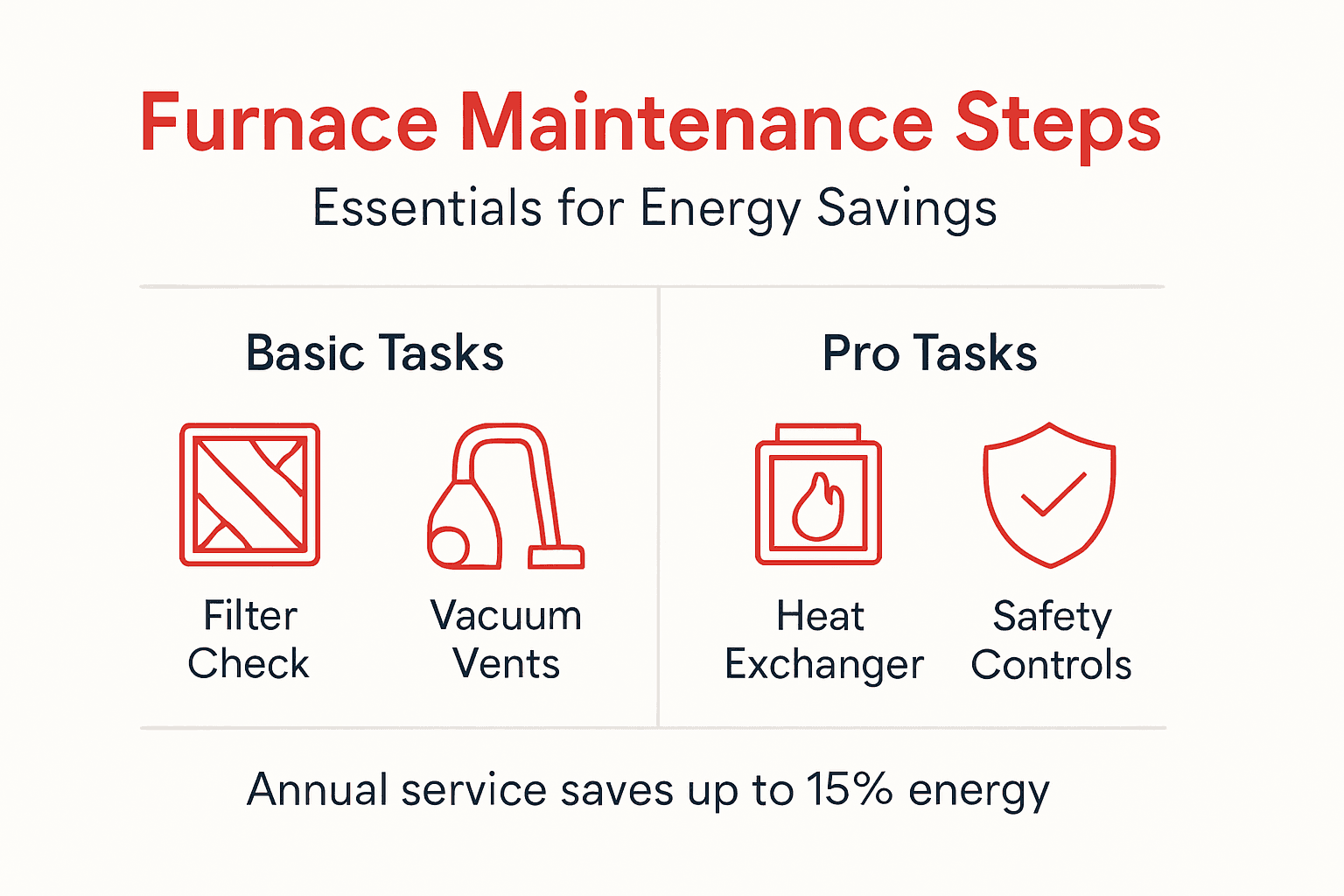
Additional tasks may include testing safety controls, checking flue draft, measuring carbon monoxide levels, and verifying proper condensate drainage on high efficiency models. Key maintenance tasks vary slightly based on your furnace type and age.
Common Misconceptions About Furnace Maintenance
Many homeowners hold beliefs about maintenance that ultimately cost them money or put their families at risk. Let’s clear up the most common myths.
Myth: If my furnace heats my home, it doesn’t need maintenance. Your furnace might work today while developing dangerous problems. Many believe maintenance is unnecessary if the furnace is working, but skipping it risks safety and efficiency. Carbon monoxide leaks don’t announce themselves until someone gets sick. Small cracks grow into big failures.
Myth: I can handle all furnace maintenance myself. Changing filters is great. Cleaning exterior surfaces helps. But you shouldn’t open your furnace cabinet or work on gas connections without proper training and tools. Professional inspections catch issues you can’t see or safely check.
Myth: New furnaces don’t need maintenance for several years. Manufacturers actually require annual professional service to keep warranties valid. Even brand new equipment benefits from inspection. Installation issues sometimes go unnoticed until a pro reviews the system.
Myth: Maintenance is only needed when something seems wrong. Preventative care happens before you notice problems. Waiting for symptoms means you’ve already lost efficiency and possibly shortened your furnace’s lifespan. Regular schedules prevent issues rather than react to them.
Pro Tip: Mark your calendar for maintenance in early fall, before heating season starts. You’ll get better appointment availability and ensure your furnace is ready when temperatures drop.
Understanding these maintenance misconceptions helps you make smart decisions about your home comfort system. Knowledge protects both your wallet and your family.
Professional vs DIY Furnace Maintenance: What Homeowners Need to Know
Knowing which tasks you can safely handle and which require professional expertise saves money while protecting your home. Here’s the practical breakdown.
| Task | DIY Safe | Requires Professional |
|---|---|---|
| Filter replacement | Yes | No |
| Exterior cleaning | Yes | No |
| Thermostat battery change | Yes | No |
| Heat exchanger inspection | No | Yes |
| Gas leak detection | No | Yes |
| Blower motor servicing | No | Yes |
| Combustion analysis | No | Yes |
| Safety control testing | No | Yes |
Homeowners should limit DIY to tasks like filter changes; safety checks need a pro to avoid hazards. You can handle these basic tasks quarterly:
- Replace disposable filters or clean permanent ones
- Vacuum dust from exterior vents and grilles
- Check that nothing blocks airflow around the furnace
- Replace thermostat batteries annually
- Listen for unusual noises during operation
Leave these tasks to licensed technicians:
- Anything involving gas lines or connections
- Opening the furnace cabinet or accessing internal components
- Testing or adjusting safety controls and limit switches
- Measuring combustion efficiency and carbon monoxide levels
- Electrical connections and motor servicing
Skipping professional vs DIY furnace maintenance guidelines creates real risks. Improper work can cause gas leaks, carbon monoxide exposure, fire hazards, or system damage. Most furnace manufacturers void warranties if unlicensed individuals perform certain services.
The smart approach combines both. You handle simple quarterly tasks that keep your system running between professional visits. Once yearly, a licensed technician performs comprehensive service covering safety critical components. This strategy maximizes value while ensuring proper care.
Recommended Maintenance Frequency for Durham Region Homeowners
Durham’s climate demands specific timing for furnace care. Our cold winters put heavy demands on heating systems. Following the right schedule prevents breakdowns when you need heat most.
Annual professional furnace service before heating season is critical in Durham Region. Book your appointment for September or early October. This timing ensures your furnace is ready before the first cold snap. You’ll also get better scheduling flexibility than waiting until November when everyone suddenly needs service.
Quarterly filter checks make sense for most homes. Check your filter every three months and replace it if it looks dirty or clogged. Homes with pets, construction nearby, or family members with allergies may need monthly filter changes. A clogged filter is the leading cause of furnace problems.
Monitor your system between professional visits for these signs:
- Rising energy bills without increased usage
- Rooms that don’t heat evenly
- Furnace cycling on and off frequently
- Unusual noises like banging, squealing, or rattling
- Yellow pilot light instead of blue on older models
Set phone reminders for your Durham furnace maintenance schedule. September for professional service, then the first day of January, April, July, and October for filter checks. This simple system ensures you never forget essential maintenance.
Consider scheduling service at the same time each year. Making it routine removes the mental burden of remembering. Many HVAC companies offer maintenance plans with automatic scheduling and discounted service rates.
Identifying Furnace Maintenance Needs and Urgent Signs
Your furnace communicates problems through specific symptoms. Recognizing these furnace maintenance warning signs helps you act quickly before minor issues become major failures.
Signs of needed maintenance include rising energy bills, unusual noises, and frequent cycling. Compare your current utility bills to the same months last year. A 10% or greater increase without usage changes suggests efficiency problems. Dirty filters, failing motors, or duct leaks often cause this.
Listen to your furnace during operation. Normal sounds include a gentle whoosh of air and occasional clicks as components cycle. Concerning noises include:
- Banging or booming at startup suggests delayed ignition
- Squealing indicates belt or bearing problems
- Rattling means loose components or ductwork
- Rumbling after burner shutdown may signal a cracked heat exchanger
Frequent short cycling wastes energy and stresses components. Your furnace should run for 10 to 15 minutes per cycle. If it turns on and off every few minutes, the thermostat placement, airflow restriction, or mechanical problem needs attention.
Pro Tip: Install carbon monoxide detectors on every floor of your home. Test them monthly. They’re your last line of defense if furnace problems create dangerous gas buildup.
These symptoms require immediate professional attention:
- Yellow or flickering pilot light flame
- Strong gas odor anywhere in your home
- Carbon monoxide detector alarm
- No heat when outdoor temperatures drop below freezing
- Visible soot around furnace vents or registers
Don’t wait on urgent signs. Shut off your furnace and call for emergency service if you smell gas or detect carbon monoxide. Your family’s safety is more important than temporary discomfort.
Ensure Your Furnace’s Health with Professional Maintenance
You now understand what furnace maintenance involves and why it matters. Red Seal Mechanical Services provides comprehensive professional furnace maintenance services tailored for Durham Region homes. Our certified technicians perform detailed inspections, thorough cleaning, and necessary repairs to keep your heating system safe and efficient.
We’ve served Bowmanville and surrounding communities since 2012. Our family owned business combines technical expertise with genuine care for your comfort. Schedule your annual service before winter arrives to avoid emergency breakdowns when temperatures plummet.
Need immediate help? Our furnace repair services in Durham Region respond quickly when problems arise. Planning a system upgrade? Our furnace installation guide walks you through the entire process.
Frequently Asked Questions
What does furnace maintenance include?
Comprehensive furnace maintenance services include filter replacement, heat exchanger inspection for cracks, blower motor cleaning and calibration, thermostat accuracy checks, gas line leak testing, and ductwork evaluation. Technicians also measure combustion efficiency, test safety controls, and verify proper venting.
How often should I schedule furnace maintenance?
Professional maintenance should happen once yearly before heating season starts, ideally in September or early October. Check and replace filters every three months or monthly if you have pets or allergies. Schedule immediate service if you notice performance changes or unusual sounds.
Can I perform furnace maintenance myself?
You can safely change filters, vacuum exterior vents, and replace thermostat batteries. Leave heat exchanger inspections, gas line work, blower motor servicing, and safety control testing to licensed professionals. DIY attempts on complex components risk safety hazards and void warranties.
What are signs my furnace needs maintenance?
Watch for rising energy bills, uneven heating between rooms, frequent on and off cycling, strange noises like banging or squealing, and yellow pilot flames. These symptoms indicate your system needs professional attention. Annual maintenance often prevents these issues from developing.
How much does furnace maintenance cost in Durham Region?
Standard annual maintenance typically costs $150 to $250 depending on your furnace type and any additional services needed. This investment prevents expensive emergency repairs averaging $400 to $1,200 and extends equipment life by five or more years. Many companies offer maintenance plans with discounted rates.
Why is fall the best time for furnace maintenance?
Scheduling service in September or early October ensures your system is ready before cold weather arrives. You’ll get better appointment availability than peak season and avoid emergency calls during winter. Early maintenance catches problems while you still have time for repairs before you need heat daily.
