


Sweltering Ontario summers can turn even the coziest home into a place of restless nights and sticky afternoons. Air conditioning does far more than cool the air, it transforms your living environment with proper humidity control and enhanced comfort. As a Canadian homeowner, choosing the right system means weighing options that suit Ontario’s unique climate and your own family’s needs. This guide highlights the most effective options and trustworthy strategies for home temperature management while helping you make decisions rooted in long-term trust and reliability.
Table of Contents
- What Air Conditioning Means for Homeowners
- Types of Air Conditioning for Ontario Homes
- How Air Conditioning Systems Work
- Choosing the Right AC for Your Home
- Efficiency, Safety, and Cost Considerations
What Air Conditioning Means for Homeowners
Air conditioning represents more than just cooling technology for Canadian homeowners—it’s a critical system that transforms indoor comfort during hot summer months. Home temperature management goes beyond simple temperature reduction, encompassing humidity control, air quality improvement, and overall living environment enhancement.
For Ontario residents, air conditioning plays a significant role in managing indoor climate. HVAC systems regulate temperature through sophisticated mechanisms that move heat outside while circulating cooled air throughout living spaces. These systems accomplish this through a complex network of components including:
- Refrigerant circulation
- Compressor functionality
- Heat exchange processes
- Air distribution networks
Homeowners have multiple air conditioning options tailored to different residential needs. Central air conditioning systems provide whole-home cooling, while room units offer targeted temperature management for specific areas. The selection depends on factors like home size, budget, and existing infrastructure.
Energy efficiency remains a critical consideration for Ontario homeowners. Modern air conditioning systems not only cool spaces but also contribute to overall home energy management. Proper installation, regular maintenance, and strategic usage can significantly reduce energy consumption and associated utility expenses.
Pro tip: Invest in annual HVAC maintenance to ensure optimal system performance and prevent unexpected breakdowns during peak summer months.
Types of Air Conditioning for Ontario Homes
Ontario homeowners have several sophisticated air conditioning options designed to meet diverse residential cooling needs. Home cooling systems range from compact room units to comprehensive whole-home solutions, each offering unique advantages for different living spaces and budgets.
The primary air conditioning types available for Ontario homes include:
- Room Air Conditioners: Ideal for cooling individual rooms or smaller living spaces
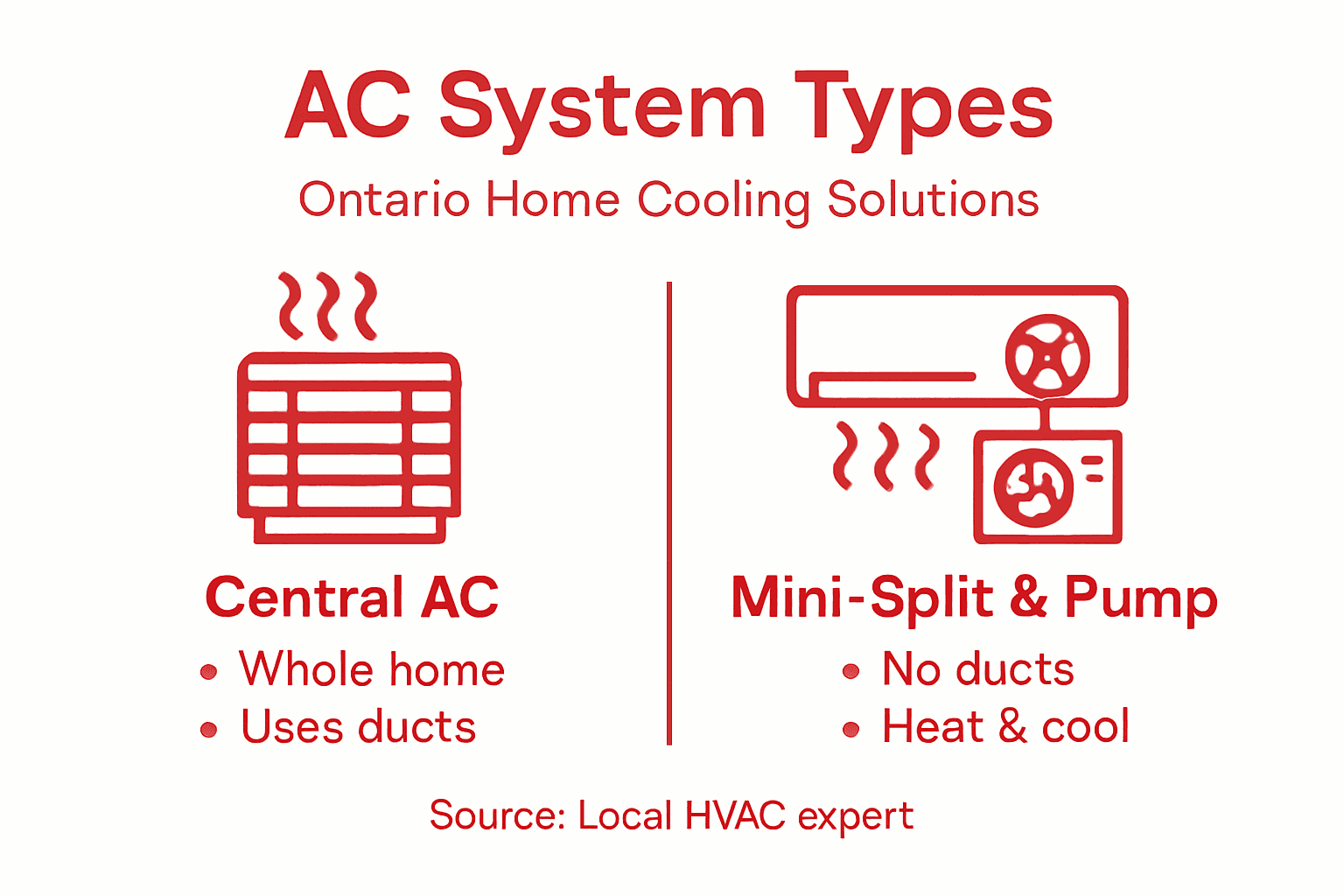
- Central Air Conditioning Systems: Provide comprehensive cooling through existing ductwork
- Ductless Mini-Split Systems: Perfect for homes without traditional ducting
- Heat Pumps: Offer dual heating and cooling functionality
Each system comes with distinct characteristics tailored to specific residential requirements. Central air conditioning systems are particularly popular among Ontario homeowners, delivering consistent cooling throughout entire homes via established ductwork networks. These systems efficiently circulate cool air, maintaining uniform temperatures across multiple rooms.
Ductless mini-split systems represent an innovative alternative for homes lacking traditional ducting. These compact units offer targeted cooling, allowing homeowners to create customized temperature zones without extensive renovation. They prove especially beneficial for older homes, additions, or spaces where installing comprehensive ductwork remains impractical.
Heat pumps have gained significant traction in recent years, offering remarkable versatility by providing both heating and cooling capabilities. These systems extract heat from outdoor air during summer to cool homes and reverse the process during winter, making them an energy-efficient solution for year-round climate control.
Pro tip: Consider consulting a professional HVAC technician to assess your specific home layout and cooling requirements before selecting an air conditioning system.
Here’s a comparison of popular air conditioning systems for Ontario homes:
| System Type | Best For | Infrastructure Needs | Notable Advantage |
|---|---|---|---|
| Central Air Conditioning | Whole-home cooling | Existing ductwork | Uniform temperature throughout home |
| Ductless Mini-Split | Room-by-room control | No ductwork required | Flexible zone temperature settings |
| Room Air Conditioner | Small spaces or apartments | Window or wall opening | Low installation cost |
| Heat Pump | Year-round heating/cooling | Varies by model | Lower long-term energy use |
How Air Conditioning Systems Work
Air conditioning technology represents a remarkable feat of engineering, transforming uncomfortable indoor environments into cool, pleasant spaces. HVAC systems operate through a sophisticated heat transfer process that removes warmth from interior spaces and expels it outdoors.
The core components of an air conditioning system include:
- Compressor: Pressurizes refrigerant and initiates the cooling cycle
- Condenser Coil: Releases heat from the refrigerant to the outside environment
- Evaporator Coil: Absorbs indoor heat and begins the cooling process
- Refrigerant Lines: Connects interior and exterior system components
- Blower: Circulates cooled air throughout the home
Refrigerant serves as the critical medium in this heat transfer process. As it moves through the system, it undergoes a continuous transformation from liquid to gas and back, absorbing and releasing heat. The compressor plays a pivotal role by increasing the refrigerant’s pressure and temperature, forcing it to move through the system’s intricate network.
Inside the home, the evaporator coil acts as a heat absorption centre. When warm indoor air passes over these cold coils, heat is extracted, and the air temperature drops significantly. The now-cooled air is then distributed throughout the home via ductwork or direct air handlers, creating a comfortable living environment.
Thermal exchange occurs most dramatically in the outdoor condenser unit. Here, the compressed, high-temperature refrigerant releases its accumulated heat into the external environment, cooling and condensing back into a liquid state. This continuous cycle ensures consistent temperature regulation and indoor comfort.
Pro tip: Schedule annual professional maintenance to ensure your air conditioning system operates at peak efficiency and prevents unexpected performance issues.
Choosing the Right AC for Your Home
Selecting the perfect air conditioning system requires careful consideration of multiple factors unique to your home’s specific characteristics and cooling needs. Home-specific HVAC selection involves evaluating several critical elements that impact overall cooling performance and efficiency.
Key factors to consider when choosing an air conditioning system include:
- Home Size: Total square footage and layout
- Existing Infrastructure: Ductwork availability
- Climate Conditions: Ontario’s seasonal temperature variations
- Energy Efficiency Goals: Long-term operational expenses
- Budget: Initial installation and ongoing maintenance costs
Home configuration plays a significant role in determining the most suitable air conditioning solution. Homes with existing ductwork typically benefit from central air conditioning systems, which provide comprehensive cooling across multiple rooms. Alternatively, homes lacking traditional ducting might find ductless mini-split systems more appropriate, offering targeted cooling without extensive renovation.
Heat pump technology presents an innovative option for Ontario homeowners seeking versatile temperature control. These systems deliver both heating and cooling capabilities, making them particularly attractive for regions experiencing moderate climate fluctuations. Heat pumps excel at maintaining consistent indoor temperatures while potentially reducing overall energy consumption compared to traditional standalone air conditioning units.
Climate adaptability remains crucial when selecting an air conditioning system. Ontario’s diverse seasonal conditions demand flexible cooling solutions that can efficiently manage temperature and humidity levels. Consulting with professional HVAC technicians can help homeowners navigate the complex landscape of available cooling technologies and identify the most suitable option for their specific residential requirements.
Pro tip: Arrange a professional home assessment to determine the most energy-efficient and cost-effective air conditioning solution tailored to your specific living space.
Efficiency, Safety, and Cost Considerations
Navigating the complex landscape of air conditioning requires a holistic approach that balances energy performance, system safety, and long-term financial considerations. Home heating and cooling maintenance involves strategic decisions that impact both immediate comfort and future expenses.
Critical efficiency and safety factors include:
- Regular Filter Maintenance: Ensures optimal airflow and system performance
- Ductwork Sealing: Prevents energy loss and improves overall system efficiency
- Proper Insulation: Reduces cooling requirements and energy consumption
- Professional Inspections: Identifies potential safety risks and mechanical issues
- Energy-Efficient Certifications: Helps consumers select high-performing units
Energy efficiency represents a crucial consideration for Ontario homeowners. Modern air conditioning systems come with standardized ratings that provide clear indicators of performance potential. These ratings help consumers understand potential energy consumption and long-term operational expenses, enabling more informed purchasing decisions.
Safety protocols are paramount when managing air conditioning systems. Potential risks such as electrical faults, refrigerant leaks, and mechanical failures can be mitigated through consistent professional maintenance. Homeowners should prioritize regular system inspections, ensuring all components function correctly and safely.
System longevity depends significantly on proactive maintenance strategies. By implementing routine care and addressing minor issues promptly, homeowners can extend their air conditioning system’s operational lifespan, reduce unexpected repair needs, and maintain optimal performance throughout the equipment’s lifecycle.
Pro tip: Schedule bi-annual professional HVAC inspections to identify potential efficiency and safety issues before they escalate into costly repairs.
The following table summarizes key efficiency and safety practices for maximizing home AC performance:
| Practice | Efficiency Benefit | Safety Benefit |
|---|---|---|
| Replace air filters | Enhances airflow, saves energy | Reduces risk of overheating |
| Seal and insulate ducts | Prevents cooled air losses | Avoids moisture build-up in ducts |
| Schedule inspections | Catches inefficiencies early | Identifies electrical or leak hazards |
| Use certified equipment | Assures higher performance | Meets Canadian safety standards |
Enhance Your Home Comfort with Trusted HVAC Solutions in Durham Region
Managing indoor temperature and air quality in Ontario homes demands reliable, efficient air conditioning systems and expert care. If you face challenges selecting the right system, maintaining your unit’s efficiency, or ensuring safe operation, Red Seal Mechanical Services is your local partner with over a decade of experience. We understand the importance of energy-efficient solutions like central air conditioning, ductless mini-splits, and heat pumps tailored for diverse home layouts and seasonal climate variations.
Take control of your home comfort today by connecting with our skilled technicians for professional installation, repair, or maintenance. Our family-owned company is committed to honest, dependable service that keeps your air conditioning system performing at its best while reducing energy costs. Don’t wait for the hottest days to address your HVAC needs. Contact us now at Red Seal Mechanical Services and discover how we can help you achieve consistent, safe, and efficient cooling all summer long.
Frequently Asked Questions
What are the main types of air conditioning systems available for homes?
There are several types of air conditioning systems suitable for homes, including room air conditioners, central air conditioning systems, ductless mini-split systems, and heat pumps. Each type caters to different cooling needs and home layouts.
How does an air conditioning system work to cool indoor spaces?
Air conditioning systems work by removing heat from indoor environments through a cycle that compresses refrigerant, releases heat outdoors, and circulates cooled air inside. Key components include the compressor, evaporator coil, condenser coil, and blower.
What factors should I consider when choosing an air conditioning system?
When selecting an air conditioning system, consider factors such as home size, existing infrastructure (like ductwork), climate conditions, energy efficiency goals, and your budget. A professional assessment can help determine the best option for your needs.
How can I improve the energy efficiency of my air conditioning system?
To improve the energy efficiency of your air conditioning system, practice regular filter maintenance, seal and insulate ductwork, schedule professional inspections, and consider using energy-efficient certified equipment. These practices help reduce energy consumption and enhance overall system performance.
