


Every Bowmanville homeowner knows that indoor comfort can shift with the season, and HVAC performance is the difference between cosy evenings and chilly frustrations. As the Durham Region’s temperatures swing, understanding how heating, ventilation, and air conditioning systems maintain consistent comfort becomes essential. Discover practical strategies for optimizing your HVAC setup, boosting energy efficiency, and ensuring every room in your Ontario home stays comfortable throughout the year. Boldly focus on the importance of balanced air quality and efficient temperature control.
Table of Contents
- Defining HVAC And Home Comfort Fundamentals
- Types Of HVAC Systems Used In Ontario Homes
- How HVAC Affects Indoor Air Quality And Temperature
- Energy Efficiency And Cost Savings With HVAC Upgrades
- Essential Maintenance And Common Homeowner Mistakes
Defining HVAC and Home Comfort Fundamentals
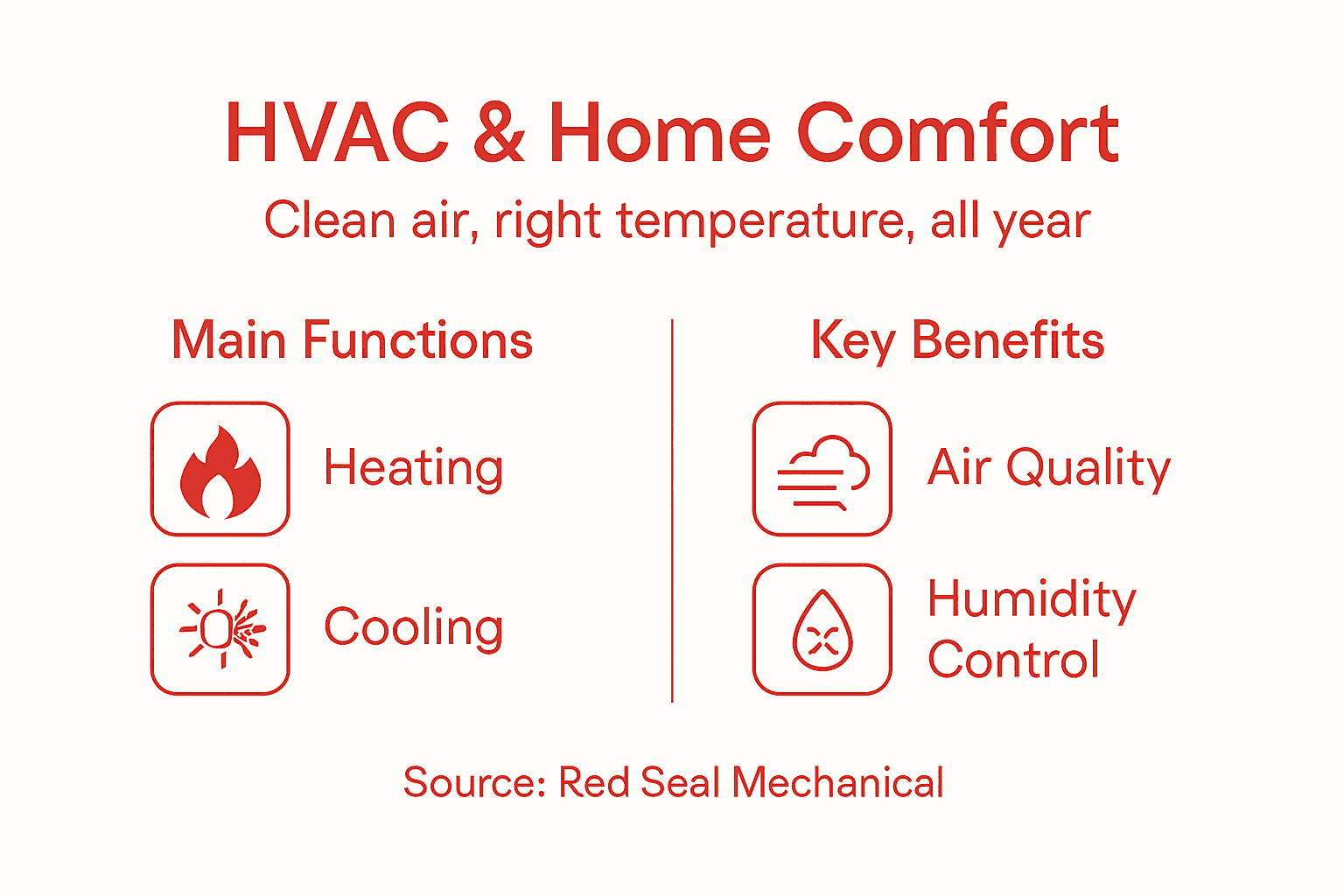
HVAC stands for heating, ventilation, and air conditioning. It’s a system that manages your home’s temperature, air quality, and humidity levels year-round. Understanding how these components work together is the foundation for maintaining a comfortable living space in the Durham Region’s variable climate.
Your HVAC system accomplishes three distinct but connected functions. Heating uses furnaces or heat pumps to distribute warm air through your home’s ductwork. Ventilation manages air flow to remove stale indoor air and bring in fresh outdoor air. Air conditioning cools the air and reduces excess moisture that builds up during warmer months.
What Makes Home Comfort?
Home comfort isn’t just about temperature. It depends on several interconnected factors working together.
Effective thermal comfort requires balancing multiple elements:
- Air temperature inside your home
- Humidity levels (ideally 30-50%)
- Air movement and circulation
- Radiant temperatures from walls and windows
- Indoor air quality and cleanliness
When HVAC systems treat air to control temperature and humidity, they’re addressing your home’s core comfort requirements. A properly functioning system maintains these conditions without requiring constant manual adjustments.
Why Ventilation Matters
Ventilation is often overlooked but critical to home comfort. Fresh air circulation removes stale air, reduces allergens, and prevents moisture buildup that leads to mould growth. Your HVAC system can provide natural ventilation through open windows or mechanical ventilation using fans and ducts.
In Ontario’s climate, mechanical ventilation becomes essential during winter months when opening windows isn’t practical. The system exchanges indoor air with filtered outdoor air, maintaining freshness without losing conditioned air.
A well-designed HVAC system balances heating, cooling, and ventilation to create a healthy indoor environment while optimizing energy use.
Understanding System Components
Your HVAC system includes several interconnected parts. The furnace or heat pump generates warmth. The air conditioner removes heat during summer. Ductwork distributes conditioned air throughout your home. Thermostats control when equipment runs. Filters clean the air before it circulates.
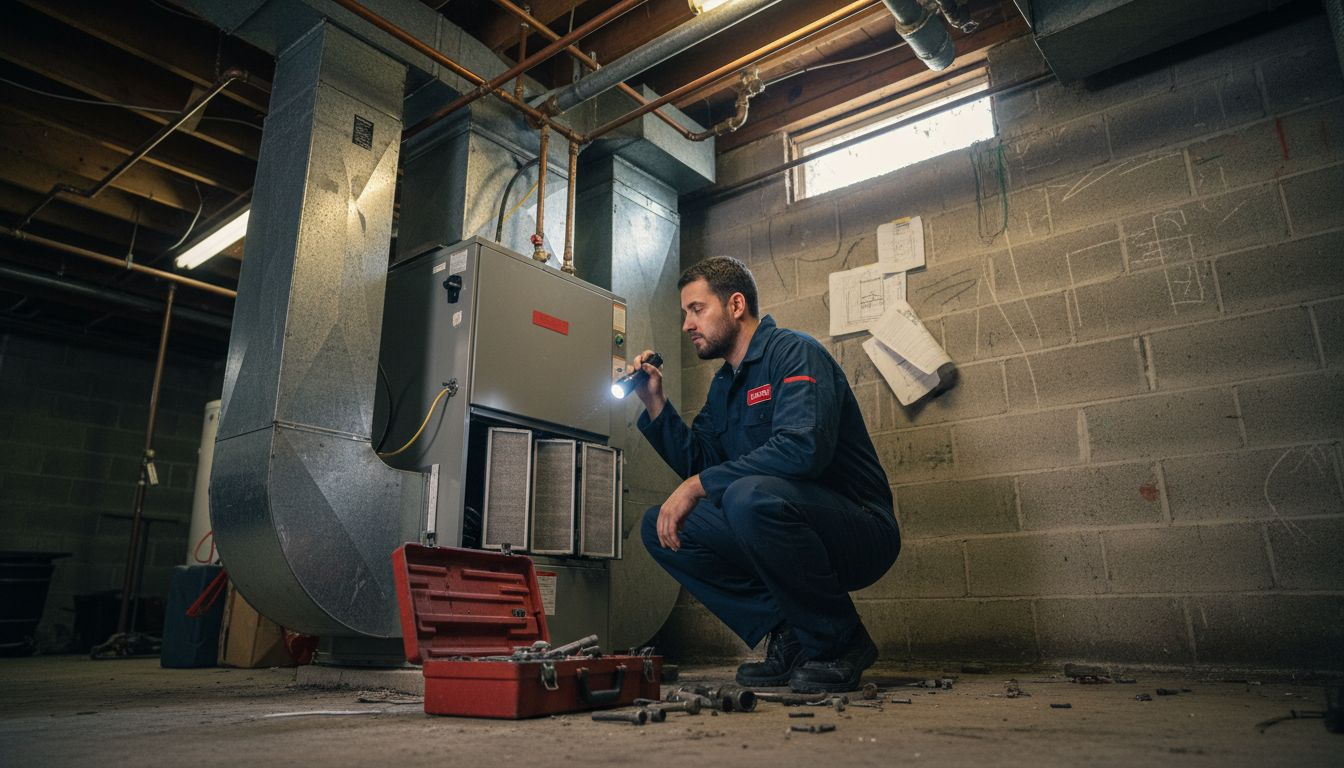
When choosing an HVAC contractor, ask about how their recommended system will address these specific components for your home’s unique needs.
Each component influences overall comfort and efficiency. A single weak point can affect your entire system’s performance.
Pro tip: Test your current comfort by checking if all rooms reach your desired temperature within an hour of your furnace or air conditioner running; if not, ventilation or ductwork issues may need professional evaluation.
Types of HVAC Systems Used in Ontario Homes
Ontario homeowners have several HVAC options to choose from, depending on their home’s age, size, and specific comfort needs. Each system type offers different advantages, and understanding the differences helps you make an informed decision about what works best for your property in the Durham Region.
Central Ducted Systems
Central systems remain the most common choice in Ontario homes. These systems use ductwork to distribute heated or cooled air throughout your entire house from a single central unit.
Furnace-based systems burn natural gas, oil, or electricity to generate heat. They pair with separate air conditioning units during summer months. This two-unit approach has worked reliably in Canadian homes for decades.
Central heat pumps combine heating and cooling in one unit, making them increasingly popular. Heat pumps are efficient for Canadian climates, including Ontario’s cold winters. They work by moving heat rather than generating it, reducing energy consumption significantly.
Ductless Mini-Split Systems
Ductless systems offer flexibility for homes without existing ductwork or for specific room additions. Individual wall-mounted units deliver heating and cooling directly to targeted spaces without requiring extensive ductwork installation.
These systems work well for:
- Older homes where ductwork installation would be invasive
- Basement renovations or room additions
- Homes where certain rooms need independent temperature control
- Properties seeking zoned comfort management
Ductless systems require less structural disruption during installation and provide excellent energy efficiency since no heat loss occurs through ducts.
Heat Pump Technology
Air-source heat pumps draw warmth from outside air, even in Ontario’s frigid winters. Modern cold-climate models maintain effectiveness at extremely low temperatures, making them ideal for our region.
Ground-source (geothermal) heat pumps use underground loops to exchange heat with stable earth temperatures. These systems deliver superior efficiency but require more complex installation with higher upfront investment.
The right HVAC system balances your home’s climate needs, available space, installation complexity, and long-term energy goals.
Choosing Your System Type
Deciding between these options requires considering several factors. Your home’s existing structure, local climate demands, budget constraints, and energy efficiency priorities all matter.
Heating and cooling basics for Ontario homeowners guide your selection process. Climate compatibility is crucial—Ontario winters demand systems that reliably perform in extreme cold.
Home size influences your choice too. Larger homes typically benefit from central systems, while smaller spaces or specific zones suit ductless approaches better.
Below is a summary of the main HVAC system types and their suitability for Ontario homes:
| System Type | Best For | Energy Efficiency | Installation Disruption |
|---|---|---|---|
| Central Ducted | Large, modern homes | Moderate to high | Extensive (ductwork needed) |
| Ductless Mini-Split | Older or renovated homes | High | Minimal (no ductwork) |
| Heat Pump (Air-source) | Broad climate zones | Very high | Moderate |
| Heat Pump (Geothermal) | Eco-conscious, new builds | Highest | Major (ground excavation) |
Pro tip: Schedule a consultation with the Red Seal Mechanical team to assess your home’s specific needs; they’ll evaluate your existing structure, climate zone, and comfort priorities to recommend the most suitable system type for your property.
How HVAC Affects Indoor Air Quality and Temperature
Your HVAC system does far more than simply warm or cool your home. It actively shapes the air you breathe every day by controlling temperature, humidity, and filtering out contaminants that affect your health and comfort.
Think of your HVAC system as your home’s lungs. It draws in air, conditions it, and circulates it throughout your living spaces. When working properly, this continuous process maintains a healthy indoor environment. When neglected, problems accumulate quickly.
Temperature Control
Managing indoor temperature is your HVAC system’s most visible function. Furnaces generate heat during winter months while air conditioners remove excess heat during summer. Heat pumps accomplish both tasks in a single unit.
Consistent temperature matters more than most homeowners realize. Rooms that heat unevenly suggest ductwork problems or inadequate air circulation. Temperature swings between rooms create discomfort and waste energy as your system works harder to compensate.
Proper temperature balance requires:
- Well-sealed ductwork without leaks
- Unobstructed air vents in every room
- Thermostat placement in central locations
- Regular filter changes to maintain airflow
- Properly sized equipment for your home
Indoor Air Quality Management
Ventilation sits at the heart of indoor air quality. Ventilation reduces pollutants and controls moisture that impact both comfort and health. Your HVAC system exchanges stale indoor air with fresh outdoor air, removing dust, allergens, and odours.
Without adequate ventilation, pollutants accumulate. Dust, pet dander, cooking fumes, and moisture build up inside your home. These contaminants trigger allergies, respiratory issues, and can promote mould growth.
Your system removes these threats by:
- Drawing in filtered fresh air
- Exhausting stale air outside
- Controlling humidity levels (ideally 30-50%)
- Filtering dust and allergens
- Reducing odours and chemical vapours
The Link Between Air Quality and Maintenance
A neglected HVAC system becomes a source of poor indoor air quality rather than a solution. Dirty filters restrict airflow, reducing ventilation effectiveness. Unmaintained ducts collect dust and debris that circulates throughout your home. Clogged vents prevent fresh air exchange.
Proper HVAC maintenance directly protects your indoor air quality and the health of your household.
Moistly, homeowners don’t connect poor air quality to their HVAC system. They notice symptoms like itchy eyes, congestion, or musty odours but don’t realise their heating and cooling unit plays a crucial role. HVAC maintenance tips for efficiency reveal how simple actions preserve both comfort and air quality.
Why This Matters in Ontario
Ontario’s humid summers and cold winters place extra demands on your HVAC system. Summer humidity promotes mould growth if your air conditioner isn’t removing moisture effectively. Winter dry air requires humidification to prevent respiratory irritation.
Your system must balance these seasonal extremes while maintaining consistent indoor conditions year-round.
Pro tip: Replace your furnace and air conditioner filters every 1-3 months depending on usage, and have your ducts inspected annually to ensure contaminants aren’t circulating through your home.
Energy Efficiency and Cost Savings with HVAC Upgrades
Older HVAC systems consume far more energy than modern alternatives. If your furnace or air conditioner is over 15 years old, upgrading to newer equipment could reduce your energy bills significantly while improving comfort throughout your home.
Energy efficiency improvements pay for themselves through lower monthly utility bills. The longer you delay an upgrade, the more money your aging system wastes heating or cooling inefficiently.
Why Older Systems Cost More to Operate
Aging HVAC equipment loses efficiency gradually. Worn components force the system to work harder, consuming more energy to achieve the same temperature. Compressors in older air conditioners strain under pressure. Furnace heat exchangers develop cracks that leak warm air.
These efficiency losses compound over time:
- Energy consumption increases 1-5% annually as systems age
- Running times lengthen to maintain desired temperatures
- Equipment cycles on and off more frequently
- Utility bills climb while comfort decreases
- Repair frequency and expenses accelerate
Eventually, the operating and maintenance expenses exceed the investment in new equipment.
Modern Efficiency Standards
Today’s HVAC systems meet stricter efficiency ratings than equipment manufactured just a decade ago. Modern furnaces achieve 95% efficiency ratings compared to 80-85% in older models. Air conditioners use refrigerants that cool more effectively while consuming less electricity.
Seasonal Energy Efficiency Ratio (SEER) measures air conditioner performance. Higher SEER ratings indicate better cooling efficiency. Modern systems typically achieve SEER ratings of 16-20, while older units operate at 10-13.
Annual Fuel Utilisation Efficiency (AFUE) measures furnace heating performance. Modern furnaces reach 95% AFUE, meaning 95 cents of every dollar spent on fuel converts to usable heat.
The Real Savings Picture
Energy bill reductions depend on your current system’s age and condition. Tuning up air conditioning systems optimises existing equipment, but upgrades deliver substantially greater savings.
Homeowners upgrading from 20-year-old systems to modern equipment typically see energy bill reductions of 20-40%. For homes in Ajax, Whitby, Oshawa, Brooklin, Clarington, Port Perry, Courtice, Port Hope, Newcastle, Bowmanville, and Orono, these savings translate to hundreds of dollars annually.
Consider this comparison:
- Old system (15+ years): Running continuously, poor efficiency
- New system (modern): Variable-speed operation, precise temperature control
- Annual savings: 20-40% of heating and cooling expenses
- Payback period: 5-8 years through utility savings alone
Modern HVAC systems balance upfront investment against long-term operational savings, making upgrades financially sensible for most homeowners.
Beyond Energy Savings
Upgrades deliver benefits beyond reduced utility bills. Better temperature control eliminates hot and cold spots. Improved humidity management increases comfort during Ontario’s extreme seasons. Quieter operation reduces noise throughout your home.
Enhanced reliability means fewer emergency repair calls during peak heating or cooling seasons when technicians charge premium rates.
Pro tip: Request an energy audit from Red Seal Mechanical to compare your current system’s operating efficiency against modern equipment; they can project realistic annual savings specific to your home and help determine if upgrading makes financial sense.
Essential Maintenance and Common Homeowner Mistakes
Your HVAC system requires regular maintenance to operate efficiently and last as long as intended. Neglecting this simple responsibility leads to costly repairs, reduced comfort, and premature system failure that could have been prevented entirely.
Many homeowners skip maintenance thinking they’ll save money. The opposite happens. One overlooked filter change cascades into multiple problems that compound over months.
What Professional Maintenance Includes
Annual HVAC check-ups involve inspecting thermostats, tightening connections, lubricating parts, and checking safety. Professional technicians catch problems early before they become expensive failures.
Essential annual maintenance tasks include:
- Inspecting thermostat function and calibration
- Tightening all electrical connections
- Lubricating moving parts and motors
- Checking condensate drains for blockages
- Verifying safe operation of gas or oil components
- Cleaning and inspecting heat exchangers
- Testing system performance before seasons change
Scheduling maintenance before heating and cooling seasons maximises reliability when you need your system most.
Explore how regular HVAC maintenance impacts performance and air quality:
| Maintenance Task | Benefit | Impact on Comfort | Impact on Air Quality |
|---|---|---|---|
| Filter changes | Improved airflow | More consistent temperatures | Fewer allergens, dust |
| Annual inspection | Early problem detection | Fewer system breakdowns | Cleaner air circulation |
| Duct cleaning | Better distribution | No cold/hot spots | Reduced mould risk |
The Filter Problem
Air filters are the most critical maintenance item homeowners control themselves. A clogged filter restricts airflow, forcing your system to work harder and consuming significantly more energy.
When filters become excessively dirty, system damage accelerates. Your furnace or air conditioner strains to push air through the blockage. Motors overheat. Compressors fail prematurely. Performance drops while operating costs climb.
Yet replacing filters takes minutes and costs little. Most homeowners neglect this simple task because it’s invisible and easy to forget.
Common Mistakes That Damage Systems
Homeowners make predictable errors that compromise HVAC reliability and efficiency.
Frequent mistakes include:
- Ignoring filter changes until airflow noticeably decreases
- Blocking return air vents with furniture or doors
- Setting thermostats to extreme temperatures
- Delaying repairs when minor issues appear
- Refusing professional maintenance to save money
- Running systems continuously without breaks
- Ignoring unusual noises, smells, or performance changes
Skipping preventative maintenance doesn’t save money; it guarantees expensive repairs down the road.
Each mistake seems harmless individually. Combined over time, they create major problems. A routine furnace maintenance schedule prevents these issues from developing.
Recognising When Professional Help is Needed
Some maintenance homeowners can handle. Most should involve professionals. Your system contains refrigerants, electrical components, and combustible gases that require certified expertise to service safely.
Temperature fluctuations, unusual noises, or reduced performance signal problems needing professional attention. Waiting allows minor issues to become major failures.
Don’t gamble with your comfort or safety. Call Red Seal Mechanical when you notice anything unusual. Their technicians serve Ajax, Whitby, Oshawa, Brooklin, Clarington, Port Perry, Courtice, Port Hope, Newcastle, Bowmanville, and Orono.
Pro tip: Schedule professional maintenance annually before your heating or cooling season begins; Red Seal Mechanical can establish a maintenance plan that keeps your system running efficiently while catching problems before they become expensive repairs.
Enhance Your Home Comfort with Trusted HVAC Solutions
Understanding the vital role of HVAC systems in maintaining home comfort reveals the importance of balanced heating, cooling, and ventilation tailored to your needs. If you are facing uneven temperatures or concerns about indoor air quality in your Durham Region home, you are not alone. These challenges call for reliable, efficient systems backed by expert service to ensure your living space is healthy and comfortable year-round.
At Red Seal Mechanical Services, we specialize in providing comprehensive HVAC solutions with a personal touch. Whether you require installation, maintenance, or repairs for furnaces, air conditioners, or ventilation, our certified team in Bowmanville is ready to help. Don’t wait until discomfort takes over. Contact us today for a consultation and bring lasting comfort and efficiency to your home.
Frequently Asked Questions
What does HVAC stand for and what does it do?
HVAC stands for heating, ventilation, and air conditioning. It is a system designed to manage your home’s temperature, air quality, and humidity to ensure comfort year-round.
Why is ventilation important for home comfort?
Ventilation is critical as it removes stale indoor air and allows fresh outdoor air to circulate. This helps reduce allergens, prevents moisture buildup, and improves overall indoor air quality, contributing to your comfort.
How does an HVAC system affect indoor air quality?
An HVAC system filters and circulates air, helping to remove dust, allergens, and pollutants. Proper maintenance, such as regular filter changes, ensures better airflow and cleaner air quality in your home.
What are the common types of HVAC systems available?
Common types include central ducted systems, ductless mini-split systems, and heat pumps (both air-source and geothermal). Each system has unique advantages and is suited for different home types and comfort needs.
