


Understanding your home’s heating and cooling system shouldn’t feel like decoding a foreign language. Yet many Durham Region homeowners face confusion when contractors mention BTUs, refrigerants, or SEER ratings during service calls. This guide translates essential HVAC terminology into plain language, helping you make confident decisions about installation, repair, and maintenance. Whether you’re upgrading an old furnace or troubleshooting air conditioning issues, knowing these terms protects you from costly mistakes and ensures your system delivers reliable comfort year-round.
Table of Contents
- Key takeaways
- Fundamentals of HVAC systems and key terms
- Understanding refrigerants and airflow in your HVAC system
- Comparing HVAC system types and efficiency considerations
- How to use HVAC terminology for better home comfort decisions
- Services to support your heating and cooling needs
- Frequently asked questions
Key Takeaways
| Point | Details |
|---|---|
| HVAC basics explained | HVAC stands for heating ventilation and air conditioning and it regulates indoor temperature humidity and air quality. |
| BTU sizing matters | BTU measures heat energy and one ton of cooling equals 12,000 BTU per hour. |
| Airflow matters for comfort | CFM shows how much air your system moves each minute and influences ventilation and temperature distribution. |
| R22 phase out | R22 has been phased out for new equipment and modern refrigerants such as R410A and R32 offer better efficiency and lower environmental impact. |
Fundamentals of HVAC systems and key terms
Every Durham Region home relies on HVAC systems to maintain comfortable living conditions throughout extreme seasonal temperature swings. HVAC stands for Heating, Ventilation, and Air Conditioning, the integrated system regulating indoor temperature, humidity, and air quality. These three components work together rather than operating as separate units, which explains why understanding one part helps you grasp how the entire system functions.
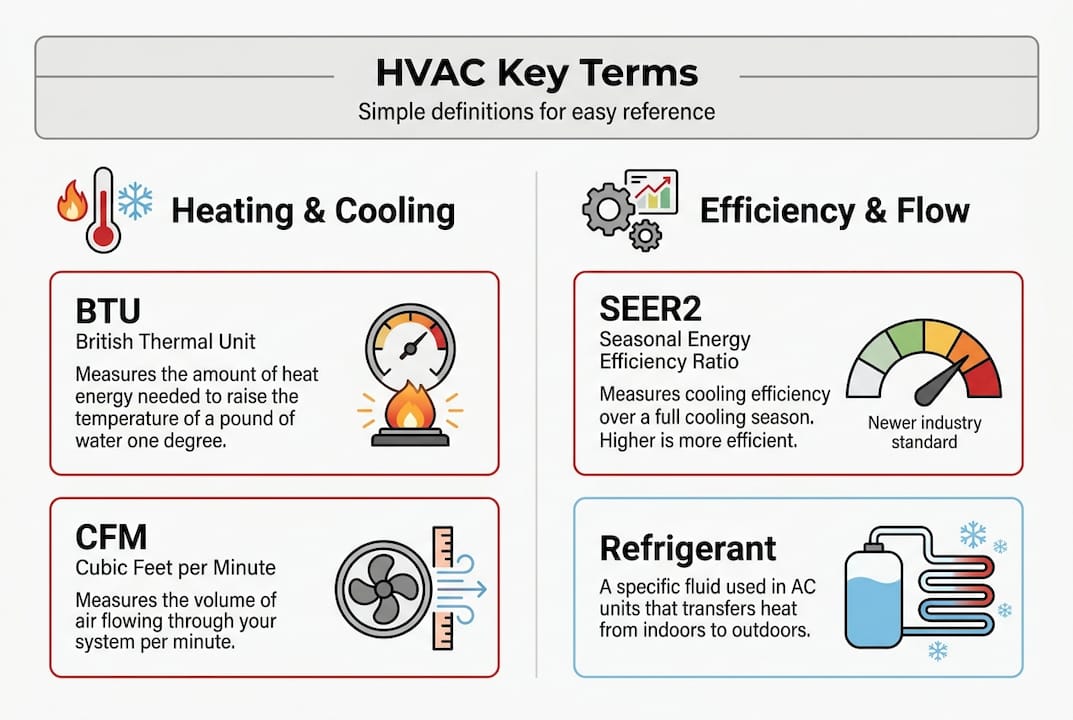
The BTU (British Thermal Unit) measures heat energy; one tonne of cooling equals 12,000 BTU/h. This measurement determines whether your furnace produces enough warmth for February cold snaps or your air conditioner handles July humidity. A 2,000 square foot home typically needs 60,000 BTU heating capacity and 36,000 BTU cooling capacity, though factors like insulation quality and window placement significantly affect these numbers.
Airflow measurement matters just as much as heating capacity. CFM quantifies how many cubic feet of air your system moves each minute, directly impacting ventilation effectiveness and temperature distribution. A furnace rated at 1,200 CFM circulates air throughout your home roughly twice per hour, preventing hot or cold spots while maintaining consistent comfort levels. Insufficient CFM leads to stuffy rooms, uneven temperatures, and poor humidity control.
These foundational terms affect every conversation you’ll have with HVAC contractors. When a technician recommends a specific furnace model or air conditioner size, they’re calculating BTU requirements based on your home’s square footage, insulation levels, and climate zone. Understanding these measurements helps you evaluate whether quotes make sense for your property rather than simply accepting recommendations without context.
Pro Tip: Understanding BTU and CFM helps avoid oversising or undersising systems, improving comfort and controlling costs. An oversised unit cycles on and off too frequently, wasting energy and failing to remove humidity properly, while an undersised system runs constantly without achieving target temperatures.
Understanding refrigerants and airflow in your HVAC system
Refrigerants form the foundation of how air conditioners and heat pumps transfer heat, yet most homeowners never think about these chemicals until a technician mentions them during a service call. Refrigerant is chemical transferring heat in AC and heat pumps; R-22 was phased out, with newer low-GWP options like R-410A and R-32 replacing it. These substances absorb heat from indoor air during cooling mode, carry it outside, then release it into the atmosphere through the condenser unit.
Environmental regulations transformed the refrigerant industry over the past two decades. R-22, commonly called Freon, contributed to ozone layer depletion and became illegal for new equipment after 2010, with complete phase-out finishing in 2020. Modern refrigerants like R-410A operate at higher pressures and deliver better efficiency without damaging the ozone layer. R-32 represents the newest generation, offering even lower global warming potential while maintaining excellent heat transfer properties.
Your system’s refrigerant type affects service costs and replacement decisions. Older units still running R-22 face expensive repairs because refrigerant supplies dwindled as production stopped, driving prices up dramatically. A refrigerant recharge that cost $200 in 2015 now runs $800 or more, often making replacement more economical than repair for aging systems. Knowing your refrigerant type helps you make informed choices when contractors present repair versus replacement options.
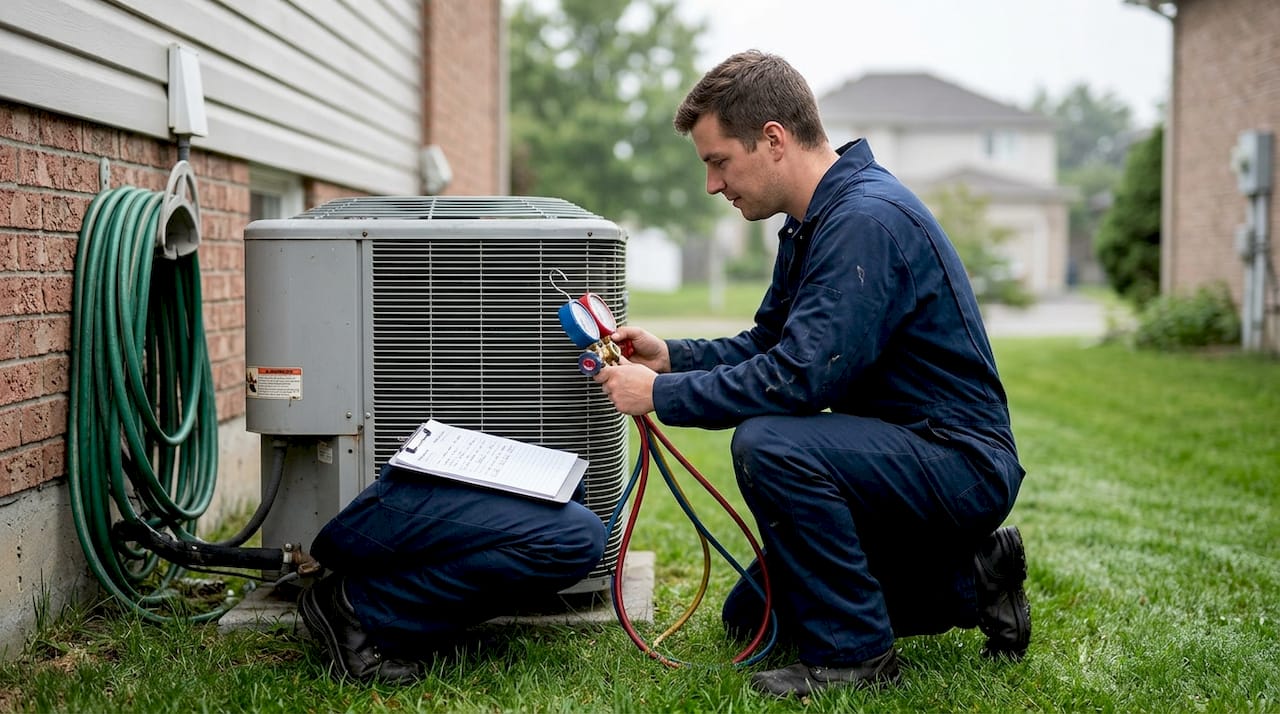
CFM (Cubic Feet per Minute) measures airflow volume; critical for system performance. Proper airflow ensures your HVAC system distributes conditioned air evenly throughout your home while maintaining efficiency. Restricted airflow from dirty filters, blocked vents, or ductwork problems forces your system to work harder, increasing energy consumption and shortening equipment lifespan. Most residential systems require 400 CFM per tonne of cooling capacity to function optimally.
Monitoring these factors helps maintain system health:
- Check air filter monthly and replace when visibly dirty or every 90 days minimum
- Keep supply and return vents clear of furniture, curtains, and debris
- Listen for unusual sounds indicating airflow restrictions or refrigerant issues
- Schedule annual professional maintenance to verify refrigerant charge and airflow rates
- Note any rooms with temperature differences suggesting distribution problems
Understanding the role of HVAC in home comfort means recognising how refrigerants and airflow work together. Adequate refrigerant charge means nothing if blocked ducts prevent proper air circulation, just as perfect airflow can’t compensate for low refrigerant levels causing inadequate cooling. Both elements must function correctly for your system to deliver the comfort and efficiency you expect.
Comparing HVAC system types and efficiency considerations
Durham Region homeowners face important decisions when selecting HVAC equipment, with system type significantly impacting both installation costs and long-term operating expenses. Split systems (furnace plus AC) versus heat pumps show distinct trade-offs: split systems cost less to install but carry higher operating costs in mild climates, while heat pumps deliver 2-3x efficient heating. Understanding these differences helps you choose equipment matching your budget, comfort priorities, and home characteristics.
Split systems separate heating and cooling functions into distinct components. A gas furnace handles winter heating while a standalone air conditioner manages summer cooling, with both sharing the same ductwork and blower system. This traditional configuration costs less upfront because you’re essentially buying two simpler machines rather than one sophisticated unit. However, the furnace burns natural gas or propane to generate heat, which becomes expensive during extended cold periods despite recent efficiency improvements.
Heat pumps revolutionise home comfort by moving heat rather than generating it through combustion. During winter, these systems extract heat from outdoor air (even in freezing temperatures) and transfer it indoors, then reverse the process for summer cooling. This heat transfer method uses significantly less energy than burning fuel, delivering substantial savings in regions with moderate winters. The technology works efficiently down to approximately -15°C, below which supplemental heating may activate.
| System type | Installation cost | Efficiency rating | Annual operating cost |
|---|---|---|---|
| Split system (16 SEER2) | $5,500 – $8,500 | 16 SEER2 cooling, 95% AFUE heating | $900 – $1,440 |
| Heat pump (16 SEER2) | $7,000 – $12,000 | 16 SEER2 cooling, 9-10 HSPF heating | $720 – $1,080 |
| Geothermal heat pump | $18,000 – $30,000 | 25+ EER, 4.0+ COP | $375 – $600 |
Benchmark efficiency shows 16 SEER2 saves approximately 12% versus 14 minimum; annual operating cost for split AC runs $900-1440 versus geothermal at $375-600. These figures assume average Durham Region electricity and natural gas rates, with actual costs varying based on home size, insulation quality, and thermostat settings. Higher efficiency ratings always cost more initially but recover the premium through reduced utility bills over the equipment’s 15-20 year lifespan.
SEER2 (Seasonal Energy Efficiency Ratio 2) replaced the older SEER standard in 2023, providing more accurate real-world efficiency measurements. Higher numbers indicate better efficiency, with current minimum standards requiring 14 SEER2 for new installations. Each two-point increase in SEER2 rating reduces cooling costs by roughly 10-12%, making premium efficiency models attractive for homes with high cooling demands or expensive electricity rates.
Pro Tip: Getting a professional Manual J load calculation ensures correct system sizing, avoiding oversising issues like short cycling that hurt efficiency and comfort. This detailed analysis accounts for your home’s square footage, insulation levels, window orientation, occupancy patterns, and local climate data to determine precise heating and cooling requirements. Skipping this step and using rough estimates often results in equipment that’s 40-60% oversised, wasting thousands in unnecessary capacity while delivering poor humidity control and uneven temperatures.
Choosing an HVAC contractor who performs proper load calculations demonstrates their commitment to quality installations rather than simply selling the biggest system possible. Reputable contractors invest time in accurate sizing because they understand that correct equipment selection determines long-term customer satisfaction and system performance.
How to use HVAC terminology for better home comfort decisions
Applying your HVAC vocabulary knowledge transforms confusing contractor conversations into productive discussions about your home’s comfort needs. When reviewing equipment quotes or service recommendations, you can now interpret specifications like BTU capacity, SEER ratings, and refrigerant types to evaluate whether proposals match your requirements. This understanding prevents common pitfalls like accepting oversised equipment or outdated technology simply because you didn’t know better questions to ask.
Follow this decision-making checklist when evaluating HVAC options:
- Verify you understand every technical term in the proposal, asking for clarification on unfamiliar abbreviations or specifications
- Request a professional Manual J load calculation to confirm recommended equipment size matches your home’s actual requirements
- Compare system types (split versus heat pump) based on your climate zone, budget, and efficiency priorities
- Evaluate energy efficiency ratings (SEER2, AFUE, HSPF) against current minimums and potential utility savings
- Plan for regular maintenance schedules to protect your investment and maintain peak performance
Variable-speed compressors represent advanced technology worth understanding when comparing equipment options. Expert analysis shows variable-speed compressors improve efficiency and humidity control but cost more initially; proper Manual J load calculations remain essential to avoid oversising causing short-cycling problems. These compressors adjust output incrementally rather than simply running at full capacity or shutting off completely, matching cooling delivery precisely to current demand. This modulation saves energy while removing more humidity and reducing temperature fluctuations.
The efficiency benefits become particularly noticeable during shoulder seasons when cooling demands fluctuate throughout the day. A single-stage compressor runs at 100% capacity regardless of whether your home needs full cooling or just slight temperature adjustment, cycling on and off frequently. Variable-speed technology runs continuously at lower speeds, consuming less electricity while maintaining more consistent comfort. The premium typically adds $800-1,500 to equipment costs but recovers through reduced utility bills within 5-7 years.
Proactive HVAC maintenance protects your investment while ensuring reliable performance. Durham Region’s temperature extremes stress heating and cooling equipment heavily, making regular service essential for longevity. Annual professional inspections catch small issues before they become expensive failures, verify refrigerant charge remains correct, and optimise airflow for peak efficiency.
Watch for these common HVAC problems in Durham homes:
- Unusual sounds like grinding, squealing, or banging indicating mechanical problems
- Weak airflow from vents suggesting ductwork leaks or blower issues
- Frequent cycling on and off pointing to oversising or thermostat problems
- Rising energy bills without usage changes revealing efficiency losses
- Uneven temperatures between rooms showing distribution or sizing issues
Recognising these warning signs early prevents minor maintenance needs from escalating into major repairs or premature equipment replacement. Your HVAC terminology knowledge helps you describe symptoms accurately when calling for service, enabling technicians to diagnose problems more efficiently and arrive prepared with appropriate tools and parts.
Services to support your heating and cooling needs
Putting your HVAC knowledge into action becomes easier with experienced professionals who prioritise education and transparency. Red Seal Mechanical Services brings over a decade of expertise to Durham Region homeowners, specialising in AC installation tailored to your home’s specific requirements rather than one-size-fits-all solutions. Their team performs detailed load calculations and explains equipment options in plain language, ensuring you understand exactly what you’re getting and why it makes sense for your situation.
Professional maintenance and repair services keep your heating and cooling systems running efficiently year after year. Following the comprehensive furnace installation process with proper setup and commissioning establishes a solid foundation, while regular furnace maintenance services protect that investment through seasonal tune-ups and prompt repairs when issues arise. This proactive approach prevents emergency breakdowns during extreme weather when you need your system most.
Contact Red Seal Mechanical for consultation and service that applies your HVAC terminology knowledge toward lasting home comfort and efficiency.
Frequently asked questions
What does HVAC stand for?
HVAC stands for Heating, Ventilation, and Air Conditioning, covering all indoor climate control systems in your home. It regulates temperature, humidity, and air quality through integrated equipment working together rather than separate components. Understanding this acronym helps you recognise that heating and cooling systems share components like ductwork and thermostats, making coordinated maintenance and upgrades more cost-effective.
How do BTUs affect HVAC sizing?
BTU measures the heat energy an HVAC system can add or remove per hour, directly determining whether equipment matches your home’s heating and cooling requirements. Correct BTU sizing ensures efficient comfort and avoids issues like oversising causing short cycling or undersising leaving rooms too hot or cold. Professional load calculations account for your home’s square footage, insulation, windows, and climate to specify precise BTU requirements rather than using inaccurate rules of thumb.
What is a refrigerant and why does it matter?
Refrigerants are chemicals that move heat during cooling and heating cycles by absorbing thermal energy indoors and releasing it outdoors. Newer refrigerants reduce environmental impact unlike phased-out types such as R-22, which damaged the ozone layer and now costs significantly more for repairs. Knowing your system’s refrigerant type helps you make informed repair versus replacement decisions, especially for older units using expensive discontinued refrigerants.
How does a heat pump differ from a split system?
Heat pumps both heat and cool by transferring heat rather than generating it through combustion, making them more energy efficient in mild climates with 2-3x better heating performance. Split systems have separate heating and cooling components (furnace plus air conditioner) and generally cost less to install but carry higher operating expenses. Your choice depends on climate severity, installation budget, and long-term energy cost priorities, with heat pumps offering superior efficiency in regions without extreme winter temperatures.
