


TL;DR:
- Upgrading HVAC systems improves efficiency, comfort, and reduces monthly energy costs.
- Replacing systems over $5,000 repair cost or after 10-12 years is financially wise.
- Homeowner incentives and rebates for modern systems can significantly lower upgrade expenses.
Many Durham Region homeowners assume their furnace or air conditioner is “good enough” until it stops working entirely. That thinking quietly costs you money every single month. After 10 to 12 years, most HVAC systems begin losing efficiency and driving up your energy bills, even when they still technically run. Upgrading your system is not just about avoiding a breakdown. It is about taking control of your home’s comfort, your monthly costs, and your peace of mind through every season Durham Region throws at you. This guide walks you through the real reasons to upgrade, when to act, and how to make the most of available rebates.
Table of Contents
- Why upgrade your HVAC system: Cost, comfort, and control
- When is it time to upgrade? Age, repairs, and the $5,000 rule
- Efficiency matters: How modern HVAC systems cut energy waste
- Unlocking rebates and incentives in Durham Region
- The truth about HVAC upgrades: What most homeowners miss
- Ready to upgrade? Connect with Durham’s HVAC experts
- Frequently asked questions
Key Takeaways
| Point | Details |
|---|---|
| Aging systems cost more | Old HVAC units lose efficiency and drive up your energy bills and repair costs. |
| Modern upgrades boost comfort | Today’s systems offer advanced features like zoning and smart controls for tailored comfort. |
| Know the right upgrade time | Use the system’s age and the $5,000 rule to decide between repair and replacement. |
| Rebates make upgrades affordable | Generous Durham Region rebates can cover up to $10,000 of your HVAC upgrade. |
| Acting early saves more | Don’t wait for a breakdown—upgrading sooner prevents hidden costs and missed savings. |
Why upgrade your HVAC system: Cost, comfort, and control
Many Durham homeowners are surprised by how much they can gain through upgrading, so let’s look closer at the main drivers.
An aging HVAC system is a bit like driving a car with a slow leak in the tyre. It keeps moving, but you are constantly paying for the inefficiency. Systems lose efficiency after 10 to 12 years, and that translates directly into higher hydro and gas bills. You may not notice the creep month to month, but the annual difference can be hundreds of dollars.
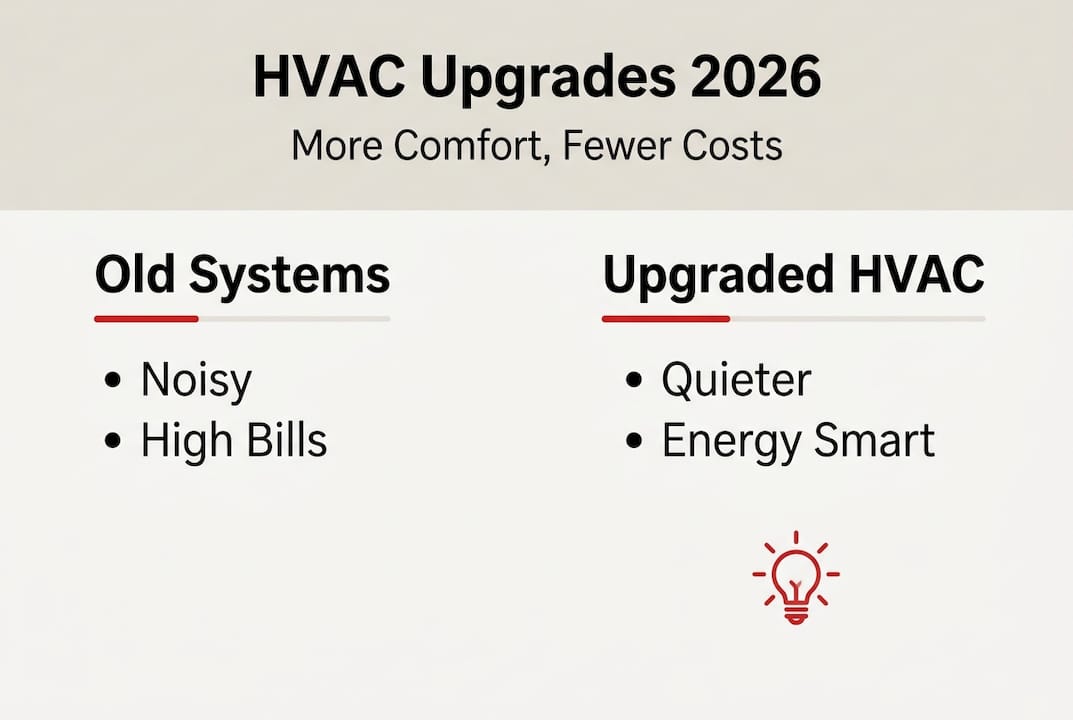
Modern systems are built differently. Variable-speed motors adjust output based on what your home actually needs, rather than blasting at full power and shutting off. Smart zoning and thermostats let you set different temperatures for different rooms, so the bedroom stays cool while the living room stays warm. You can control it all from your phone.
For Durham Region specifically, this matters. Our winters are cold, our summers are humid, and a system that cannot adapt to those swings leaves you uncomfortable and overpaying. Investing in improving HVAC energy efficiency is one of the most practical home improvements you can make here.
Key benefits of upgrading your HVAC system:
- Lower monthly energy bills through higher efficiency ratings
- Consistent temperatures throughout your home, room to room
- Quieter operation with variable-speed technology
- Remote monitoring and scheduling via smart thermostat apps
- Fewer emergency repair calls and unexpected costs
| Feature | Older system | Modern system |
|---|---|---|
| Efficiency rating | AFUE 60 to 80% | AFUE 95 to 98% |
| Temperature control | Single zone | Multi-zone capable |
| Motor type | Single-speed | Variable-speed |
| Smart controls | None | App and voice compatible |
| Average repair frequency | High after year 10 | Low for first 10 years |
The comfort gains from HVAC comfort upgrades are not just about temperature. Humidity control, air quality, and quieter operation all improve your day-to-day living experience in ways you notice immediately.
When is it time to upgrade? Age, repairs, and the $5,000 rule
Knowing why upgrades are valuable is one thing, but when is the right time to act?
The most practical tool for this decision is the $5,000 rule. Multiply your system’s age by the repair cost. If the result is over $5,000, replacement is almost always the smarter financial choice. For example, a 12-year-old furnace facing a $500 repair scores 6,000. That is a clear signal to replace, not patch.
System lifespan benchmarks to keep in mind:
- Furnaces typically last 15 to 20 years with proper maintenance
- Central air conditioners average 10 to 15 years before efficiency drops significantly
- Heat pumps generally last 10 to 15 years depending on usage and climate
- Hot water tanks connected to your HVAC system average 8 to 12 years
- Ductwork can last 20 to 25 years but may need sealing or replacement sooner
| System type | Average lifespan | Replace when… |
|---|---|---|
| Furnace | 15 to 20 years | Repairs exceed $5,000 rule |
| Central AC | 10 to 15 years | SEER rating below 13 |
| Heat pump | 10 to 15 years | Frequent refrigerant issues |
| Ductwork | 20 to 25 years | Visible leaks or poor airflow |
Pro Tip: Keep a simple log of every repair call and its cost. After two or three visits in a single season, add them up and apply the $5,000 rule. You will have a clear, unemotional answer about whether to repair or replace.
Common warning signs that it is time to stop repairing and start planning an upgrade include uneven heating or cooling between rooms, strange noises like banging or rattling, a sudden spike in your energy bill, or a system that runs constantly without reaching the set temperature. You can review signs you need HVAC repair to help identify where your system stands right now.
“The cost of waiting is rarely zero. Every month an inefficient system runs, it is spending money you could have saved with a replacement.”
Understanding furnace maintenance benefits can also extend the life of a system that is not quite at replacement age, buying you time to plan and budget properly.
Efficiency matters: How modern HVAC systems cut energy waste
With the decision to upgrade comes the question: what do you actually get with a new system?
The short answer is a lot. Modern furnaces operate at 95 to 98% AFUE (Annual Fuel Utilisation Efficiency), meaning nearly all the fuel you pay for becomes heat in your home. Older systems often sit at 60 to 80% AFUE. That gap is significant over a full heating season in Durham Region.
Heat pumps are becoming increasingly popular here for good reason. Heat pumps suit Ontario’s variable climate, with payback periods often falling in the 5 to 7 year range when you factor in available rebates. They move heat rather than generate it, making them dramatically more efficient than traditional furnaces in moderate temperatures.
What makes new systems genuinely more efficient:
- ECM (electronically commutated motor) technology reduces electricity use by up to 75% compared to older motors
- Two-stage and variable-speed compressors match output to actual demand
- Modern refrigerants like R-410A and R-32 are more efficient and environmentally responsible
- Sealed combustion systems reduce heat loss through the flue
- Integrated humidity control reduces the “feels like” temperature, lowering demand on the system
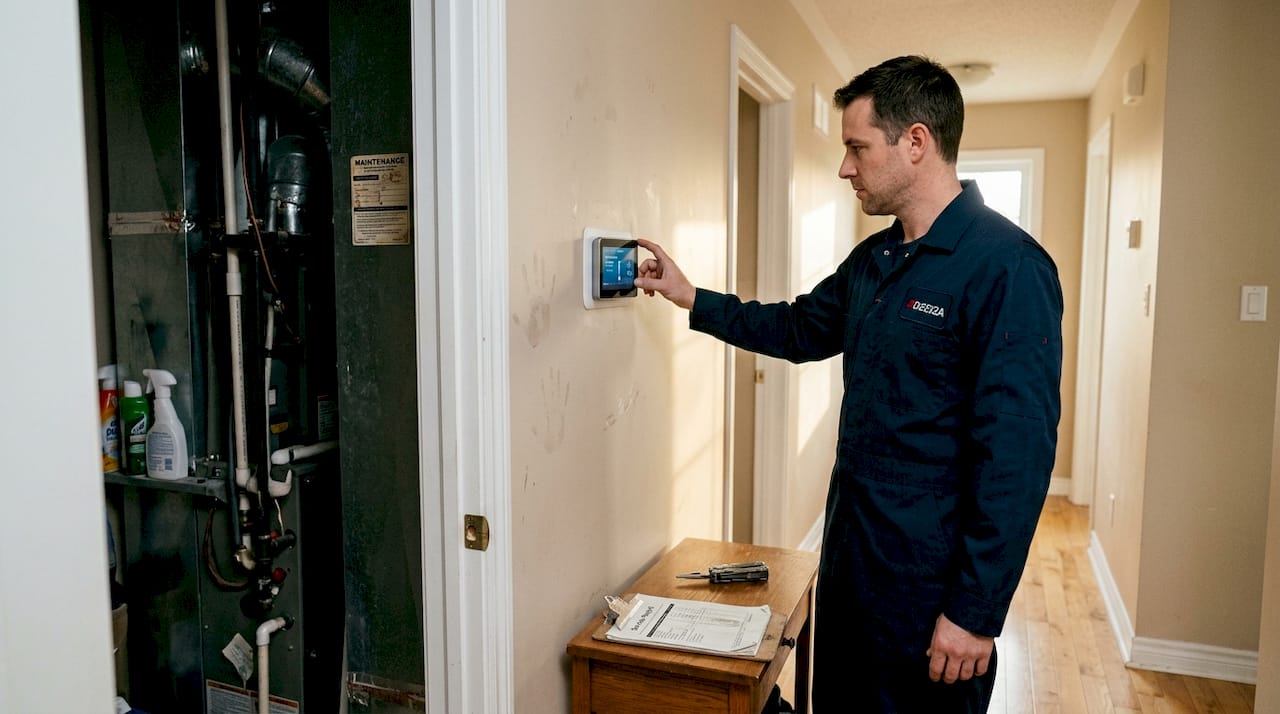
Variable-speed and zoning features are the real game changers for comfort. Instead of your system cycling on at full blast and then shutting off, it runs steadily at lower capacity. The result is fewer temperature swings, better humidity control, and noticeably quieter operation.
Pro Tip: If you are upgrading to a heat pump, ask your installer about cold-climate models rated for operation down to minus 25 degrees Celsius. These are specifically designed for Ontario winters and maintain efficiency even on our coldest days.
Understanding Ontario HVAC basics helps you ask the right questions when comparing equipment options. The role HVAC plays in home comfort goes well beyond temperature, touching air quality, humidity, and overall wellness in your living space.
Unlocking rebates and incentives in Durham Region
Upgrades become much more attractive when you realise how much support may be available.
Durham Region homeowners stand to benefit from some of the most generous HVAC incentives available in Canada right now. Rebates of $6,500 to $10,000 or more are available for eligible heat pump upgrades when you stack federal and provincial programmes together. That is a substantial reduction on a system that will serve your home for 15 years or more.
Main programmes available in 2026:
- Canada Greener Homes Grant: Federal funding for eligible heat pumps and insulation upgrades
- Ontario Enbridge Gas rebates: Available for high-efficiency furnaces and smart thermostats
- Canada Oil to Heat Pump Affordability (COHA) programme: Additional support for households switching from oil heating
- Hydro One and local utility rebates: Vary by municipality but can add several hundred dollars more
| Programme | Potential rebate | Equipment requirement |
|---|---|---|
| Canada Greener Homes | Up to $5,000 | ENERGY STAR certified |
| Enbridge Gas rebate | Up to $1,000 | AFUE 95%+ furnace |
| COHA programme | Up to $10,000 | Cold-climate heat pump |
| Local utility rebate | $100 to $500 | Varies by provider |
Eligibility is not automatic. Ontario rebates require licensed installers and equipment that meets specific performance thresholds, including HSPF2 ratings of 8.1 or higher and SEER2 ratings of 15.2 or higher for heat pumps. Working with a certified contractor is not just recommended. It is required to qualify.
You can learn more about what qualifies in Durham Region incentives and confirm your installer meets rebate requirements before any work begins. Stacking programmes takes a bit of planning, but the savings are well worth the effort.
The truth about HVAC upgrades: What most homeowners miss
Even with generous rebates available, hesitation is natural. Here is what years in the industry reveal.
The homeowners who wait the longest for an upgrade almost always say the same thing afterward: “I wish I had done this sooner.” The pattern is consistent. A system limps along for two or three years past its prime, racking up repair bills, driving up energy costs, and delivering uneven comfort. Then it fails at the worst possible time, usually during a January cold snap or an August heat wave, forcing a rushed decision with no time to compare options or apply for rebates.
What most people miss is the cumulative cost of delay. It is not one big number. It is $80 extra per month on your gas bill, a $400 repair in spring, another $600 in autumn, and two winters of sleeping in a house that never quite reaches the right temperature. Those losses add up quietly.
Our experience also shows that the best upgrades go beyond just swapping the furnace or AC. Pairing upgrades with insulation and ductwork amplifies your savings considerably. A new high-efficiency furnace pushing heated air through leaky ducts is still an inefficient system. Thinking about the full picture delivers the best long-term value and the most noticeable improvement in comfort.
Ready to upgrade? Connect with Durham’s HVAC experts
If upgrading your HVAC now sounds like a smart move, here is where to get answers and help.
At Red Seal Mechanical Services, we have been helping Durham Region homeowners make confident HVAC decisions since 2012. Our team knows the local climate, the available rebate programmes, and the equipment that performs best in our region. Whether you are comparing furnace options or exploring heat pump installations, we can guide you through the full process. Review our guide to the HVAC installation process to understand what to expect, or brush up on HVAC terms explained so you can ask the right questions. When you are ready to take the next step, speak with a Durham specialist on our team and get a quote tailored to your home.
Frequently asked questions
How long does an HVAC system usually last?
Most HVAC systems last 10 to 20 years before efficiency and reliability begin to decline noticeably. Regular maintenance can extend that range, but performance will gradually drop regardless.
Why is upgrading an old HVAC system worth the cost?
Upgrades reduce energy bills, improve comfort, and limit repair calls, with payback periods often in the 5 to 12 year range. The savings compound over time, making early action more financially rewarding.
What rebates are available for HVAC upgrades in Durham Region?
Durham homeowners may qualify for heat pump rebates up to $10,000 by stacking federal and provincial programmes together in 2026. Eligibility depends on equipment type and installer certification.
Do I need a licensed contractor for rebates on new HVAC systems?
Yes. Rebate eligibility requires licensed installers and certified equipment models meeting specific efficiency thresholds. Hiring an uncertified contractor will disqualify your application.
How do variable-speed and zoning features improve home comfort?
Zoning and variable-speed technology fine-tune heating and cooling to match each area of your home, eliminating hot and cold spots while reducing energy use in unoccupied rooms.
