


Your furnace stops working on the coldest night of January, or your air conditioner fails during a July heatwave. These scenarios happen to Durham Region homeowners who skip seasonal HVAC maintenance. A simple checklist prevents unexpected breakdowns, cuts energy costs by up to 15%, and extends your system’s lifespan. This guide walks you through practical maintenance steps you can perform each season, plus when to call professionals for tune-ups that keep your heating and cooling running smoothly all year.
Table of Contents
- Understanding Your HVAC System And Seasonal Challenges
- Preparing For Seasonal Maintenance: Essential Tools And Safety Checks
- Step-By-Step HVAC Seasonal Maintenance Checklist For Spring And Fall
- Verifying Results And Troubleshooting Common HVAC Issues
- Trusted HVAC Services For Durham Homeowners
- How Often Should I Schedule HVAC Maintenance In Durham?
- What Air Filter Should I Use For My HVAC System?
- How Can I Protect My Outdoor AC Unit From Pet Damage?
- When Should I Replace My HVAC System Instead Of Maintaining It?
Key takeaways
| Point | Details |
|---|---|
| Coil cleaning boosts efficiency | Regular coil cleaning and airflow checks improve AC efficiency by up to 30%, reducing energy bills. |
| Seasonal tune-ups extend lifespan | Professional inspections in spring and fall catch problems early and optimise system performance. |
| Filter replacement prevents strain | Changing air filters every 1-3 months maintains airflow and indoor air quality while preventing system overwork. |
| Protect outdoor units | Clearing debris and installing pet barriers around outdoor units prevents costly coil corrosion and mechanical damage. |
| Duct sealing saves energy | Checking and sealing ductwork reduces energy loss by up to 20%, lowering monthly utility costs. |
Understanding your HVAC system and seasonal challenges
Your HVAC system includes several key components working together. The furnace heats air during winter months, while the air conditioner cools your home in summer. Ductwork distributes conditioned air throughout your house, and filters trap dust and allergens before air enters your living spaces. Each component requires specific attention during different seasons.
Durham Region’s climate creates unique maintenance demands. Harsh winters stress furnaces with continuous operation, while humid summers push air conditioners to their limits. Spring brings pollen and debris that clog outdoor units, and autumn leaves can block airflow around condensers. These seasonal changes mean your system faces different challenges throughout the year.
Common issues plague Durham homeowners who neglect regular upkeep. Blocked airflow from overgrown shrubbery or accumulated debris forces systems to work harder, consuming more energy. Pet damage presents another serious problem, as pet urine can corrode AC coils, leading to refrigerant leaks and irreparable damage. A small decorative fence prevents this costly issue.
Understanding these factors helps you prioritise maintenance tasks effectively. You can address seasonal threats before they damage equipment or spike your energy bills. Regular inspections catch minor problems like loose wiring or dirty coils before they escalate into expensive repairs.
Pro Tip: Regularly inspect the clearance zone around your outdoor unit, keeping at least 60 centimetres of space clear on all sides to ensure proper airflow and system efficiency.
Familiarising yourself with homeowner HVAC maintenance tips gives you confidence to tackle basic tasks while recognising when professional help becomes necessary. This knowledge foundation prepares you for the hands-on maintenance steps ahead.
Preparing for seasonal maintenance: essential tools and safety checks
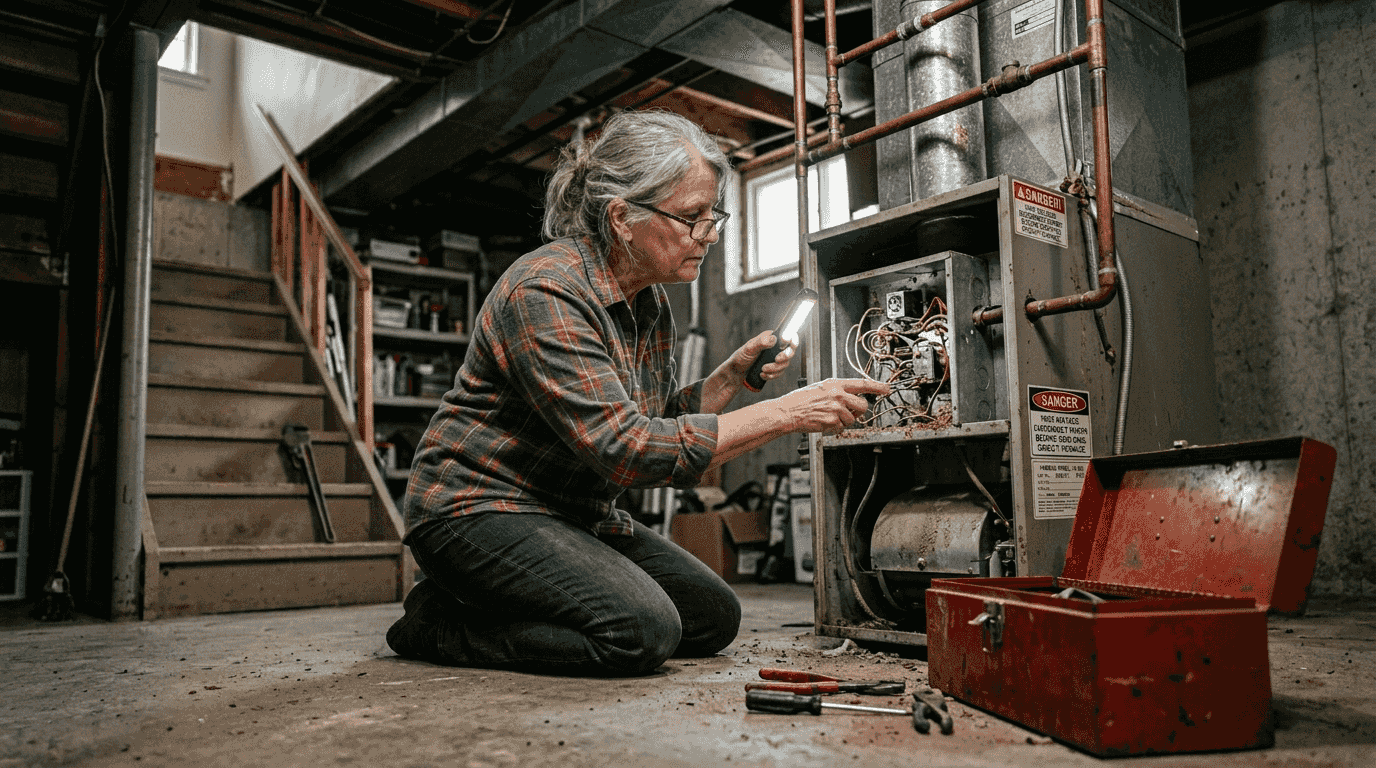
Gathering the right tools before starting makes maintenance efficient and thorough. You need replacement air filters sized for your system, coil cleaner spray, a vacuum with attachments, screwdrivers (both flathead and Phillips), work gloves, and a multimeter for electrical checks. Keep a flashlight handy for inspecting dark spaces around your furnace and ductwork.
Safety must come first when working with HVAC equipment. Always turn off power to your system at both the thermostat and the circuit breaker before performing any maintenance. Wear protective gloves and safety glasses when cleaning coils or handling filters. Never work on electrical components in wet conditions or with damp hands, as moisture creates serious shock hazards.
When inspecting the control box and electrical components, look for signs of corrosion or loose wiring, which can be a fire hazard. If you spot damaged wiring, frayed connections, or burnt components, stop immediately and call a certified technician. These issues require professional expertise to repair safely.
Choosing the right air filter impacts both air quality and system performance. Here’s a comparison of common filter types for Durham homes:
| Filter Type | MERV Rating | Replacement Frequency | Best For |
|---|---|---|---|
| Fibreglass | 1-4 | Monthly | Basic dust protection, budget-conscious homes |
| Pleated | 8-11 | Every 3 months | Balanced filtration and airflow, most homes |
| Electrostatic | 8-12 | Every 3-6 months | Pet owners, allergy sufferers |
| HEPA | 13-16 | Every 6-12 months | Severe allergies, respiratory conditions |
Pro Tip: Schedule your spring tune-up in March or early April before the rush, when HVAC companies offer faster service and sometimes discounted rates for early bookings.
Understanding HVAC tune-up energy savings helps you appreciate why professional inspections complement your DIY efforts. Proper preparation sets you up for successful maintenance that protects your investment and keeps your family comfortable.
Step-by-step HVAC seasonal maintenance checklist for spring and fall
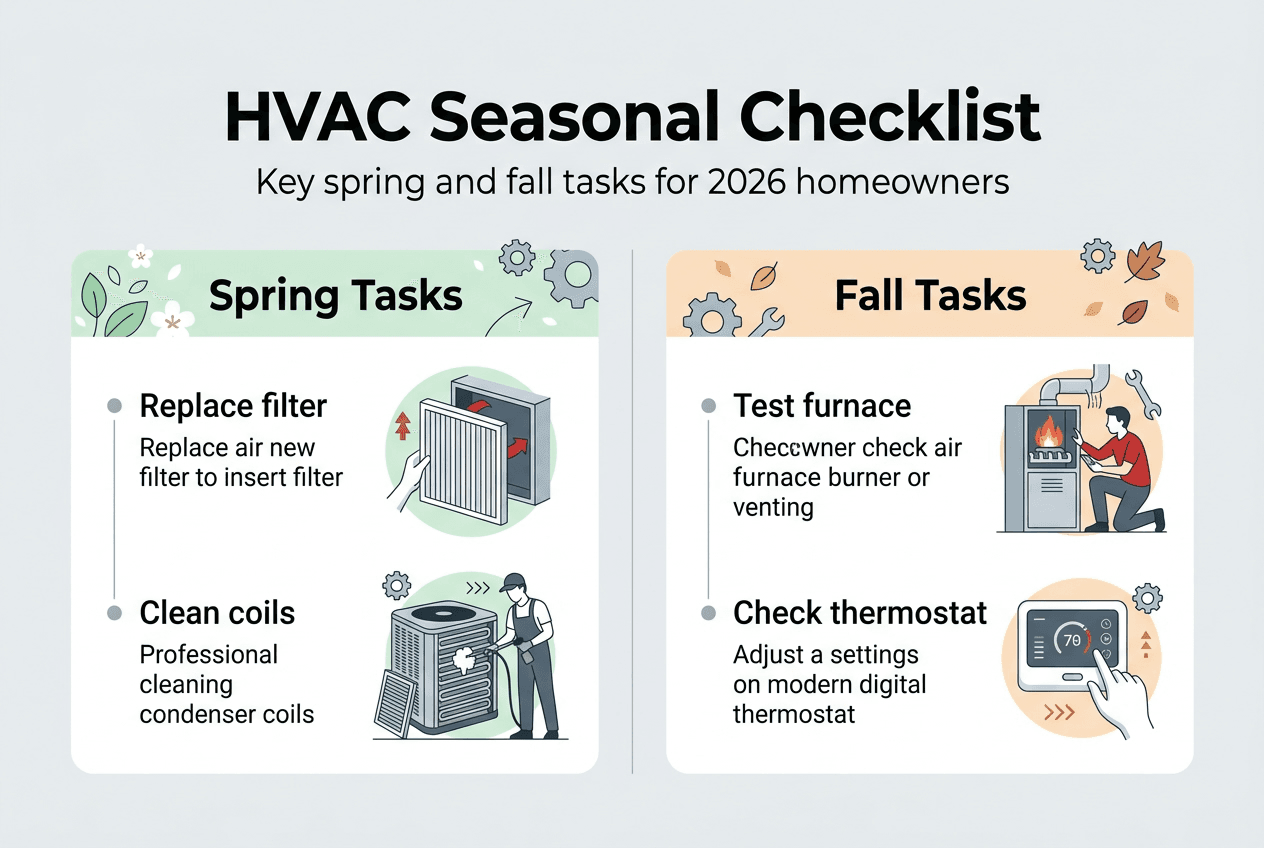
Follow these numbered steps each spring and fall to maintain peak system performance:
- Replace or clean air filters, checking manufacturer recommendations for your specific system type and household needs.
- Inspect and clean evaporator and condenser coils using approved coil cleaner, removing dust and debris that reduce efficiency.
- Clear outdoor unit surroundings, removing leaves, grass clippings, and debris within a 60-centimetre radius.
- Check refrigerant levels by observing frost patterns on lines and listening for hissing sounds that indicate leaks.
- Examine ductwork for gaps or disconnections, sealing joints with mastic or metal tape to prevent air loss.
- Test thermostat accuracy by comparing displayed temperature with a separate thermometer placed nearby.
- Inspect electrical connections for tightness and signs of wear, ensuring all components receive proper voltage.
- Lubricate moving parts like blower motors and fan bearings according to manufacturer specifications.
- Clean condensate drain lines using a wet/dry vacuum to prevent clogs that cause water damage.
- Verify proper airflow by checking vents throughout your home for consistent output.
Regular AC maintenance, including coil cleaning and airflow checks, can significantly improve energy efficiency, with studies showing dirty coils reduce efficiency by up to 30%. This dramatic impact on performance makes coil cleaning one of your most valuable maintenance tasks.
Homeowners often make preventable mistakes that undermine their maintenance efforts:
- Neglecting monthly filter checks during peak heating or cooling seasons
- Using incorrect filter sizes that allow air to bypass filtration
- Ignoring outdoor unit maintenance until vegetation completely blocks airflow
- Attempting refrigerant recharging without proper certification and equipment
- Skipping professional tune-ups to save money, only to face expensive emergency repairs
Comparing DIY maintenance with professional services helps you allocate your time and budget effectively:
| Maintenance Aspect | DIY Approach | Professional Tune-Up |
|---|---|---|
| Cost | $50-100 annually for supplies | $150-300 per visit |
| Time Required | 2-4 hours per season | 1-2 hours (technician handles work) |
| Tasks Covered | Filter changes, basic cleaning, visual inspections | Comprehensive system analysis, refrigerant check, electrical testing |
| Equipment Needed | Basic tools, cleaning supplies | Specialised diagnostic tools, gauges, leak detectors |
| Warranty Protection | May void warranty if done incorrectly | Maintains warranty compliance |
Pro Tip: Use MERV 8-11 rated filters for the best balance of particle filtration and airflow, as higher ratings can restrict airflow in systems not designed for them.
Shifting from reactive repairs to proactive seasonal care prevents costly breakdowns and extends equipment lifespan by years, saving thousands of pounds in premature replacement costs.
Protecting your outdoor unit from pet damage requires simple preventive measures. Installing a small decorative fence creates a barrier that keeps animals away while maintaining proper airflow around the condenser. This inexpensive solution prevents pet urine from corroding AC coils, which leads to refrigerant leaks and irreparable damage.
Understanding why tune-up air conditioners matters helps you commit to this seasonal routine. Regular AC maintenance services catch problems before they escalate, ensuring reliable comfort when you need it most. The importance of HVAC maintenance extends beyond comfort to safety, efficiency, and long-term cost savings.
Verifying results and troubleshooting common HVAC issues
Monitoring your system after maintenance confirms your efforts achieved the desired results. Watch for these signs of effective upkeep:
- Steady month-to-month energy consumption without unexpected spikes
- Consistent airflow from all vents throughout your home
- Quiet operation without rattling, grinding, or squealing noises
- Absence of unusual odours like burning, mustiness, or chemical smells
- Even temperature distribution across all rooms
- Quick system response when adjusting thermostat settings
Common issues may persist despite your maintenance efforts, signalling deeper problems. Clogged evaporator coils cause ice buildup on refrigerant lines and reduced cooling capacity. Refrigerant leaks manifest as hissing sounds, oily residue around connections, or ice formation on outdoor lines. Noisy fans indicate worn bearings or loose mounting hardware that requires immediate attention. Thermostat errors create temperature inconsistencies and cycling problems that waste energy.
Preventive maintenance catches problems before they become major issues, saving homeowners money and ensuring system reliability throughout the year. This proactive approach identifies worn components during routine inspections, allowing scheduled replacements instead of emergency repairs.
Pro Tip: Programme your smart thermostat with setback temperatures during sleeping hours and away periods, reducing energy consumption by 10-15% without sacrificing comfort when you’re home.
Knowing when to call professionals prevents minor issues from escalating into major failures. Contact a certified technician if you notice refrigerant leaks, electrical problems, persistent strange noises, or complete system failures. Attempting complex repairs without proper training and tools often causes additional damage and voids manufacturer warranties.
Regular HVAC maintenance can reduce energy bills by up to 15% through improved efficiency and optimised operation. This significant saving accumulates over months and years, offsetting maintenance costs while delivering superior comfort. Tracking your energy usage helps you spot efficiency declines that indicate needed repairs or adjustments.
Understanding professional HVAC repair benefits helps you make informed decisions about when DIY maintenance suffices and when expert intervention becomes necessary. Certified technicians bring diagnostic equipment, specialised knowledge, and warranty-protected repairs that protect your investment.
Trusted HVAC services for Durham homeowners
Red Seal Mechanical Services has served Durham Region families since 2012, providing expert furnace and air conditioning care that complements your seasonal maintenance efforts. Our certified technicians understand local climate challenges and tailor maintenance packages to protect your system year-round. We catch potential problems during comprehensive inspections, preventing breakdowns before they disrupt your comfort or drain your budget.
Scheduling professional tune-ups alongside your DIY maintenance creates a complete care programme. Our spring and fall service appointments verify refrigerant levels, test electrical components, and optimise system settings beyond typical homeowner capabilities. This partnership approach maximises equipment lifespan while maintaining peak efficiency that keeps energy costs low.
Explore our furnace maintenance and services for heating system care, or review our AC maintenance services for cooling season preparation. Our HVAC tune-up services deliver measurable energy savings and reliable performance throughout 2026.
How often should I schedule HVAC maintenance in Durham?
Homeowners in the Durham Region should prioritise professional HVAC inspections at least twice yearly, scheduling one visit in spring before cooling season and another in fall before heating season begins. This timing allows technicians to prepare each system component before peak demand periods. Additional inspections may benefit homes with pets, allergies, or older equipment.
What air filter should I use for my HVAC system?
Use MERV 8-11 rated filters for the best balance of filtration and airflow in most residential systems. These filters capture common allergens, dust, and pet dander without restricting airflow that forces your system to work harder. Higher MERV ratings suit homes with severe allergies but may require more frequent changes and professional assessment of system compatibility.
How can I protect my outdoor AC unit from pet damage?
Install a small decorative fence around your outdoor condenser, maintaining at least 60 centimetres of clearance on all sides for proper airflow. Pet urine can corrode AC coils, leading to refrigerant leaks and irreparable damage, making this simple barrier a worthwhile investment. Choose materials that complement your landscaping while providing effective protection from curious pets.
When should I replace my HVAC system instead of maintaining it?
Consider replacement when your system exceeds 15 years old, requires frequent repairs costing more than half the replacement price, or fails to maintain comfortable temperatures despite proper maintenance. Modern systems offer 20-30% better efficiency than models from the early 2010s, potentially offsetting replacement costs through energy savings. A professional assessment helps you weigh repair costs against long-term replacement benefits.
Recommended
- HVAC Safety Checklist 2026: 42% Fewer Breakdowns Proven
- HVAC tune-up in 2026 saves energy and costs in Durham
- Common HVAC problems in Durham region: 8 issues raising costs 30%
- 7 Signs Your HVAC Needs Repair Every Bowmanville Homeowner Should Know
- 7 Essential Steps for Your Spring Cleaning Checklist – Yarra Valley Carpet Cleaning
- 6 Examples of Drain Maintenance Every Homeowner Needs
