


Many Durham Region homeowners skip regular HVAC maintenance until something breaks. Yet 42% of HVAC breakdowns during heat waves could be avoided with simple maintenance. Neglecting routine checks creates efficiency drops and dangerous hazards like carbon monoxide leaks. This checklist balances DIY tasks with professional inspections to keep your heating and cooling systems safe, efficient, and ready for Ontario’s extreme seasons.
Table of Contents
- How To Choose HVAC Safety Tasks: Key Selection Criteria
- Essential Furnace Inspection And Gas Line Safety Checks
- Air Filter Replacement And Indoor Air Quality Improvement
- Ductwork Inspection And Leak Prevention
- Carbon Monoxide Detector Testing And Risk Reduction
- Outdoor Unit Cleaning And Clearance
- Thermostat Calibration And Smart Thermostat Benefits
- DIY Vs Professional HVAC Maintenance Tasks
- Summary Comparison: Simplifying Your HVAC Safety Checklist
- Situational Recommendations For Durham Region Homeowners
- Keep Your Durham Region Home Safe With Professional HVAC Services
- FAQ
Key Takeaways
| Point | Details |
|---|---|
| Annual furnace inspections | Professional checks prevent carbon monoxide risks and heating failures before winter. |
| Air filter replacement | Change filters every 1 to 3 months depending on pets, allergies, and home conditions. |
| Duct sealing benefits | Reduces heat loss up to 30% while improving comfort and lowering energy bills. |
| Monthly DIY tasks | Filter checks and outdoor unit cleaning complement scheduled professional maintenance. |
| Outdoor unit clearance | Maintain 2 feet minimum clearance to prevent overheating and mechanical damage. |
How to Choose HVAC Safety Tasks: Key Selection Criteria
Not all HVAC maintenance tasks carry equal weight. Prioritize safety hazards first. Carbon monoxide leaks and gas line issues can turn deadly fast, so tasks addressing these risks belong at the top of your list.
Ontario’s seasonal extremes demand climate-specific planning. Furnaces work overtime from November through March, while air conditioners face peak loads during July and August. Schedule inspections before these heavy-use periods to catch problems early.
Balance DIY capabilities with professional requirements. You can handle monthly filter changes and outdoor unit cleaning. Gas line inspections and heat exchanger checks require licensed technicians with specialized tools and training.
Energy efficiency gains often align with safety improvements. Sealing ductwork reduces fire hazards from overheating systems while cutting heating costs. Clean outdoor coils prevent refrigerant leaks and improve cooling performance.
Recognize high-risk areas needing expert eyes. Heat exchangers crack over time, releasing carbon monoxide without visible signs. Electrical connections loosen from vibration, creating fire risks. Professional technicians spot these hidden dangers during annual tune-ups.
Consider frequency based on system age and usage patterns. Newer systems may handle longer intervals between professional visits. Homes with pets or smokers need more frequent filter attention. Understanding heating and cooling basics for Ontario helps you match tasks to your specific situation.
Pro Tip: Create a seasonal calendar marking DIY monthly tasks and annual professional service dates to stay ahead of maintenance needs.
Essential Furnace Inspection and Gas Line Safety Checks
Annual professional furnace inspection and gas line safety checks are essential for preventing carbon monoxide leaks and heating failures. Schedule these visits in September or early October, before heating season begins. Technicians examine combustion chambers, burners, and venting systems for cracks or blockages.
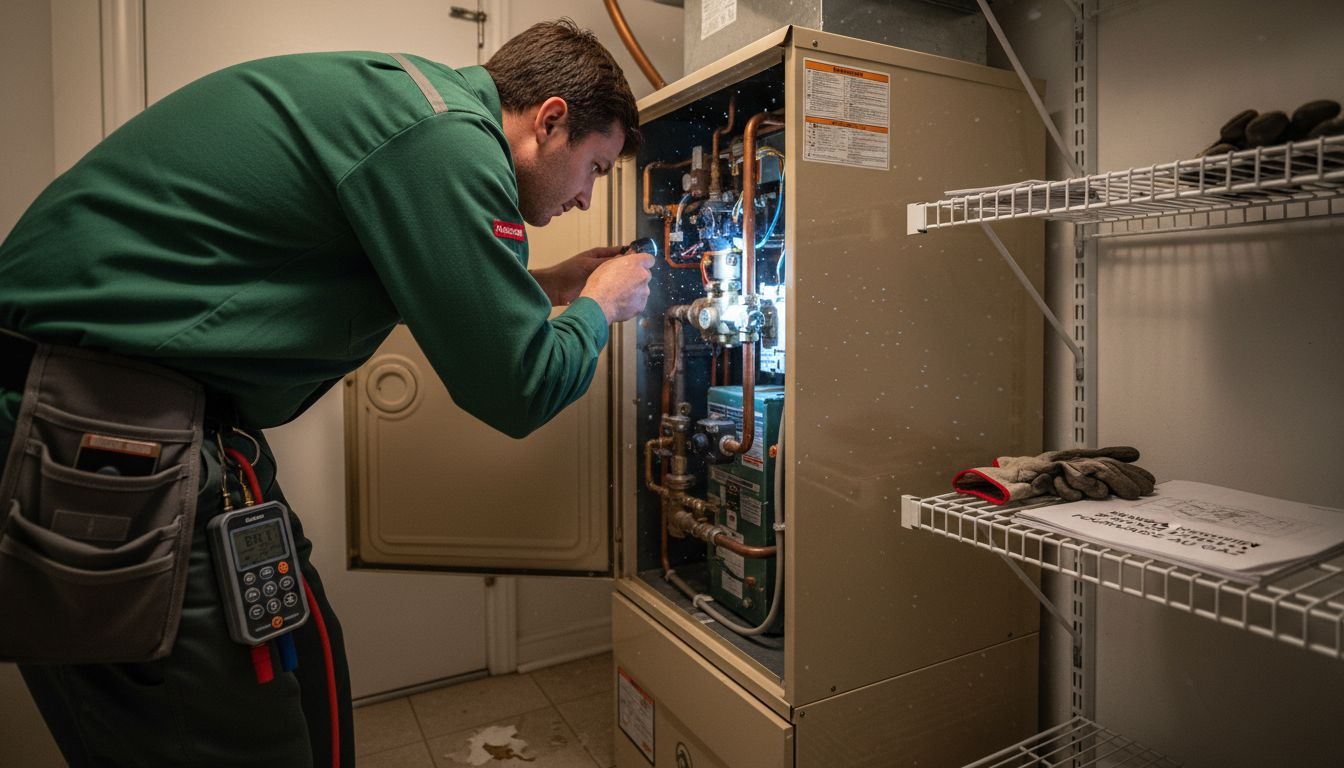
Gas line inspection must stay strictly in professional hands. Licensed technicians use pressure testing equipment and gas detectors to identify even tiny leaks. DIY attempts risk explosion, fire, or asphyxiation from undetected problems.
Heat exchanger condition determines whether your furnace operates safely. Cracks allow carbon monoxide to mix with household air without triggering obvious symptoms until poisoning occurs. Annual inspections catch deterioration before it becomes dangerous.
Carbon monoxide detector placement matters as much as testing. Install units on every floor, especially near bedrooms and furnace rooms. Test detectors monthly by pressing the test button. Replace batteries annually or when low-battery alerts sound.
Recognize carbon monoxide exposure symptoms in household members:
- Persistent headaches without other explanation
- Dizziness or nausea affecting multiple people
- Confusion or difficulty concentrating
- Flu-like symptoms that improve away from home
- Sudden fatigue or weakness
“A properly maintained furnace with annual professional inspection provides reliable heating while protecting your family from invisible dangers like carbon monoxide poisoning.”
The annual furnace inspection benefits extend beyond safety. Technicians adjust burners for optimal efficiency, reducing fuel waste. They lubricate moving parts to prevent premature wear. Regular furnace maintenance and services keep warranty coverage valid and catch small issues before they become expensive repairs.
Download a DIY HVAC maintenance checklist PDF to track professional service dates alongside your monthly tasks.
Air Filter Replacement and Indoor Air Quality Improvement
Air filter replacement every 1 to 3 months improves HVAC efficiency and reduces allergens significantly. The exact frequency depends on several household factors. Homes with multiple pets need monthly changes to handle extra hair and dander. Allergy sufferers benefit from 45-day replacement cycles using higher MERV-rated filters.
MERV ratings measure filter effectiveness at trapping particles. Basic fiberglass filters rate MERV 1 to 4, catching only large debris. Pleated filters in the MERV 8 to 13 range remove pollen, mold spores, and pet dander. MERV 13 to 16 filters trap bacteria and smoke particles but may restrict airflow in older systems.
Regular replacement prevents dust buildup inside ductwork and on coils. Clogged filters force systems to work harder, increasing energy bills by 15% or more. Restricted airflow causes uneven heating or cooling across rooms. In extreme cases, dirty filters lead to frozen evaporator coils or overheated heat exchangers.
DIY filter replacement takes five minutes and requires no tools:
- Turn off the furnace or air handler at the thermostat
- Locate the filter slot, typically near the return air duct or inside the furnace cabinet
- Slide out the old filter and note the airflow direction arrows
- Insert the new filter matching the arrow direction to airflow
- Restart the system and check for proper operation
Pro Tip: Write the installation date on the filter frame with a marker to track replacement schedules easily.
Enhanced filtration directly improves indoor air quality by removing irritants before they circulate through living spaces. This proves especially important for children, elderly residents, or anyone with respiratory conditions. Consider upgrading to air filtration services in Durham Region for whole-home purification systems that work alongside standard filters.
Keep spare filters on hand to maintain consistency. Buying in bulk saves money and ensures you never skip a replacement due to lack of supplies. Store filters in a dry location away from moisture or dust.
Ductwork Inspection and Leak Prevention
Leaky ducts waste up to 30% of heated or cooled air before it reaches living spaces. This energy loss translates directly into higher utility bills and uneven comfort. Gaps around duct joints, holes from rodent damage, or disconnected sections allow conditioned air to escape into attics, crawl spaces, or wall cavities.
Visual DIY inspection catches obvious problems. Walk through your basement or attic spaces looking for visible gaps, torn insulation wrapping, or disconnected duct sections. Check joints where metal ducts connect for separation. Look for dust streaks around registers indicating air leakage.
Professional duct sealing delivers measurable improvements in efficiency and comfort. Technicians use mastic sealant or metal-backed tape to close leaks permanently. They may also employ aerosol sealants that coat leaks from inside the ductwork. Proper sealing can save 20% to 30% on heating and cooling costs.
Signs pointing to ductwork problems:
- Rooms that never reach thermostat temperature
- Excessive dust accumulation despite regular cleaning
- Whistling or rattling sounds from ducts during operation
- Hot or cold spots in rooms furthest from the furnace
- Higher than expected energy bills without usage changes
Cleaning ductwork removes accumulated debris that restricts airflow and harbors allergens. Professional cleaning involves specialized vacuums and rotary brushes that dislodge buildup without damaging ducts. Combine this service with your furnace maintenance guide recommendations for comprehensive system care.
| Task | DIY Feasible | Professional Benefits | Typical Cost |
|---|---|---|---|
| Visual duct inspection | Yes | Finds hidden leaks with specialized equipment | Free to $150 |
| Duct sealing | Partial | Complete sealing with proper materials | $300 to $800 |
| Duct cleaning | No | Removes years of buildup safely | $400 to $1000 |
| Insulation upgrade | Partial | Proper R-value and vapor barriers | $1 to $3 per sq ft |
Address ductwork issues promptly to maximize HVAC performance and extend equipment life. Well-sealed ducts reduce strain on blowers and compressors, preventing premature failures.
Carbon Monoxide Detector Testing and Risk Reduction
Test all carbon monoxide detectors annually as part of your furnace preparation routine. Press the test button on each unit until the alarm sounds, confirming battery and sensor function. Replace batteries at the same time you change furnace filters to maintain a consistent schedule.
Place detectors strategically throughout your home. Install at least one unit on every level, with priority placement near bedrooms where family members sleep. Position additional detectors within 10 feet of furnace rooms and attached garages where vehicles idle.
Recognize carbon monoxide poisoning symptoms early:
- Dull headache developing within hours of furnace operation
- Weakness and dizziness affecting balance
- Nausea or vomiting without gastrointestinal illness
- Shortness of breath during normal activities
- Confusion or impaired judgment
- Blurred vision or loss of consciousness
Evacuate immediately if detectors alarm. Do not investigate the source or attempt to silence the alarm. Call 911 from outside your home and wait for emergency responders to clear the building. Never re-enter until professionals declare it safe.
Regular carbon monoxide safety checks save lives by catching problems before exposure occurs. Combine detector maintenance with annual furnace inspection benefits to address potential CO sources before they become active threats.
Replace detector units every 5 to 7 years regardless of apparent function. Sensors degrade over time, losing sensitivity to carbon monoxide presence. Check manufacturer labels for specific replacement dates. Many newer models include end-of-life warnings that alert when replacement is needed.
Never ignore intermittent detector chirping. This usually signals low battery or sensor malfunction requiring immediate attention. Treat every alarm as real until proven otherwise through professional inspection.
Outdoor Unit Cleaning and Clearance
Maintain at least 2 feet of clearance around outdoor air conditioning units and heat pumps. Vegetation, lawn equipment, or stored items restrict airflow, forcing systems to work harder. Reduced airflow leads to overheating, compressor failure, and shortened equipment life.
Remove debris regularly throughout operating seasons:
- Clear fallen leaves and grass clippings weekly during autumn
- Trim bushes and plants encroaching on unit perimeter
- Remove snow accumulation after winter storms
- Wash away cottonwood seeds and pollen during spring
- Check for wasp nests or rodent intrusion
Clean condenser coils carefully to avoid damage. Turn off power at the disconnect box near the unit. Spray coils gently with a garden hose from inside out, pushing debris away from fins. Never use a pressure washer, which bends delicate aluminum fins and reduces efficiency.
Seasonal cleaning extends unit life by preventing corrosion and mechanical wear. Dirt buildup on coils acts as insulation, blocking heat transfer. Systems compensate by running longer cycles, increasing wear on compressors and fan motors.
Pro Tip: Schedule outdoor unit cleaning when you change air filters to maintain a regular rhythm of preventive care.
Inspect the concrete pad supporting your outdoor unit. Settling soil can tilt units, stressing refrigerant lines and creating drainage problems. Shim pads level if needed, or call professionals for significant settling requiring pad replacement.
Professional AC maintenance services include refrigerant level checks, electrical connection tightening, and lubrication that complement your DIY cleaning efforts. Combine both approaches for optimal cooling performance and reliability.
Thermostat Calibration and Smart Thermostat Benefits
Check thermostat calibration annually to ensure accurate temperature control. Place a quality thermometer next to your thermostat. Compare readings after 15 minutes. Differences greater than 2 degrees indicate calibration drift requiring adjustment or replacement.
Programmable and smart thermostats can reduce energy use by up to 15% through optimized scheduling. These devices learn your patterns and adjust temperatures automatically when you’re away or sleeping. Remote control via smartphone apps lets you modify settings from anywhere.
Smart thermostat features worth considering:
- Learning algorithms that adapt to your schedule automatically
- Geofencing that adjusts temperature based on phone location
- Energy usage reports showing consumption patterns
- Remote access for vacation adjustments or emergency response
- Integration with voice assistants and smart home systems
Proper calibration prevents unnecessary HVAC cycling that wastes energy and stresses components. Systems that short-cycle run briefly then shut off repeatedly, never reaching optimal efficiency. Accurate thermostats maintain steady temperatures with longer, more efficient cycles.
Upgrades improve comfort through zone control and scheduling flexibility. Multi-zone systems with multiple thermostats heat or cool only occupied areas. This targeted approach saves money in larger homes where family members use different spaces throughout the day.
Installation difficulty varies by system compatibility and home wiring. Most modern smart thermostats include C-wire adapters for homes lacking common wire connections. Professional installation ensures proper configuration and prevents damage to HVAC controls. Understanding heating and cooling basics helps you choose the right thermostat for your specific system.
DIY vs Professional HVAC Maintenance Tasks
Monthly DIY tasks homeowners can safely handle include air filter inspection and replacement, outdoor unit cleaning, thermostat battery replacement, and visual duct inspection. These activities require no specialized tools or technical knowledge beyond basic home maintenance skills.
Annual professional inspections must cover gas line integrity, heat exchanger condition, refrigerant levels, electrical connections, and combustion efficiency. Licensed technicians carry specialized diagnostic equipment and training to identify problems invisible to homeowners.
Avoid DIY gas line repairs under all circumstances. Gas leaks create explosion risks that far outweigh any potential savings. Even minor adjustments require pressure testing and leak detection equipment that most homeowners lack. DIY HVAC maintenance tasks like air filter replacement and outdoor unit cleaning can be safely done monthly or seasonally; gas line and heat exchanger inspections require professionals.
Combine DIY vigilance with scheduled professional tune-ups:
- Monthly: Check and change air filters as needed
- Quarterly: Inspect outdoor unit clearance and clean debris
- Seasonally: Test carbon monoxide detectors before heating season
- Annually: Schedule professional furnace and AC inspections
- As needed: Call for any unusual noises, odors, or performance changes
Pro Tip: Document DIY maintenance with photos and notes to share with technicians during professional visits, helping them spot developing issues.
| Task Category | DIY Suitable | Professional Required | Risk Level |
|---|---|---|---|
| Air filter changes | Yes | No | Low |
| Outdoor cleaning | Yes | No | Low |
| Thermostat adjustment | Yes | No | Low |
| Gas line inspection | No | Yes | Critical |
| Heat exchanger check | No | Yes | Critical |
| Refrigerant service | No | Yes | High |
| Electrical repairs | No | Yes | High |
| Duct sealing | Partial | Recommended | Medium |
Proper task assignment reduces hazards and prevents unexpected breakdowns. Homeowners who attempt repairs beyond their skill level often create more expensive problems or void equipment warranties. Stick to manufacturer-recommended DIY tasks and leave complex work to licensed professionals.
Regular routine furnace maintenance in Ontario combines your monthly attention with professional expertise for optimal safety and efficiency. Download the DIY HVAC maintenance checklist PDF to track both DIY and professional tasks throughout the year. Following heating and cooling basics for Ontario ensures you understand what to watch for between service visits.
Summary Comparison: Simplifying Your HVAC Safety Checklist
This comparison table organizes maintenance tasks by frequency, complexity, and safety risk to help you plan your annual HVAC care schedule. Use it to identify which tasks fit your DIY capabilities and where professional service provides critical protection.
| Task | Frequency | Complexity | Safety Risk | DIY or Pro |
|---|---|---|---|---|
| Air filter replacement | Monthly to Quarterly | Simple | Low | DIY |
| Outdoor unit cleaning | Monthly during season | Simple | Low | DIY |
| Thermostat calibration | Annually | Moderate | Low | DIY or Pro |
| Carbon monoxide testing | Annually | Simple | Critical | DIY |
| Furnace inspection | Annually | Complex | Critical | Professional |
| Gas line inspection | Annually | Complex | Critical | Professional |
| Heat exchanger check | Annually | Complex | Critical | Professional |
| Duct sealing | Every 3-5 years | Moderate | Medium | Professional |
| Duct cleaning | Every 3-5 years | Complex | Low | Professional |
| Refrigerant service | As needed | Complex | High | Professional |
| Electrical connections | Annually | Complex | High | Professional |
| Blower motor lubrication | Annually | Moderate | Low | Professional |
Prioritize tasks marked critical for safety risk before addressing efficiency improvements. Schedule annual professional service covering all complex tasks in a single visit to maximize value. Handle simple DIY tasks on regular monthly schedules to maintain consistent system performance.
Tailor this checklist to your specific home conditions. Homes with pets need more frequent filter attention. Properties with mature landscaping require extra outdoor unit maintenance. Older systems benefit from more frequent professional inspections to catch age-related deterioration.
Situational Recommendations for Durham Region Homeowners
Customize your HVAC maintenance approach based on your household’s unique factors:
- Homes with multiple pets or indoor smokers need air filter replacement every 30 days to maintain air quality and prevent system strain from excessive debris
- Residents with allergies or asthma benefit from MERV 11 to 13 filters changed every 45 days, plus annual duct cleaning to remove accumulated allergens
- Properties experiencing drafty rooms or uneven temperatures should prioritize professional duct sealing to improve comfort and reduce energy waste
- Families with young children or elderly members must emphasize carbon monoxide detector maintenance and annual furnace inspections to protect vulnerable occupants
- Homes heated primarily with natural gas require extra attention to gas line integrity checks and combustion efficiency testing
Prioritize annual furnace and carbon monoxide detector checks before November. Durham Region winters demand reliable heating, and equipment failures during January cold snaps create emergency situations with higher repair costs and limited technician availability.
Customize task frequency based on system age and usage intensity. HVAC systems over 15 years old benefit from semi-annual professional inspections to catch wear before failures occur. New systems may handle longer intervals but still require annual checks to maintain warranty coverage.
Encourage proactive scheduling of professional services during shoulder seasons in April or October when demand is lower. You’ll get faster appointment times, more thorough attention from technicians, and often better pricing than peak season emergency calls.
Keep Your Durham Region Home Safe with Professional HVAC Services
While DIY maintenance keeps your system running smoothly, annual professional service provides critical safety checks that protect your family. Red Seal Mechanical Services delivers comprehensive furnace maintenance and services throughout the Durham Region, including thorough inspections, tune-ups, and repairs that extend equipment life.
Our licensed technicians specialize in gas line repairs and replacement, ensuring your home’s heating system operates safely and efficiently. We understand Ontario’s climate demands and schedule service to prepare your equipment before extreme weather arrives.
Scheduling regular maintenance prevents costly emergencies and gives you peace of mind knowing your HVAC system is safe. Our family-owned company has served Durham Region homeowners since 2012 with honest, reliable service backed by proper certifications and local expertise. Contact Red Seal Mechanical Services today to schedule your annual inspection.
FAQ
What is the ideal frequency for replacing HVAC air filters in homes with pets?
Replace filters every 30 to 45 days in homes with pets to reduce allergens and prevent system strain from hair and dander buildup. More frequent changes maintain optimal airflow and improve indoor air quality for both pets and residents.
Can homeowners safely inspect gas lines themselves?
Gas line inspection and repairs must only be performed by licensed professionals due to serious safety hazards. DIY attempts risk gas leaks, explosions, or carbon monoxide poisoning from improperly detected or repaired issues.
How does duct sealing improve HVAC safety and efficiency?
Sealing leaky ducts reduces heat loss by up to 30%, directly lowering energy bills while improving comfort throughout your home. It also prevents dust, pollutants, and combustion gases from entering the HVAC system, enhancing both safety and air quality.
When should carbon monoxide detectors be tested and replaced?
Test carbon monoxide detectors annually before heating season and replace batteries as needed to ensure reliable function. Most detector units require complete replacement every 5 to 7 years as sensors lose sensitivity over time, so check manufacturer labels for specific replacement dates.
