


TL;DR:
- Indoor comfort depends on temperature, humidity, and air quality working together.
- Proper HVAC maintenance and upgrades improve air balance, filtration, and overall home comfort.
- Small adjustments like vent placement and regular system checks have a big impact on satisfaction.
Most homeowners assume comfort is simply about hitting the right temperature on the thermostat. Set it to 21°C and you’re done, right? Not quite. Indoor comfort is shaped by a combination of temperature, humidity, and air quality working together. When any one of these is off, your home can feel stuffy, dry, or just plain uncomfortable, even if the thermometer reads perfectly. Here in Durham Region, where winters are cold and summers are humid, your HVAC system does far more than heat and cool. This guide walks you through exactly how a well-maintained system improves every aspect of your home’s comfort, and what you can do to get more from it.
Table of Contents
- Understanding comfort: More than just temperature
- The role of HVAC in regulating humidity and air quality
- Heating, cooling, and smart tech: Customised comfort for every home
- Practical tips: Maximising your HVAC investment for comfort
- A local perspective: What most homeowners miss about HVAC comfort
- Your next step: Bring comfort home with expert HVAC help
- Frequently asked questions
Key Takeaways
| Point | Details |
|---|---|
| Holistic comfort approach | Lasting comfort depends on temperature, humidity, and indoor air quality together. |
| HVAC controls air and humidity | Modern HVAC systems manage moisture and air purity, preventing discomforts like dry air or allergens. |
| Smart controls increase satisfaction | Switching to smart thermostats and sensors can noticeably improve comfort by adapting to your routines. |
| Pro maintenance is crucial | Regular system checks and filter changes keep HVACs efficient and comfort levels steady all year. |
Understanding comfort: More than just temperature
When people talk about home comfort, temperature usually gets all the attention. But seasoned HVAC professionals will tell you that temperature is only part of the picture. Two homes set to the same temperature can feel completely different depending on how much moisture is in the air and how well that air circulates.
Indoor comfort actually depends on three interconnected factors:
- Temperature: The most obvious factor, but only effective when the other two are in balance.
- Relative humidity (RH): The amount of moisture in the air, expressed as a percentage. Too high and you feel clammy; too low and your skin dries out, your throat gets scratchy, and static electricity becomes a nuisance.
- Air quality: The presence (or absence) of dust, allergens, mould spores, and other airborne particles that affect how fresh and breathable your indoor air feels.
For Canadian homes, the optimal RH sits between 30% and 50%. Fall outside that range in either direction and comfort drops fast. In winter, indoor air tends to dry out as heating systems run continuously. In summer, high outdoor humidity seeps inside and makes your home feel warmer than it actually is.
Poor humidity control does more than cause discomfort. It can lead to mould growth on walls and ceilings, worsen respiratory conditions like asthma, and even damage wood floors and furniture over time. A dry home in winter can cause cracked skin and irritated sinuses for everyone in the household.
Understanding the role of HVAC in home comfort means recognising that your system is managing all three of these variables at once. That’s a lot to ask of any piece of equipment, which is why proper installation, sizing, and maintenance matter so much. A system that’s too large will cycle on and off too quickly, failing to properly dehumidify the air. One that’s too small will run constantly and still struggle to keep up.
Now that we’ve set the scene for what comfort truly means, let’s look at how your HVAC system manages these variables.
The role of HVAC in regulating humidity and air quality
With the basics of comfort in mind, let’s dig into how HVAC technology actually manages home air quality and humidity.
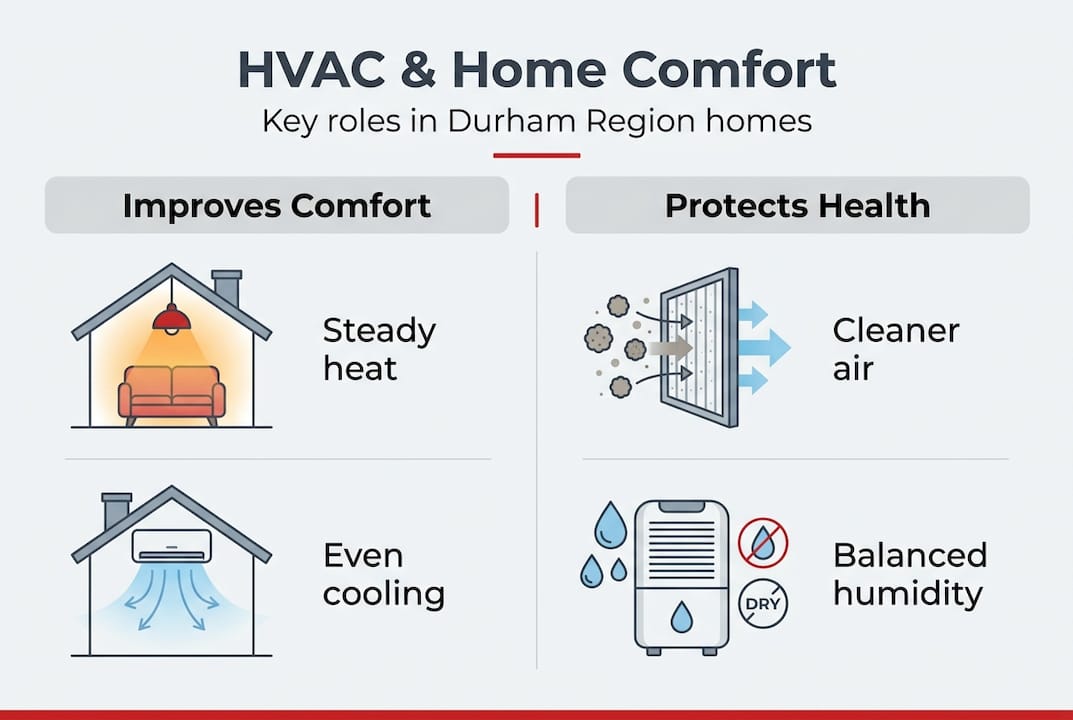
Your central air conditioner does double duty. It cools your home, yes, but it also pulls moisture out of the air as warm air passes over the cold evaporator coil. This dehumidification effect is a big reason why a well-functioning AC makes a hot day feel genuinely manageable. In winter, your furnace adds heat but can dry the air out, which is why many homeowners pair their system with a whole-home humidifier to restore that 30–50% RH sweet spot.
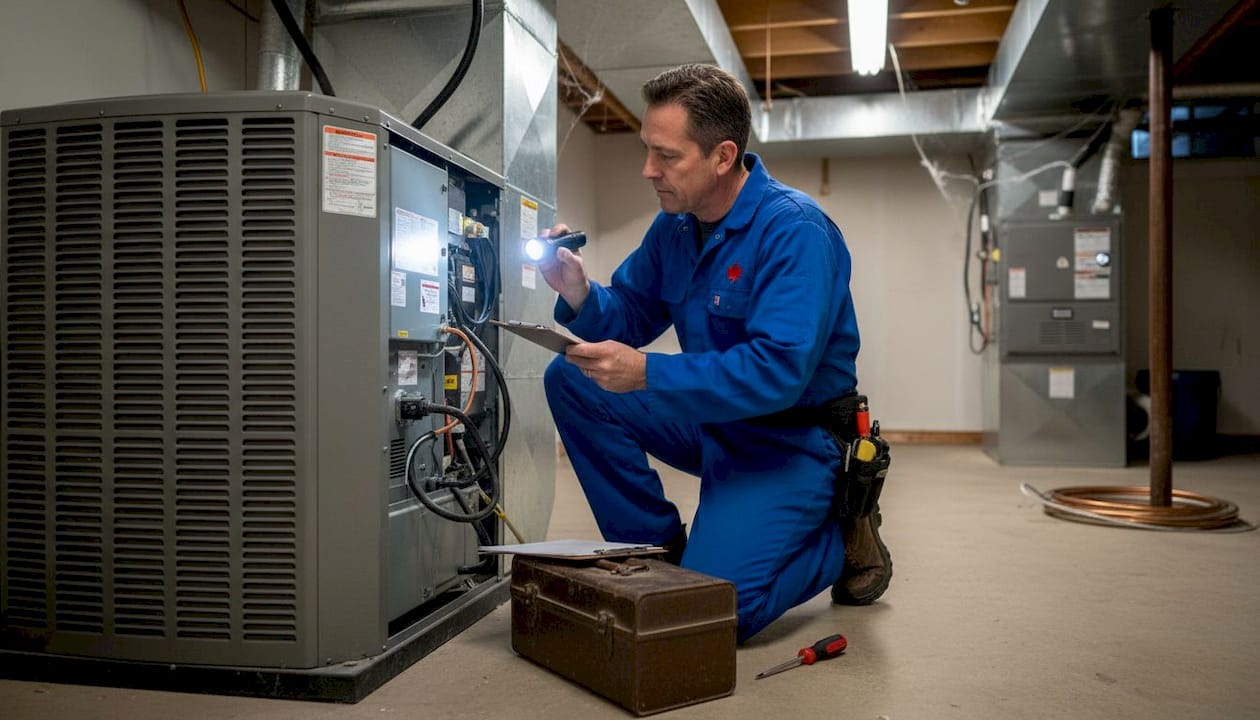
Filtration is where air quality really comes into focus. Standard one-inch filters catch large dust particles, but they do little for fine allergens, mould spores, or airborne microbes. MERV 13+ filters and UV lights significantly reduce allergens, dust, and harmful microbes, improving how clean and fresh your indoor air feels every day.
Here’s a quick comparison of filtration options:
| Filter type | MERV rating | What it captures | Best for |
|---|---|---|---|
| Basic fibreglass | 1–4 | Large dust, lint | Minimal protection |
| Standard pleated | 7–10 | Dust, pollen, mould spores | Most households |
| High-efficiency pleated | 11–13 | Fine particles, pet dander | Allergy sufferers |
| HEPA / UV combo | 14–16+ | Bacteria, viruses, microbes | Sensitive households |
Ventilation is another piece of the puzzle that often gets overlooked. Good airflow isn’t just about removing odours. It dilutes indoor pollutants that build up from cooking, cleaning products, and everyday activities. Without proper ventilation, even a clean-looking home can have surprisingly poor air quality.
“Improving your home’s filtration and ventilation isn’t a luxury. It’s one of the most practical things you can do for your family’s day-to-day well-being.”
Pro Tip: If anyone in your home suffers from allergies or asthma, consider asking about air filtration upgrades when scheduling your next service. Upgrading your filter and adding UV treatment can make a noticeable difference within days.
Heating, cooling, and smart tech: Customised comfort for every home
Once you’re aware of filtration and humidity upgrades, it’s time to examine the technology choices for heating and cooling in your unique home.
Traditional gas furnaces have served Durham Region homes reliably for decades. But heat pumps offer efficient heating and cooling by reversing a refrigerant cycle, moving heat rather than generating it. This makes them highly efficient in mild climates and a strong option for southern Ontario’s shoulder seasons. Unlike furnaces, heat pumps don’t dry out the air as they operate, which is a genuine comfort advantage many homeowners appreciate.
Smart thermostats are another game-changer. Smart thermostats adapt to occupancy patterns, reducing temperature swings and measurably improving homeowner satisfaction. Instead of blasting heat when you wake up or cooling an empty house all afternoon, a smart thermostat learns your schedule and adjusts automatically.
Here’s a simple guide to deciding on upgrades:
- Assess your current system’s age. Systems over 15 years old are often prime candidates for replacement.
- Identify your comfort complaints. Hot and cold spots suggest airflow issues; dry air points to humidity control gaps.
- Compare heating options. Review Ontario heating and cooling options to see what fits your home and budget.
- Consider smart controls. Even older systems benefit from a smart thermostat upgrade.
- Get a professional assessment. A qualified technician can recommend the right combination for your specific home.
| Technology | Comfort benefit | Efficiency gain |
|---|---|---|
| Heat pump | Even temps, no dry air | Up to 300% efficient |
| Smart thermostat | Adapts to your schedule | 10–15% energy savings |
| Zoning system | Room-by-room control | Reduces wasted heating/cooling |
| MERV 13+ filter | Cleaner, fresher air | Minimal energy impact |
Exploring boosting comfort with smart controls is a practical first step if you want to improve comfort without replacing your entire system.
Practical tips: Maximising your HVAC investment for comfort
Equipped with knowledge of the right technologies, you still need simple actions to keep your comfort system at its best.
Consistent maintenance is the single biggest factor separating a comfortable home from a frustrating one. Here’s what every Durham Region homeowner should be doing:
- Change your filter every 1–3 months. A clogged filter restricts airflow and forces your system to work harder, reducing both comfort and efficiency.
- Keep vents clear. Furniture or curtains blocking supply and return vents create hot and cold spots throughout the home.
- Check your thermostat settings seasonally. Programming setbacks for overnight and away periods saves energy without sacrificing comfort.
- Inspect your outdoor unit. Clear debris, leaves, and overgrown plants from around your AC or heat pump to maintain proper airflow.
- Book annual tune-ups. A professional inspection catches small issues before they become expensive breakdowns.
Hot and cold spots are one of the most common complaints we hear from homeowners. Often the fix isn’t a new system. It’s something as simple as a blocked return vent, an unbalanced damper, or a door that’s been kept closed in a room with its own supply vent. These small details have a bigger impact than most people realise.
Smart thermostat data confirms that homes with programmed temperature schedules experience fewer comfort complaints and lower energy costs. That’s a win on both fronts.
Pro Tip: Book your furnace tune-up in early autumn and your AC check-up in late spring, before peak demand hits. You’ll get faster service and catch any issues before you actually need the system. Our HVAC maintenance tips page has a full seasonal checklist to keep you on track.
A local perspective: What most homeowners miss about HVAC comfort
After years of serving homes across Durham Region, we’ve noticed a pattern. Homeowners invest in new equipment and still feel dissatisfied. The system runs, the temperature is right, but something still feels off. More often than not, the issue isn’t the equipment at all.
It’s the details that get overlooked. A supply vent pointed directly at a seating area. A return vent blocked by a bookshelf. A home with older construction and uneven insulation that no thermostat setting can fully compensate for. These small factors quietly undermine even the best HVAC systems.
Durham Region homes vary enormously. A 1960s bungalow in Bowmanville behaves very differently from a newer build in Whitby. Local climate patterns, home age, and construction style all influence how your system performs. That’s why cookie-cutter advice rarely works here.
Our honest take: start with the basics before chasing the latest technology. A properly balanced, well-maintained system in a home with clear vents and a sensible thermostat programme will outperform a high-end system that’s been poorly installed or ignored. Transparent, practical advice matters more than upselling gadgets. A good HVAC customer service experience should always leave you better informed, not just with a bigger invoice.
Your next step: Bring comfort home with expert HVAC help
Understanding how temperature, humidity, and air quality work together is a strong foundation. But knowing what to do and having the right team to do it are two different things. A professional assessment of your home’s HVAC system can identify the gaps that are quietly costing you comfort and money.
Our team at Red Seal Mechanical Services has been helping Durham Region homeowners since 2012. Whether you need to explore our full range of Durham Region HVAC services, get help with furnace repair in Durham, or look into a new air conditioning installation, we’re here to help you make the right call for your home and your budget. Reach out today and let’s get your comfort sorted.
Frequently asked questions
How does HVAC improve air quality in my home?
MERV 13+ filters and UV lights remove dust, allergens, and microbes from circulating air, while proper ventilation dilutes indoor pollutants that build up from everyday activities.
What level of indoor humidity is best for comfort and health?
The optimal indoor humidity for Canadian homes sits between 30% and 50% relative humidity, balancing comfort, health, and protection for your home’s structure.
Do smart thermostats really make a comfort difference?
Yes. Smart thermostats adapt to occupancy and minimise temperature swings, which studies confirm leads to measurably higher homeowner satisfaction and lower energy use.
Are heat pumps suitable for Durham Region’s climate?
Heat pumps are highly efficient in southern Ontario’s climate, providing comfortable heating and cooling without the dry air that traditional furnaces can produce.
What signs suggest my HVAC system needs maintenance for better comfort?
Uneven temperatures between rooms, rising energy bills, or stale and stuffy air are clear signals that your system is due for a professional inspection and tune-up.
