


No one expects their furnace to quit during a Canadian winter night or their air conditioner to fail just as a heat wave peaks, yet these urgent moments hit Durham Region homeowners every season. Quick, local expertise is your first line of defence against discomfort, property damage, or even health risks during extreme weather. Know what truly counts as a real HVAC emergency and discover how choosing a certified, nearby provider keeps your family safe while saving time and unnecessary costs.
Table of Contents
- Defining Emergency HVAC Service And Misconceptions
- Types Of HVAC Emergencies In Canadian Homes
- How Emergency HVAC Service Works Step-By-Step
- Urgent Risks And Financial Implications
- Choosing A Qualified Emergency HVAC Provider
Defining Emergency HVAC Service and Misconceptions
Emergency HVAC service is not simply a technician arriving quickly when your system fails. It’s a specialized response designed to restore critical heating or cooling when your home faces immediate discomfort or safety risks.
Unlike routine maintenance or standard repairs scheduled during business hours, emergency HVAC service operates outside normal timeframes. This means your technician is available evenings, weekends, and holidays when your furnace quits on a frozen January night, or your air conditioner fails during a heat wave.
What Actually Qualifies as an Emergency
Not every HVAC problem demands emergency response. Understanding the difference saves time and prevents unnecessary expenses.
True emergency situations include:
- No heat during winter months with outdoor temperatures below freezing
- Complete cooling failure during extreme heat warnings
- Gas leaks or carbon monoxide concerns related to your heating system
- System failures that create safety hazards for children, elderly family members, or pets
- Frozen pipes or water damage from HVAC equipment requiring immediate attention
Non-emergency repairs can typically wait for regular business hours:
Here’s a quick comparison of urgent HVAC emergencies versus non-urgent issues to help homeowners prioritise their response:
| Situation Type | Immediate Action Needed | Potential Impact | Can Wait for Business Hours |
|---|---|---|---|
| No heat during below-freezing weather | Yes | Health risk, property damage | No |
| Complete cooling failure in heat wave | Yes | Heat exhaustion danger | No |
| Minor refrigerant leak | No | Efficiency loss | Yes |
| Unusual noises, system operating | No | Minor inconvenience | Yes |
- Minor refrigerant leaks detected during maintenance
- Gradual loss of heating or cooling efficiency
- Unusual noises that don’t prevent system operation
- Scheduled maintenance or filter replacements
Common Misconceptions About Emergency Service
Homeowners in the Durham Region often misunderstand what emergency HVAC service actually covers.
Misconception 1: Emergency service means the problem is always fixable on the first visit. Reality: Some issues require parts ordering or specialized equipment. Your technician diagnoses the problem and may schedule follow-up service.
Misconception 2: Emergency calls are dramatically more expensive. While after-hours service does have premiums, emergency management planning guidance emphasizes that tailored response procedures minimise unnecessary costs by addressing the actual problem efficiently rather than applying blanket solutions.
Misconception 3: Any HVAC company offers emergency service. Some providers operate only during standard business hours. Red Seal Mechanical Services provides emergency response across Ajax, Brock, Whitby, Oshawa, Pickering, Clarington, Scugog and Uxbridge.
Misconception 4: You should call during the emergency itself. Actually, knowing how local emergency responses work helps you prepare beforehand. Keep your HVAC provider’s emergency contact information readily accessible rather than searching frantically when temperatures drop.
Misconception 5: Emergency service is only for broken systems. Safety concerns like suspected gas leaks or carbon monoxide alarms absolutely qualify, even if your system technically still operates.
True emergencies involve safety risks, extreme weather conditions, or situations where delayed repair causes serious discomfort or property damage. Everything else can typically wait for standard service hours.
Pro tip: Save your HVAC provider’s emergency number in your phone contacts now, before you need it. When a real emergency strikes, you’ll have the number immediately rather than scrambling to find a technician in the middle of the night.
Types of HVAC Emergencies in Canadian Homes
HVAC emergencies in Canadian homes take many forms, and not all look the same. Understanding the different types helps you recognise when you need immediate help versus when repair can wait.
Canadian homeowners face unique seasonal challenges. Winter emergencies differ dramatically from summer ones, and various hazards affecting Canadian homes include extreme weather events that directly impact heating and cooling systems.
Winter Heating Emergencies
Winter brings the most critical emergency situations across the Durham Region. When outdoor temperatures plunge below zero, a failed furnace becomes dangerous, not just uncomfortable.
Common winter emergencies include:
- Complete furnace failure with no heat output
- Pilot light failures that prevent ignition
- Thermostat malfunctions, leaving your home unheated
- Blocked vents or exhaust pipes from snow and ice buildup
- Gas supply issues affecting burner operation
These situations can lead to frozen pipes, property damage, and serious health risks for vulnerable family members.
Summer Cooling Emergencies
Summer emergencies centre on air conditioning failures during heat waves. Unlike winter, these aren’t safety threats in the same way, but extreme heat poses real health dangers.
Typical summer emergency scenarios involve:
- Complete air conditioner shutdown during peak heat
- Refrigerant leaks reducing cooling capacity
- Compressor failures preventing cold air circulation
- Thermostat failures in cooling mode
- Electrical issues affecting the outdoor unit
Safety-Related HVAC Emergencies
Some emergencies have nothing to do with comfort and everything to do with danger. These absolutely require immediate response.
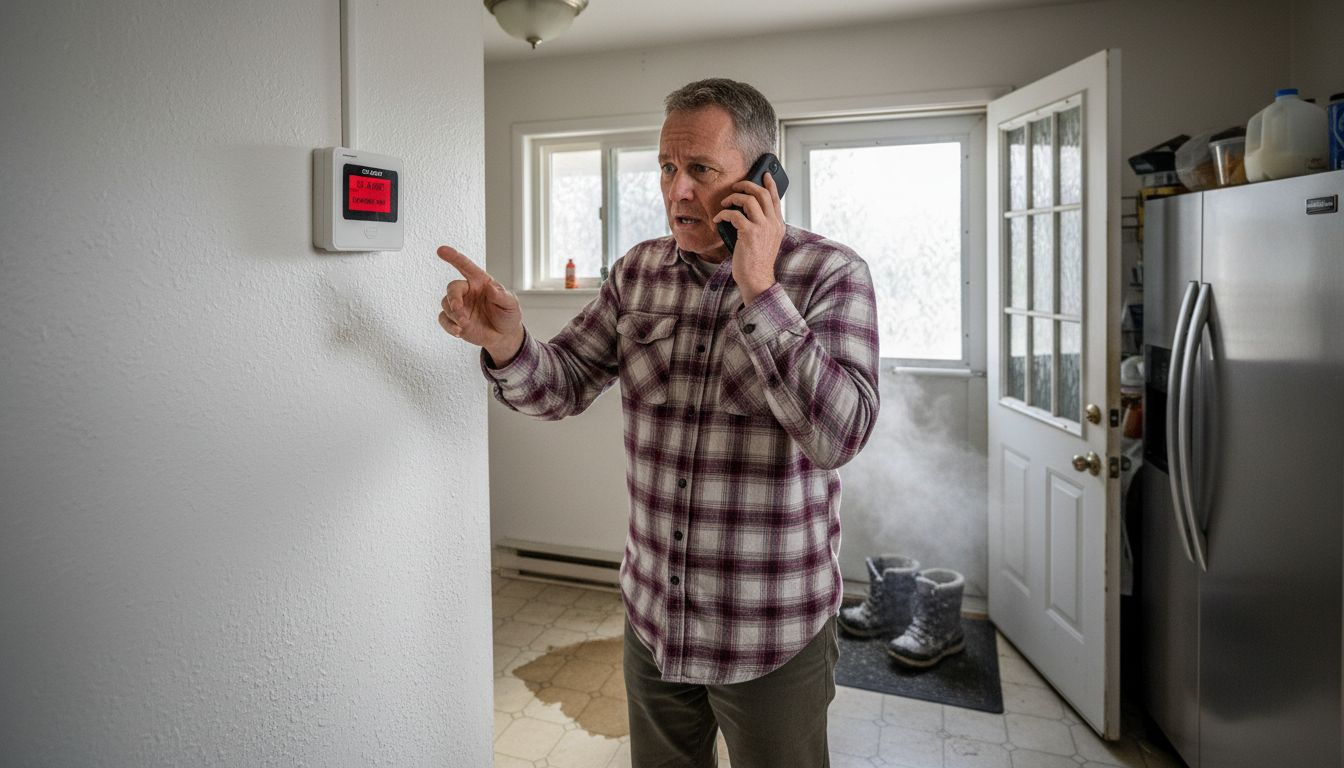
Carbon monoxide concerns rank as the most serious. If your carbon monoxide detector sounds, treat it as an emergency regardless of system status. Gas leaks detected near your furnace or heating equipment demand immediate professional attention and possibly evacuation.
Water damage situations also qualify as emergencies. A furnace leaking water can indicate serious problems requiring quick diagnosis to prevent mould growth or electrical hazards.
Power Outage Impacts
Common emergencies affecting Canadian homes include power outages that suddenly disable HVAC systems. Winter outages are particularly critical since many furnaces depend on electricity for operation, even though they use gas for heat.
During extended outages, your home loses heating capability entirely. Summer outages similarly eliminate cooling, creating indoor temperatures that become dangerous within hours during heat waves.
HVAC emergencies span comfort failures, safety hazards, and system damage—each demands different response urgency but all require professional assessment.
Pro tip: During extreme weather events, call your HVAC provider before the emergency occurs. Once temperatures spike or plunge, emergency technicians become fully booked, and wait times extend from hours to days.
How Emergency HVAC Service Works Step-by-Step
Emergency HVAC service follows a structured process designed to diagnose problems quickly and restore your heating or cooling. Knowing what happens from your first call through completion helps you prepare and understand what technicians do.
The process combines emergency preparedness and response training with technical expertise to handle system failures efficiently and safely. Every step matters when your family’s comfort and safety are at stake.
Step 1: Make the Call
Your first action is contacting your HVAC provider’s emergency line. Have your address, system type, and problem description ready before dialling.
When you call, provide:
- Your location (which helps technicians plan routing)
- System type (furnace, air conditioner, or both)
- When the problem started
- Any safety concerns (gas smell, carbon monoxide alarm, water damage)
- Whether you have elderly family members or pets at home
Dispatchers use this information to prioritise calls. Safety issues jump the queue.
Step 2: Technician Dispatch and Arrival
Red Seal Mechanical Services dispatches the nearest qualified technician to your location across Ajax, Brock, Whitby, Oshawa, Pickering, Clarington, Scugog and Uxbridge.
Arrival times depend on demand and your location. During extreme weather, all emergency technicians work simultaneously, so waits can extend.
Step 3: System Inspection and Diagnosis
Your technician arrives with tools and diagnostic equipment. They’ll inspect your HVAC system components to identify the problem. This resembles how HVAC system components are evaluated for functionality and safety.
Expect the technician to:
- Check electrical connections and power supply
- Inspect the thermostat settings and operation
- Test furnace ignition or air conditioner compressor
- Look for refrigerant leaks, water damage, or gas issues
- Examine ductwork for blockages
Step 4: Problem Assessment and Next Steps
Once diagnosed, your technician explains what’s wrong and available options. Some problems can be fixed immediately. Others require parts ordering or return visits.
You’ll learn whether repair is possible today or if temporary measures help until parts arrive. Your technician never guesses at solutions.
Step 5: Repair or System Restoration
If repair is possible immediately, work begins. Your technician performs the fix, tests system operation, and confirms proper functioning before leaving.
If parts are needed, they’ll discuss scheduling and temporary solutions like space heaters or portable air conditioning units.
Emergency HVAC service moves from diagnosis to solution systematically, ensuring you understand each step and what comes next.
Pro tip: Keep your system’s model number and age written down near your furnace or air conditioner. Emergency technicians can reference this information immediately, speeding diagnosis and repair by 10 to 15 minutes.
Urgent Risks and Financial Implications
HVAC emergencies create immediate risks that extend far beyond discomfort. Understanding these dangers helps homeowners appreciate why quick response matters so critically.
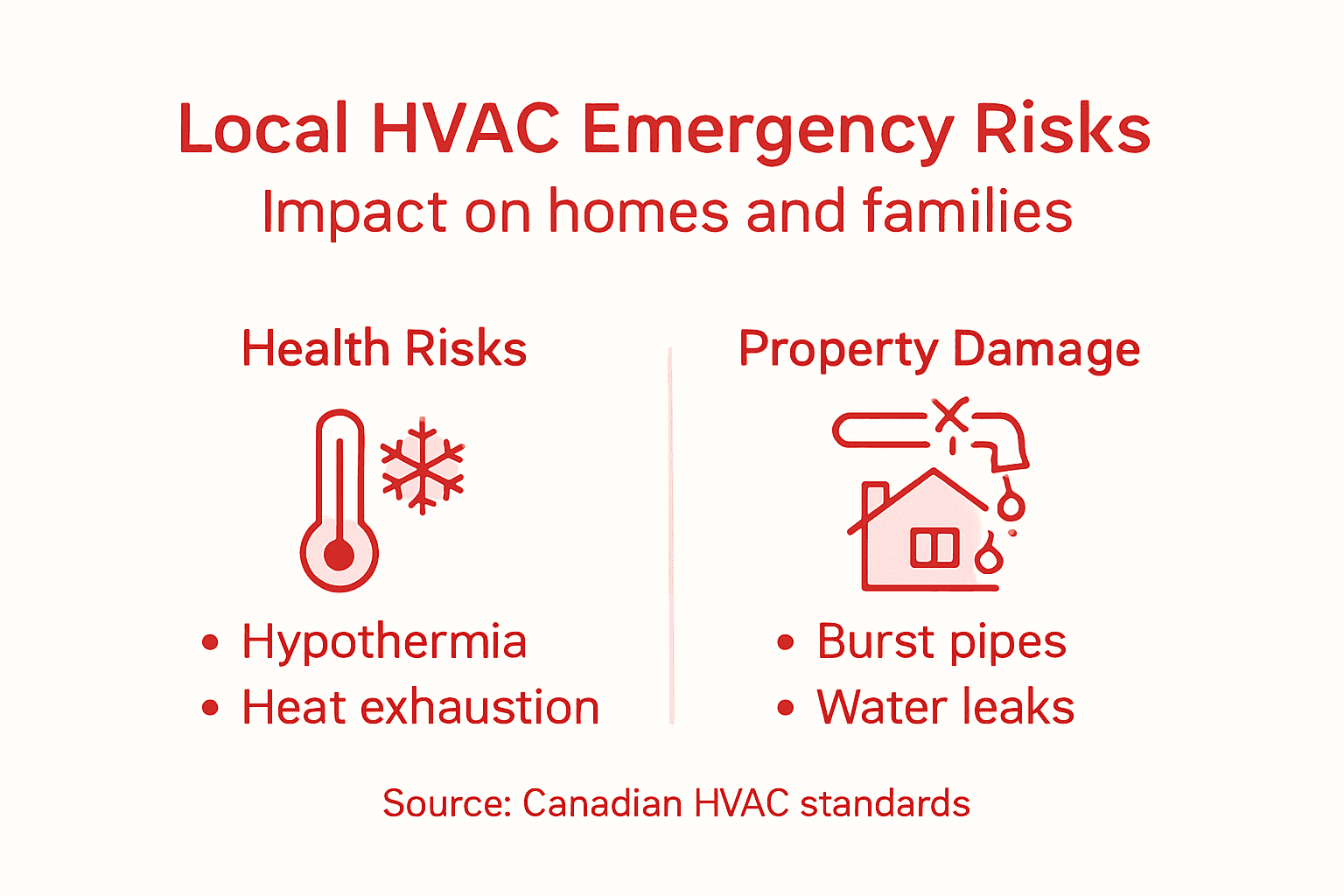
When systems fail during extreme weather, the consequences multiply rapidly. Property damage, health threats, and unexpected expenses accumulate within hours, not days.
Health and Safety Risks
Frozen pipes represent the most expensive damage from winter heating failures. When indoor temperatures drop below freezing, water in your plumbing lines freezes and expands, rupturing pipes and causing severe water damage.
A single burst pipe can flood multiple rooms, damaging flooring, walls, and personal belongings. Repairs often exceed thousands of dollars.
Hypothermia and cold-related illness threaten vulnerable family members during extended heating outages. Young children, elderly relatives, and those with health conditions face serious danger within hours of temperature drops.
Heat exhaustion and dehydration during summer cooling failures pose equal dangers. Extreme indoor temperatures create life-threatening conditions for at-risk individuals remarkably quickly.
Property Damage and Secondary Problems
Beyond immediate system issues, failed HVAC creates cascading damage:
- Burst pipes from frozen water damage your entire home
- Mould growth develops rapidly in damp conditions from leaking systems
- Structural damage occurs as moisture penetrates walls and foundations
- Electrical hazards emerge from water-damaged equipment and wiring
- Secondary system failures cascade when one component fails
Infrastructure failures like HVAC system outages increasingly affect Canadian homes, with rising disaster frequency and associated costs impacting property values and insurance rates.
Financial Consequences
Emergency repairs typically cost more than scheduled maintenance. But the real financial impact comes from secondary damage that prevention avoids.
Here’s what unaddressed HVAC emergencies actually cost:
- Emergency service technician fees (higher than regular rates)
- System replacement if repair is impossible
- Water damage restoration from burst pipes or leaks
- Temporary heating or cooling rental equipment
- Insurance deductibles for covered damage
- Potential loss of home value if damage isn’t addressed
Emergency preparedness reduces significant financial costs by preventing damage escalation and enabling swift response before secondary problems develop.
A furnace failure that costs $300 to repair immediately can become a $15,000 water damage claim when pipes freeze. That’s the real financial risk.
The following table summarises major risks and their typical financial consequences if HVAC emergencies are delayed:
| Risk Type | Direct Damage | Average Cost in Canada | Typical Secondary Costs |
|---|---|---|---|
| Frozen pipes | Burst pipes, flooding | $15,000+ | Mould removal, home value loss |
| Heating outage | Health emergencies | Not quantifiable | Medical bills |
| Cooling failure | Heat-related illness | Not quantifiable | Hospitalisation costs |
| Leak or water damage | Floor and wall repairs | $3,000–$8,000 | Electrical rewiring, mould |
Delayed HVAC response transforms manageable repair expenses into catastrophic property damage claims and health emergencies.
Pro tip: Schedule annual HVAC maintenance before winter and summer seasons. A $150 inspection catches problems before they become emergencies, protecting your home and wallet far more effectively than emergency repairs ever could.
Choosing a Qualified Emergency HVAC Provider
Not all HVAC companies offer emergency service, and not all emergency providers deliver equal quality. Selecting the right technician before an emergency occurs ensures you get reliable help when you need it most.
Your choice directly impacts response time, repair quality, and whether problems get solved on the first visit. Making this decision now prevents desperate searching during a crisis.
What Makes a Provider Qualified
Licensing and certifications separate qualified technicians from unlicensed operators. Ensure your provider holds Red Seal certification, which means they’ve passed rigorous examinations demonstrating competency in heating and cooling systems.
Licensed HVAC contractors in Canada comply with industry standards that ensure safe, efficient service and accountability. This protects both your home and your family.
Qualified providers also carry:
- Liability insurance protecting you if damage occurs during service
- Workers compensation for their technicians
- Bonding that guarantees work quality
- Manufacturer training for specific equipment brands
- Emergency response certifications
Red Seal Mechanical Services: Your Local Expert
Red Seal Mechanical Services has served the Durham Region since 2012 as a family-owned HVAC provider. Based in Ontario, they respond to emergencies across Ajax, Brock, Whitby, Oshawa, Pickering, Clarington, Scugog and Uxbridge.
Their team combines local presence with comprehensive certifications. Being local matters because response times shorten dramatically when technicians don’t travel far.
Key Selection Criteria
When evaluating any emergency HVAC provider, ask these questions:
- Are they available 24/7, including weekends and holidays?
- What’s their average response time in your area?
- Do they provide upfront explanations before starting work?
- Are their technicians factory-trained on major equipment brands?
- Do they offer warranties on repairs and parts?
- Can they handle both furnaces and air conditioning?
- Do they provide same-day emergency service during extreme weather?
Avoiding Unreliable Providers
Stay away from companies that can’t answer basic questions about their qualifications. Red flags include unlicensed technicians, refusal to explain problems, pressure to replace rather than repair systems, and vague pricing information.
Verify credentials directly. Don’t rely on their word alone. Check with professional HVAC organisations requiring demonstrated competencies to confirm technician qualifications and insurance status.
Companies that rush work, skip safety checks, or avoid written estimates are cutting corners in ways that compromise quality and your safety.
Choosing a qualified provider before an emergency means faster response, better repairs, and peace of mind when temperatures turn critical.
Pro tip: Call your preferred HVAC provider now during normal business hours and ask about their emergency response procedures. Building a relationship before crisis strikes ensures they prioritise your call when you need help most.
Ready for Any HVAC Emergency in Durham Region
Experiencing an HVAC emergency can feel overwhelming, especially when safety and comfort are on the line during extreme Canadian weather. Whether it’s a furnace failure on a freezing night or an air conditioner breakdown in a heat wave, these urgent situations demand fast, expert solutions from a trusted local provider. Red Seal Mechanical Services understands the unique challenges homeowners face and is committed to delivering rapid emergency response, honest diagnostics, and reliable repairs across Durham Region.
Don’t wait until the next emergency to find your HVAC partner. Learn how others in Durham Region value our service and discover important tips to protect your home. When urgent heating or cooling problems strike, act now to safeguard your family’s comfort and safety by reaching out directly through our contact page. Be prepared with trusted expertise ready to respond 24/7 so your home stays safe all year round.
Frequently Asked Questions
What qualifies as an emergency HVAC situation?
Emergency HVAC situations include no heat during winter below freezing, complete cooling failure during extreme heat, gas leaks, safety hazards for vulnerable family members, and urgent water damage from HVAC equipment.
Are emergency HVAC callouts always fixable on the first visit?
Not necessarily. Some HVAC issues may require parts ordering or additional specialized equipment, which means follow-up visits might be necessary for completion.
Why is it important to save my HVAC provider’s emergency number?
Having your HVAC provider’s emergency number saved allows you to contact them quickly during a crisis. It helps avoid the stress of searching for their contact information when you need immediate assistance.
How does emergency HVAC service differ from regular maintenance?
Emergency HVAC service operates outside of normal business hours and is focused on immediate repairs for urgent issues, while regular maintenance is scheduled at convenient times to address non-urgent repairs and upkeep.
