


Every homeowner wants a comfortable home year-round, but managing indoor temperature and air quality is not as simple as it may seem. HVAC, short for Heating, Ventilation, and Air Conditioning, is much more than just heating or cooling—ventilation is a crucial piece often overlooked. With the right system and regular professional care, you can achieve consistent comfort and healthier air for your family while keeping long-term energy costs in check.
Table of Contents
- HVAC Meaning And Common Misconceptions
- Major Types Of Residential HVAC Systems
- How HVAC Systems Function In Homes
- Legal And Safety Requirements In Ontario
- Costs, Pitfalls, And Homeowner Responsibilities
HVAC Meaning and Common Misconceptions
HVAC represents a sophisticated system for maintaining indoor environmental comfort, far more complex than most homeowners realize. The acronym stands for Heating, Ventilation, and Air Conditioning – a comprehensive approach to managing indoor climate and air quality.
At its core, HVAC is about creating comfortable living spaces by controlling three critical elements: temperature, humidity, and air circulation. Modern HVAC systems employ sophisticated technologies that go beyond simple heating and cooling.
Common misconceptions about HVAC systems often stem from incomplete understanding. Many people incorrectly assume HVAC is just about temperature control, overlooking its crucial ventilation functions. In reality, HVAC plays a vital role in:
- Regulating indoor temperature
- Controlling humidity levels
- Filtering and circulating air
- Removing pollutants and odors
- Preventing mold and harmful microorganism growth
The complexity of HVAC systems requires professional design and maintenance. These systems use advanced principles from thermodynamics, fluid mechanics, and heat transfer to create optimal indoor environments. Energy efficiency has become a primary focus, with modern systems designed to minimize energy consumption while maximizing comfort.
Ventilation: The Unsung Hero
Ventilation is perhaps the most overlooked component of HVAC systems. It’s not just about moving air – it’s about ensuring air quality, removing contaminants, and maintaining a healthy indoor environment. Proper ventilation can:
- Reduce indoor air pollution
- Control moisture levels
- Prevent the buildup of harmful gases
- Improve overall respiratory health
Pro tip: Have your HVAC system professionally inspected annually to ensure optimal performance and catch potential issues before they become costly repairs.
Major Types of Residential HVAC Systems
Residential HVAC systems in Canada offer diverse solutions for maintaining comfortable indoor environments. Residential heating and cooling technologies have evolved significantly to address the unique climate challenges of Canadian homes.
Four primary types of residential HVAC systems dominate the market, each with distinct advantages:
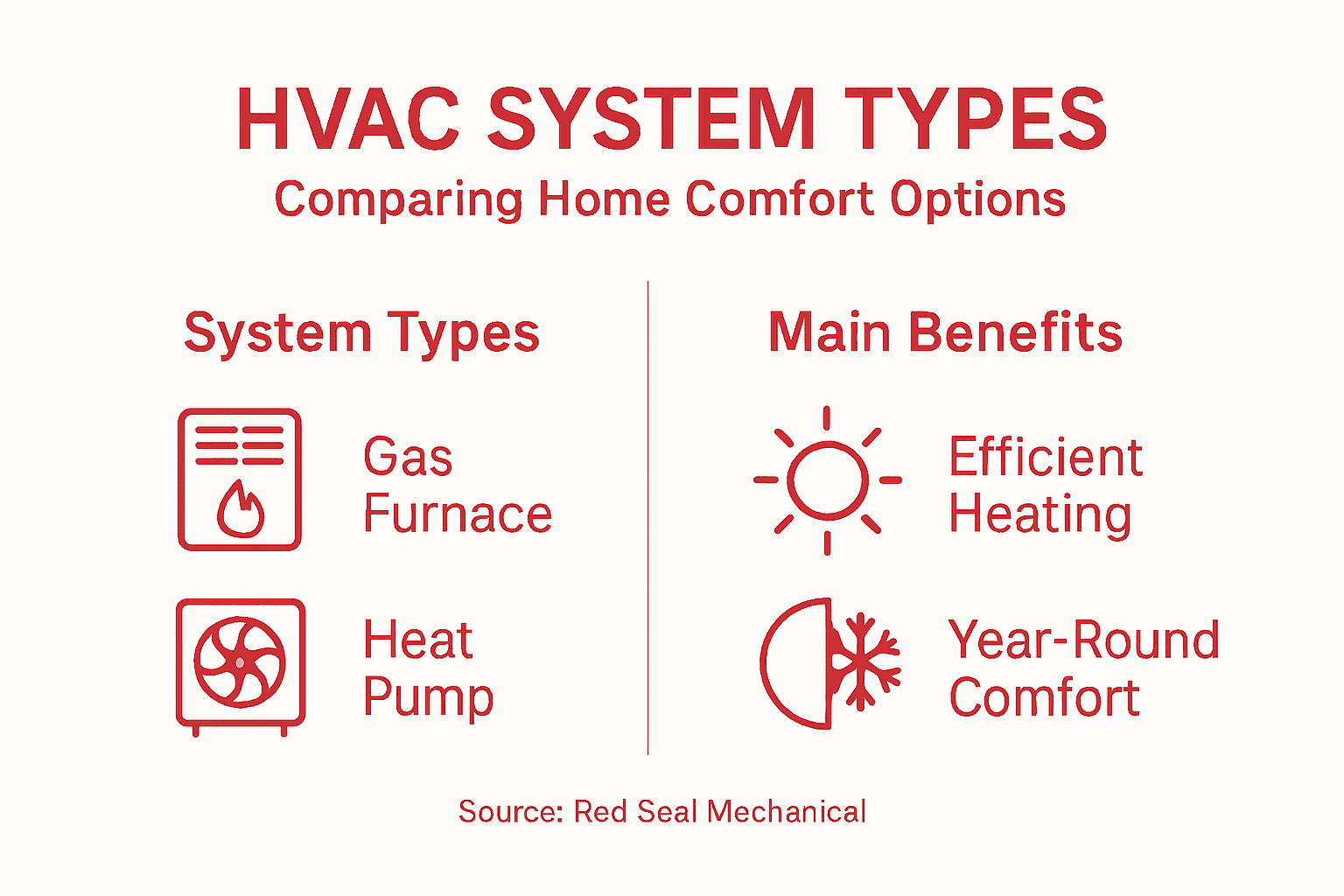
- Gas Furnaces: Ideal for cold Canadian winters, providing efficient and reliable heating
- Central Air Conditioners: Comprehensive cooling solutions for summer months
- Heat Pumps: Versatile systems offering both heating and cooling capabilities
- Ductless Mini-Split Systems: Flexible options for homes without traditional ductwork
Gas Furnaces
Gas furnaces remain a popular choice for Canadian homeowners, particularly in regions experiencing harsh winter conditions. These systems use natural gas to generate heat, distributing warmth through a network of ducts. Modern gas furnaces boast high efficiency ratings, helping homeowners manage energy consumption while maintaining consistent indoor temperatures.
Central Air Conditioning
Central air conditioning systems provide comprehensive cooling for entire homes. These systems work by removing heat and humidity, creating a comfortable living environment during hot summer months. They typically integrate with existing furnace ductwork, making them a seamless addition to most residential heating systems.
Heat Pumps: Dual-Purpose Comfort
Heat pumps represent a cutting-edge solution for year-round climate control. Unlike traditional systems, heat pumps can both heat and cool spaces by transferring thermal energy. During winter, they extract heat from outdoor air, and in summer, they remove heat from indoor spaces. This versatility makes them an energy-efficient alternative to separate heating and cooling systems.
Ductless Mini-Split Systems
Designed for homes without traditional ductwork, ductless mini-split systems offer targeted temperature control. These systems consist of a small outdoor compressor unit connected to one or more indoor air handling units. They’re perfect for home additions, renovated spaces, or homes where installing ductwork is impractical.
Here’s a quick comparison of major residential HVAC system types in Canada:
| System Type | Best For | Energy Efficiency | Typical Installation Cost |
|---|---|---|---|
| Gas Furnace | Harsh winters | High, newer models feature efficiency ratings | $3,000–$6,000 |
| Central Air Conditioner | Whole home cooling | Moderate, newer systems use eco refrigerants | $2,000–$5,000 |
| Heat Pump | Year-round climate control | Very high, lowers heating bills | $4,000–$8,000 |
| Ductless Mini-Split | Homes without ducts | High, zoned control for savings | $2,500–$7,000 |
Choosing the right HVAC system depends on your home’s specific requirements, local climate, and energy efficiency goals.
Pro tip: Consult with a professional HVAC technician to assess your home’s unique needs and determine the most suitable system for optimal comfort and energy efficiency.
How HVAC Systems Function in Homes
Home HVAC systems are complex networks of interconnected components designed to maintain optimal indoor comfort. HVAC parts and their intricate functions reveal the sophisticated engineering behind temperature and air quality management.

Key Components of HVAC Systems
The primary components that work together to create a comfortable home environment include:
- Furnace or Heat Pump: Generates and distributes heat
- Air Conditioning Unit: Removes heat and manages humidity
- Blower Motor: Circulates conditioned air through ducts
- Thermostat: Controls system activation and temperature settings
- Air Filters: Removes dust and airborne contaminants
Heating and Cooling Process
The heating and cooling process begins with the thermostat, which acts as the system’s brain. When indoor temperatures deviate from the desired setting, the thermostat sends signals to activate either the heating or cooling mechanism. During winter, the furnace or heat pump generates warmth, while in summer, the air conditioning unit removes heat and humidity.
Air Distribution Mechanism
The blower motor plays a crucial role in maintaining consistent indoor temperatures. It pushes conditioned air through a network of ducts and vents, ensuring even distribution throughout the home. Air filters integrated into this system trap dust, pollen, and other pollutants, improving overall indoor air quality.
Efficient HVAC systems rely on the seamless interaction of multiple components, each performing a specific function to create a comfortable living environment.
Energy Efficiency and Performance
Modern HVAC systems are designed with energy efficiency in mind. Advanced technologies allow these systems to adjust output based on specific temperature requirements, reducing energy consumption and lowering utility bills. Regular maintenance ensures optimal performance and extends the system’s operational lifespan.
Pro tip: Schedule bi-annual professional maintenance to keep your HVAC system running efficiently and prevent unexpected breakdowns.
Legal and Safety Requirements in Ontario
In Ontario, HVAC systems are subject to stringent legal and safety regulations designed to protect homeowners and workers alike. Workplace safety regulations establish comprehensive guidelines for HVAC installation, maintenance, and operation.
Key Safety Legislation
The primary legal frameworks governing HVAC systems in Ontario include:
- Occupational Health and Safety Act (OHSA)
- Ontario Building Code
- Technical Standards and Safety Authority (TSSA) Regulations
- Electrical Safety Authority (ESA) Requirements
- Municipal Permit and Inspection Protocols
Worker Protection Standards
The Occupational Health and Safety Act mandates specific safety protocols for HVAC professionals. This includes comprehensive requirements for:
- Proper personal protective equipment
- Hazard identification and mitigation
- Mandatory safety training
- Reporting of unsafe working conditions
- Compliance with installation and maintenance standards
Installation and Compliance Requirements
HVAC installations in Ontario must meet rigorous standards. Professional technicians must obtain necessary permits, follow precise installation guidelines, and ensure all systems comply with provincial safety regulations. This includes proper electrical connections, gas line installations, and ventilation requirements.
Safety regulations are not optional suggestions – they are mandatory protections designed to safeguard both workers and homeowners.
Homeowner Responsibilities
Homeowners play a crucial role in maintaining safety standards. This involves:
For reference, here are key responsibilities for Ontario homeowners to ensure HVAC safety and compliance:
| Responsibility | Why It Matters | Impact |
|---|---|---|
| Hire certified professionals | Ensures legal compliance | Reduces accident and liability risk |
| Schedule regular inspections | Catches early faults | Prolongs system lifespan |
| Maintain installation records | Aids warranty claims | Simplifies resale and repairs |
| Follow provincial guidelines | Meets code standards | Prevents fines and insurance issues |
- Hiring licensed and certified HVAC professionals
- Ensuring regular system inspections
- Maintaining documentation of installations and repairs
- Following manufacturer and provincial guidelines
- Addressing potential safety concerns promptly
Pro tip: Always verify a technician’s professional credentials and current certifications before allowing any HVAC work in your home.
Costs, Pitfalls, and Homeowner Responsibilities
Navigating the complex world of HVAC systems requires careful consideration and informed decision-making. Canadian homeowner initiatives offer resources to help manage HVAC investments effectively.
Common HVAC Investment Pitfalls
Homeowners frequently encounter several critical challenges when managing HVAC systems:
- Selecting inappropriate system sizes
- Overlooking energy efficiency ratings
- Neglecting regular maintenance
- Falling for aggressive sales tactics
- Misunderstanding long-term system economics
Homeowner Decision-Making Strategies
Making informed HVAC choices involves understanding multiple interconnected factors. Homeowners must evaluate system performance, long-term energy savings, and potential environmental impacts. This requires researching different technologies, understanding warranty terms, and comparing installation requirements across various system types.
Navigating Financial Considerations
Financial planning for HVAC systems goes beyond initial installation expenses. Smart homeowners consider:
- Potential energy rebate programs
- Long-term operational efficiency
- Maintenance and repair projections
- Potential home value improvements
- Insurance and warranty considerations
Smart HVAC investments balance immediate needs with future performance and efficiency goals.
Protecting Your Investment
Protecting your HVAC system requires proactive management. This includes regular professional inspections, understanding manufacturer recommendations, and maintaining comprehensive service records. Homeowners should develop relationships with reputable local HVAC professionals who can provide ongoing support and expert advice.
Pro tip: Create a dedicated maintenance folder documenting all HVAC system services, repairs, and professional interactions to track your system’s health and performance.
Secure Your Home Comfort with Trusted Local HVAC Experts
Understanding what HVAC really means and how important reliable heating, ventilation, and air conditioning systems are can make all the difference to your home’s comfort and air quality. This article highlights common challenges like maintaining proper ventilation, choosing the right system type, and ensuring legal and safety compliance in Ontario. If these concerns resonate with you, it is crucial to partner with an experienced provider who truly understands local needs.
At Red Seal Mechanical Services, we specialize in delivering dependable furnace, heating, and air conditioning solutions tailored for Durham Region homes. With a family-owned commitment since 2012, our certified technicians focus on honest service and expert maintenance to keep your HVAC system running efficiently year-round. Ready to protect your investment and enjoy worry-free comfort? Visit Red Seal Mechanical Services today to schedule an inspection or consultation that fits your needs.
Frequently Asked Questions
What does HVAC mean?
HVAC stands for Heating, Ventilation, and Air Conditioning. It refers to a system designed to manage indoor environmental comfort by controlling temperature, humidity, and air circulation.
Why is proper ventilation important in HVAC systems?
Proper ventilation is crucial as it ensures air quality, reduces indoor air pollution, controls moisture levels, and improves overall respiratory health. It also helps prevent the buildup of harmful gases.
What are the major types of residential HVAC systems available?
The major types of residential HVAC systems include gas furnaces, central air conditioners, heat pumps, and ductless mini-split systems. Each type has unique advantages based on heating and cooling needs.
How can homeowners ensure their HVAC system runs efficiently?
Homeowners can ensure efficient HVAC operation by scheduling bi-annual professional maintenance, regularly replacing air filters, and keeping ducts clean. It’s also important to consult with qualified HVAC technicians for any installation and repair needs.
