


Choosing the right air conditioning system for your Durham Region home can feel overwhelming. With humid summers and a wide range of options, from central units to ductless mini-splits, window models, and even geothermal heat pumps, it’s tough to know which system will deliver the best comfort, efficiency, and value. This guide breaks down the most popular air conditioning systems available, explaining how each works, their costs, and which homes they suit best. You’ll gain the clarity needed to make an informed decision that keeps your family cool and your energy bills manageable.
Table of Contents
- Key takeaways
- Understanding central air conditioning systems
- Ductless mini-split systems: flexible cooling without ducts
- Window and portable air conditioning units: affordable but limited options
- Geothermal and advanced air conditioning options
- Discover expert HVAC services for Durham Region homeowners
- Frequently asked questions
Key Takeaways
| Point | Details |
|---|---|
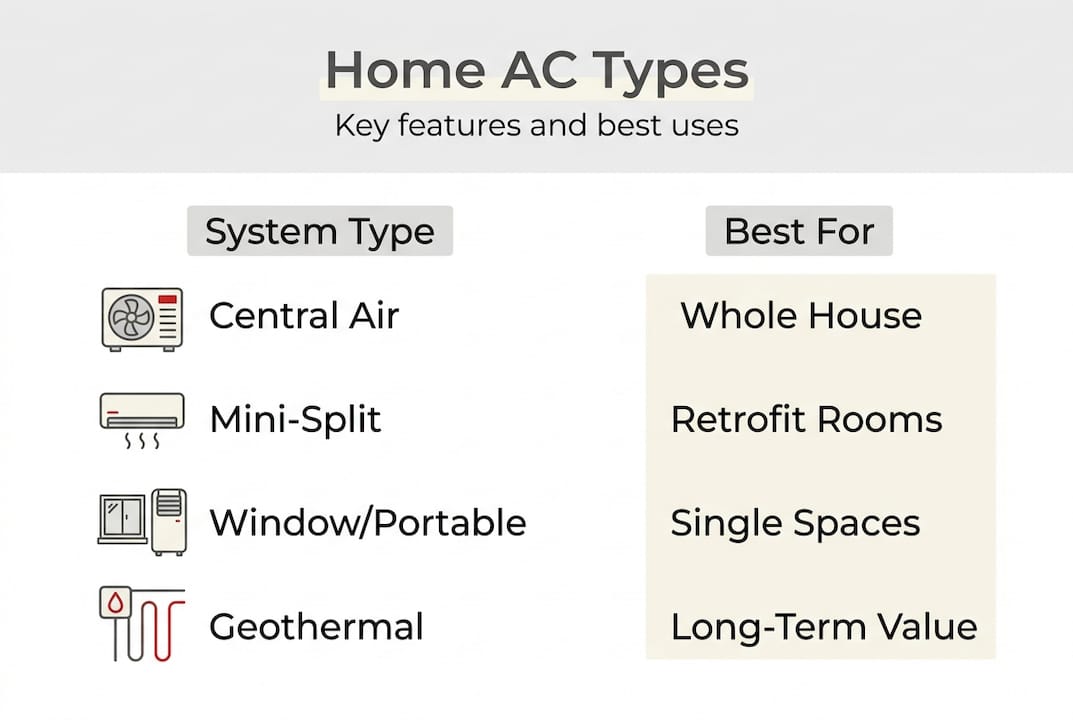
| Central with existing ducts | Central systems work best for homes that already have ductwork and provide even cooling and strong humidity control. |
| Ductless flexibility | Ductless mini splits offer zoning and flexible cooling without ductwork. |
| Window and portable limits | Window and portable units are affordable for single rooms but are less efficient and noisier than central systems. |
| Geothermal efficiency costs | Geothermal heat pumps deliver high efficiency but require a significant upfront investment and site conditions. |
Understanding central air conditioning systems
Central air conditioning remains the most common cooling solution in Durham Region homes, especially those built with existing ductwork. These split-system ducted units use an outdoor condenser and compressor paired with an indoor evaporator coil connected to a furnace or air handler that distributes cooled air through ducts to every room. This setup ensures even temperature distribution throughout your home, which is critical for maintaining consistent comfort during hot, humid summers.
One of central air conditioning’s biggest advantages is effective humidity control. Durham Region summers bring high humidity levels that can make indoor spaces feel sticky and uncomfortable. Central systems excel at removing moisture from the air as they cool, improving overall comfort and indoor air quality. The evaporator coil condenses water vapour out of the air, which drains away, leaving your home feeling fresher.
Installation costs for central air conditioning typically range from $1,500 to $4,000, but this assumes your home already has ductwork in place. If ducts need to be installed or extensively repaired, costs can climb significantly higher. Professional AC installation is essential to avoid duct leaks that waste energy and reduce comfort. Even small leaks can cause up to 30% efficiency loss, driving up your electricity bills and straining the system.
Central units generally run quieter indoors than window or portable options because the noisy compressor sits outside. However, they offer less flexibility for zoning compared to ductless systems. If you want to cool only specific rooms, central air may not be the most efficient choice. Regular maintenance, including duct sealing and filter changes, keeps these systems running efficiently and extends their lifespan.
Pro Tip: Schedule annual maintenance before cooling season starts to catch minor issues before they become expensive repairs and to keep your system running at peak efficiency.
Key benefits of central air conditioning:
- Even temperature distribution throughout the entire home
- Excellent humidity control suited to Durham Region’s humid summers
- Quieter indoor operation compared to window or portable units
- Increases home resale value
Potential drawbacks:
- Higher upfront cost if ductwork installation is required
- Less flexible for zoning or cooling specific rooms only
- Requires professional installation and regular maintenance
For homeowners with existing ducts seeking whole-house comfort, central air conditioning delivers reliable, efficient cooling. Understanding air conditioning basics in Ontario helps you appreciate how these systems work and why proper installation matters.
Ductless mini-split systems: flexible cooling without ducts
Ductless mini-split systems have surged in popularity as a modern alternative to central air conditioning, especially in homes without existing ductwork or where adding ducts is impractical. These ductless systems connect an outdoor compressor to one or more indoor wall or ceiling units via refrigerant lines, eliminating the need for bulky ductwork. This design offers exceptional flexibility for zoning, allowing you to cool specific rooms independently and save energy by not conditioning unused spaces.

Mini-splits shine in efficiency. With SEER ratings ranging from 16 to 30 or higher, they can deliver 30 to 50% energy savings compared to window units and often outperform central systems. Inverter or variable-speed compressors adjust cooling output precisely to match demand, avoiding the energy waste of constant on-off cycling. This technology also reduces temperature swings, keeping your home more comfortable.
Costs for ductless mini-splits vary widely based on the number of zones and system complexity. Single-zone units start around $600, while multi-zone systems serving several rooms can reach $20,000 or more. While the upfront investment is higher than window units, the long-term energy savings and comfort benefits often justify the expense. Professional mini-split installation is critical to ensure refrigerant lines are properly charged and sealed, preventing leaks that compromise performance.
Mini-splits operate quietly indoors, with noise levels often below 30 decibels, comparable to a whisper. Installation is less disruptive than adding ductwork, requiring only a small hole through the wall to connect indoor and outdoor units. This makes them ideal for home additions, older homes, or rooms that central systems struggle to reach.
Pro Tip: Choose a mini-split with an inverter compressor for maximum efficiency and quieter operation, especially if you plan to run the system frequently during Durham’s hot summers.
Advantages of ductless mini-splits:
- Zoned cooling saves energy by conditioning only occupied rooms
- High SEER ratings deliver significant electricity savings
- Quiet indoor operation enhances comfort
- Minimal installation disruption compared to ductwork
- Ideal for homes without existing ducts or difficult-to-reach spaces
Considerations:
- Higher upfront cost than window or portable units
- Requires professional installation to avoid refrigerant leaks
- Indoor units visible on walls or ceilings may not suit all aesthetics
| System type | SEER/CEER rating | Cost range | Best use |
|---|---|---|---|
| Central air conditioning | 13-21 | $1,500-$4,000+ | Whole-house cooling with ducts |
| Ductless mini-split | 16-30+ | $600-$20,000 | Zoned cooling without ducts |
| Window air conditioner | 8-12 | $150-$800 | Single-room budget cooling |
For homeowners seeking flexibility, efficiency, and quiet operation, ductless mini-splits represent a smart investment. Explore more air conditioning tips for Durham homeowners to maximise your system’s performance.
Window and portable air conditioning units: affordable but limited options
Window and portable air conditioners offer budget-friendly cooling solutions for homeowners who need to cool individual rooms or prefer a lower upfront investment. Window air conditioners are self-contained units installed in a window opening, housing the compressor, evaporator, and condenser in one box designed for single-room cooling. Portable air conditioners are mobile units with an exhaust hose that vents hot air out a window or wall, offering flexibility to move between rooms.
These units are significantly less expensive than central or mini-split systems. Window models range from $150 to $800, while portable units cost between $100 and $500. This affordability makes them attractive for renters, homeowners on tight budgets, or those needing temporary or supplemental cooling. Installation is straightforward for window units, requiring only a secure fit in the window frame, while portable models need minimal setup beyond positioning the exhaust hose.
However, efficiency is a major trade-off. Window units typically achieve CEER ratings of 8 to 12, and portable models score EER ratings of 8 to 11, both far below the performance of central systems or mini-splits. Lower efficiency translates to higher electricity costs for the same cooling output. In Durham Region’s humid summers, these units also struggle with moisture removal, often leaving rooms feeling clammy even when temperatures drop.
Noise is another drawback. Both window and portable units place the compressor indoors or very close to living spaces, generating noticeable sound during operation. This can disrupt sleep or concentration, especially in bedrooms or home offices. Window units also block natural light and views, while portable models require floor space and careful hose placement to avoid heat leakage.
| Feature | Window AC | Portable AC |
|---|---|---|
| Cost range | $150-$800 | $100-$500 |
| Efficiency | CEER 8-12 | EER 8-11 |
| Noise level | Moderate to high | High |
| Mobility | Fixed in window | Wheels for movement |
| Installation ease | Moderate (window fit) | Very easy (plug and hose) |
Pros of window air conditioners:
- Low upfront cost
- Effective for single-room cooling
- No professional installation required
Cons of window air conditioners:
- Lower efficiency increases electricity bills
- Blocks window and reduces natural light
- Noisier operation
- Limited humidity control
Pros of portable air conditioners:
- Lowest upfront cost
- Mobility allows use in different rooms
- No permanent installation needed
Cons of portable air conditioners:
- Least efficient cooling option
- Highest noise levels
- Requires floor space and exhaust hose setup
- Poor dehumidification in humid climates
For homeowners needing budget-friendly spot cooling or temporary solutions, window and portable units serve a purpose. However, their limitations in efficiency, noise, and humidity control make them less suitable for whole-house comfort in Durham Region’s climate. If you experience issues with these units, consult an air conditioning repair guide or explore more efficient alternatives. Additional AC tips for Durham homeowners can help you maximise performance even with budget units.
Geothermal and advanced air conditioning options
Geothermal heat pumps represent the pinnacle of air conditioning efficiency, offering year-round heating and cooling by leveraging the earth’s stable underground temperatures. These geothermal systems use ground loops buried in your yard to exchange heat, achieving EER ratings of 20 to 40, far surpassing any other cooling technology. This exceptional efficiency translates to dramatically lower operating costs, often reducing energy bills by 50% or more compared to conventional systems.
The catch is upfront investment. Geothermal heat pump installation costs range from $15,000 to $30,000, driven by the complexity of drilling or trenching to install ground loops. Not every property is suitable. You need sufficient land area and favourable soil or bedrock conditions for effective heat exchange. A professional site assessment determines feasibility and helps identify potential government incentives or rebates that can offset costs.
Despite the high initial expense, geothermal systems offer compelling long-term value for homeowners planning to stay in their homes for many years. Operating costs are minimal because the system moves heat rather than generating it, and ground loops can last 50 years or more with minimal maintenance. The outdoor equipment is quieter than conventional air conditioners, and the system provides both heating and cooling, eliminating the need for separate furnaces.
Geothermal heat pumps also deliver environmental benefits. By using renewable ground energy, they produce far fewer greenhouse gas emissions than fossil fuel systems. For eco-conscious homeowners in Durham Region, this aligns with sustainability goals while reducing long-term energy expenses.
Pro Tip: If you plan to stay in your home for at least 10 years, geothermal heat pumps often pay for themselves through energy savings and increased home value, making them a smart long-term investment.
Benefits of geothermal heat pumps:
- Highest efficiency among all air conditioning options (EER 20-40)
- Lowest operating costs reduce monthly energy bills significantly
- Quiet operation with minimal outdoor noise
- Environmentally friendly with low emissions
- Year-round heating and cooling in one system
- Long lifespan with minimal maintenance
Limitations:
- High upfront installation cost ($15,000-$30,000)
- Requires suitable land and soil conditions
- Complex installation process
- Not ideal for homeowners planning to move soon
For homeowners with appropriate sites and long-term plans, geothermal systems offer unmatched efficiency and comfort. Consulting with certified professionals ensures you understand site requirements and available incentives. Learn more about heating and cooling basics in Ontario to see how geothermal fits into a comprehensive home comfort strategy.
Discover expert HVAC services for Durham Region homeowners
Choosing the right air conditioning system is just the first step. Proper installation, regular maintenance, and reliable repair services ensure your investment delivers years of efficient, comfortable cooling. Red Seal Mechanical Services brings over a decade of experience serving Durham Region homeowners with professional AC installation, AC maintenance services, and expert repairs. Our certified technicians understand the unique climate challenges in Durham and help you select and maintain the system that best fits your home and budget. Whether you’re upgrading to a ductless mini-split, replacing an aging central unit, or need emergency repairs, we deliver honest, reliable service you can trust. Reach out today for personalised advice and solutions tailored to your home’s needs.
Frequently asked questions
What types of air conditioning systems are best for Durham homes?
Homes with existing ductwork benefit most from central air conditioning for whole-house cooling and excellent humidity control. If your home lacks ducts or you want zoned cooling, ductless mini-splits offer superior efficiency and flexibility. Window and portable units suit single-room needs or tight budgets but sacrifice efficiency and comfort. Geothermal heat pumps deliver the highest efficiency for homeowners with suitable sites and long-term plans. Your choice depends on your home layout, budget, and cooling priorities. Explore air conditioning tips for Durham homeowners to optimise any system you choose.
How much does installing a central air conditioning system cost in the Durham Region?
Central air conditioning installation typically costs $1,500 to $4,000 if your home already has ductwork in good condition. Homes requiring new duct installation or extensive repairs face significantly higher costs, sometimes exceeding $10,000 depending on home size and complexity. Professional assessment is essential to determine exact pricing based on your specific situation. Factors like system size, efficiency rating, and installation difficulty all influence final costs. Investing in quality installation ensures long-term efficiency and comfort.
What are the efficiency differences between mini-split and window air conditioners?
Ductless mini-split systems achieve SEER ratings of 16 to 30 or higher, while window air conditioners typically rate CEER 8 to 12. This efficiency gap translates to 30 to 50% energy savings with mini-splits compared to window units. Over time, lower electricity bills offset the higher upfront cost of mini-splits. Higher efficiency also reduces environmental impact and improves comfort through better temperature and humidity control. For homeowners prioritising long-term savings and performance, mini-splits are the clear winner.
Can geothermal heat pumps work in Durham Region homes?
Geothermal heat pumps work exceptionally well in Durham Region homes with suitable land and soil conditions. These systems deliver superior efficiency and year-round comfort, but they require sufficient yard space for ground loops and favourable geology for effective heat exchange. A professional site assessment determines feasibility and identifies any limitations. While the upfront investment is substantial, homeowners planning to stay long-term often find the energy savings and environmental benefits well worth it. Government incentives may also be available to reduce installation costs.
