


Waking up to a cold house during a Durham Region winter is more than uncomfortable, it’s urgent. Before you panic and call for emergency service, many furnace problems stem from simple issues you can diagnose and fix yourself in minutes. This guide walks you through safe, practical troubleshooting steps that restore warmth quickly while helping you recognise when professional help is truly necessary.
Table of Contents
- Prerequisites And Preparation
- Step-By-Step Furnace Troubleshooting
- Common Mistakes And Troubleshooting Errors To Avoid
- Expected Outcomes And When To Call Professionals
- Summary And Next Steps
- About Red Seal Mechanical Services
- FAQ
Key takeaways
| Point | Details |
|---|---|
| Safety protocols matter | Always shut off electrical power and gas supply before inspecting your furnace to prevent accidents. |
| Check basics first | Thermostat settings and dirty air filters cause most heating failures and take minutes to verify. |
| DIY success rate is high | Homeowner troubleshooting resolves 70% of minor furnace issues without professional intervention. |
| Know your limits | Repeated shutdowns, gas odours, or strange noises require immediate professional assessment. |
| Prevention saves money | Regular maintenance prevents costly breakdowns and keeps energy bills manageable through harsh winters. |
Prerequisites and preparation
Successful furnace troubleshooting starts before you touch any equipment. Gathering the right tools and understanding safety protocols prevents accidents and wasted effort.
You need surprisingly few items: a reliable flashlight for inspecting dark furnace compartments, a screwdriver set for accessing panels, and replacement air filters matching your system specifications. Keep these items accessible during heating season. Having them ready means you can act quickly when problems arise rather than scrambling during an emergency.
Safety comes first, always. Before any inspection, locate your furnace’s electrical disconnect switch, usually mounted on or near the unit. Flip it to the off position. Next, find your gas supply valve and turn it perpendicular to the pipe to shut off fuel flow. These two steps eliminate the most serious hazards. Never skip them, even for quick checks.
Understanding basic furnace operation helps you troubleshoot effectively. Your system pulls cold air through return ducts, filters it, heats it in the combustion chamber or heat exchanger, then distributes warm air through supply ducts. The blower fan circulates air while safety sensors monitor temperatures and combustion. When something disrupts this cycle, your home loses heat.
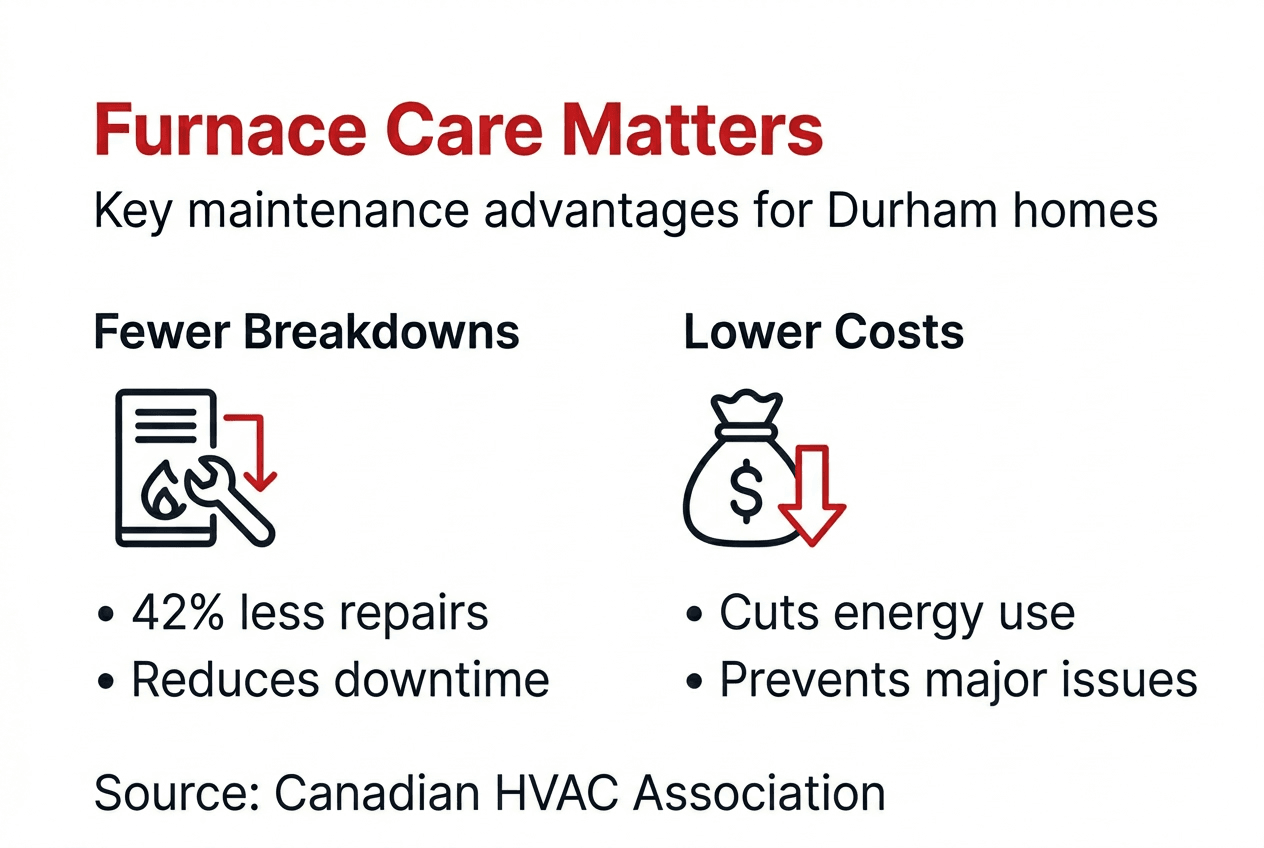
Regular maintenance reduces breakdowns by 42% and cuts energy costs significantly. Durham winters demand reliable heating, making prevention essential. Annual professional inspections catch problems before they escalate, but monthly homeowner checks keep systems running between service calls.
Use this preparation checklist to stay organised:
| Task | Details |
|---|---|
| Gather tools | Flashlight, screwdrivers, replacement filters |
| Locate shutoffs | Find electrical disconnect and gas valve |
| Review manual | Check manufacturer troubleshooting section |
| Clear access | Remove storage blocking furnace area |
| Note symptoms | Document when problem started and patterns |
Pro Tip: Take photos of your furnace setup before troubleshooting. These images help you restore everything correctly and provide useful references if you need to describe issues to a technician later.
Clearing the area around your furnace improves safety and access. Remove storage boxes, cleaning supplies, and anything combustible within one metre of the unit. Good lighting and clear space let you work efficiently and spot problems quickly. Keep the furnace troubleshooting checklist handy as you proceed through diagnostic steps.
Step-by-step furnace troubleshooting
With preparation complete, follow these systematic checks to identify and resolve common furnace problems safely and effectively.
- Confirm power and gas supplies are off using the shutdown procedures covered earlier.
- Check your thermostat display for error codes, dead batteries, or blank screens indicating power issues.
- Verify thermostat settings show heat mode, temperature set above current room temperature, and fan switch on AUTO not ON.
- Inspect the air filter by removing the access panel and checking for visible dirt, dust buildup, or damage.
- Examine the furnace exterior for any unusual sounds, vibrations, or smells when you restore power briefly.
- Observe blower fan behaviour after the heating cycle completes to distinguish normal operation from malfunctions.
Thermostat problems cause more service calls than actual furnace failures. Start here because fixes take seconds. If your thermostat shows a blank screen, replace batteries first. Digital models need fresh batteries annually. If the display works but shows cooling mode or off, switch to heat and raise the temperature setting five degrees above room temperature. Wait five minutes for the system to respond.
The fan setting creates confusion for many homeowners. Setting the fan to ON runs it continuously, blowing unheated air between heating cycles and making you think the furnace isn’t working. Switch to AUTO so the fan operates only during heating cycles. This simple change solves the “cold air blowing” complaint instantly.
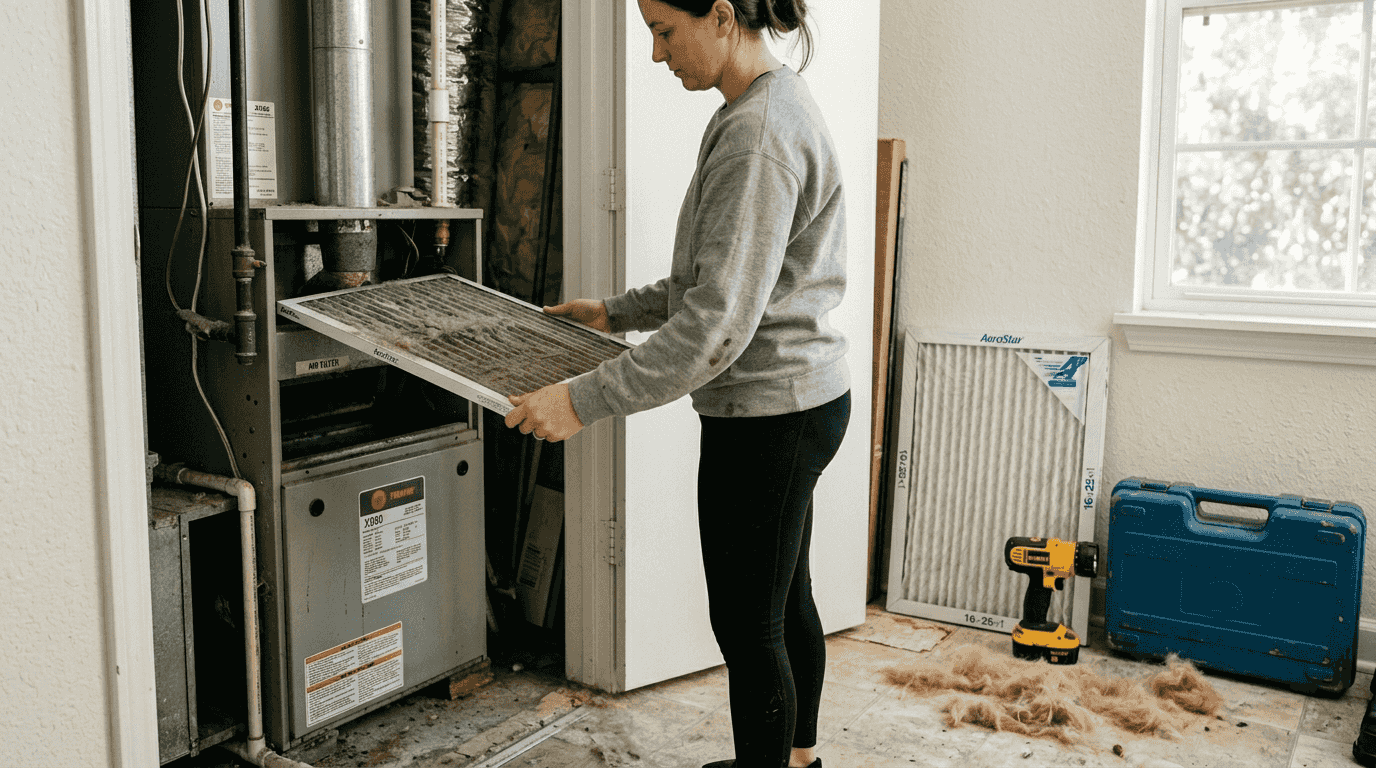
Air filter replacement ranks among the most impactful maintenance tasks you control. A clogged filter restricts airflow, forcing your furnace to work harder and potentially triggering safety shutdowns. Locate the filter slot, usually in the return air duct or furnace cabinet. Slide out the old filter and check it against light. If you cannot see light through it clearly, replacement is overdue. Install the new filter with arrows pointing toward the furnace, matching airflow direction.
| Issue | Quick Fix | Impact |
|---|---|---|
| Thermostat on cooling mode | Switch to heat mode | Immediate heating restoration |
| Fan set to ON | Change to AUTO setting | Stops continuous cold air |
| Dirty air filter | Replace with clean filter | Improves airflow 40% instantly |
| Tripped breaker | Reset circuit breaker | Restores power to system |
Control board resets help after power outages or safety shutdowns, but only attempt this after verifying no underlying problems exist. Look for a reset button on the furnace control board, typically a small red or yellow button. Press and hold for five seconds, then release. The system should initiate its startup sequence. If it shuts down again immediately, a safety issue needs professional diagnosis.
Pro Tip: The blower fan often continues running for several minutes after the burner shuts off. This normal cooldown cycle prevents heat buildup and extracts remaining warmth from the heat exchanger. Don’t mistake this for a malfunction.
External factors affect furnace performance too. Check that all supply vents throughout your home remain open and unblocked by furniture or drapes. Closing too many vents creates pressure imbalances that reduce efficiency. Verify return air vents have clearance for proper circulation. These checks take minutes but significantly impact heating effectiveness. Consider reviewing proper filter selection to optimise your system performance long term.
Follow the complete six-step troubleshooting process systematically rather than jumping between checks randomly. This methodical approach identifies problems faster and prevents overlooking simple solutions.
Common mistakes and troubleshooting errors to avoid
Even well-intentioned homeowners make predictable errors during furnace troubleshooting that waste time, risk safety, or cause additional damage.
Neglecting filter replacement beyond three months ranks as the most common cause of furnace problems. Dirty filters reduce airflow, increase energy consumption, and trigger overheating shutdowns. Set calendar reminders every 90 days during heating season. Homes with pets, renovations, or high dust levels need monthly replacement. The small investment in filters prevents expensive repairs.
Misinterpreting normal blower operation creates unnecessary service calls. After the burner completes its heating cycle, the blower continues running two to five minutes to extract remaining heat. Homeowners hearing the fan without feeling warm air assume something broke. Understanding this normal cooldown sequence saves you from mistaking proper operation for malfunction.
Resetting the control board without investigating why it shut down poses serious risks. Safety sensors trigger shutdowns for reasons like overheating, flame sensor issues, or gas pressure problems. Repeatedly resetting without addressing root causes can damage components or create hazardous conditions. If your furnace shuts down more than twice after resets, stop and call professionals.
Skipping thermostat verification wastes troubleshooting time. Before dismantling your furnace, spend 30 seconds confirming the thermostat shows heat mode, appropriate temperature setting, and AUTO fan operation. This basic check resolves problems instantly yet gets overlooked surprisingly often.
Failing to shut off power and gas before inspecting your furnace creates the most dangerous mistake possible. Electrical shock and gas exposure risks far outweigh any time saved by skipping safety protocols. Always, without exception, kill power at the disconnect switch and close the gas valve before opening panels or touching components.
Pro Tip: Take notes during troubleshooting, documenting what you checked, what you found, and what you changed. These details prove invaluable if you need professional help later, giving technicians context that speeds diagnosis.
Other common errors include:
- Ignoring strange noises or smells, assuming they will resolve themselves
- Blocking vents with furniture, decorations, or storage items
- Setting thermostat temperatures excessively high, thinking it heats faster
- Attempting repairs beyond your skill level instead of calling experts
- Postponing professional maintenance to save money short term
Recognise your limitations honestly. The troubleshooting checklist empowers you to handle common issues confidently while identifying when expertise becomes necessary. Knowing when to stop prevents turning minor problems into major expenses.
Expected outcomes and when to call professionals
Understanding what DIY troubleshooting can realistically achieve helps you set appropriate expectations and recognise when professional intervention becomes essential.
Most minor furnace problems respond well to homeowner troubleshooting. Simple checks resolve 70% of heating issues without professional service. Thermostat adjustments, filter replacements, and basic resets handle the majority of calls. You save service charges while learning valuable system knowledge.
Delaying necessary repairs creates escalating costs and risks. Systems running with unresolved problems consume excess energy, strain components, and may fail completely during the coldest weather. Postponing repairs increases energy bills by 30% compared to properly maintained systems. The money saved by avoiding service calls quickly disappears through higher utility bills.
| Scope | Homeowner Troubleshooting | Professional Repair |
|---|---|---|
| Common fixes | Thermostat, filters, resets, breakers | Complex diagnostics, part replacement, system repairs |
| Time investment | 15 to 45 minutes | 1 to 3 hours typically |
| Cost range | Minimal, mostly supplies | Service call plus parts and labour |
| Success rate | 70% for minor issues | 95% plus for all problems |
| Safety assurance | Homeowner responsibility | Licensed, insured technician |
Specific warning signs demand immediate professional assessment regardless of your troubleshooting results:
- Repeated system shutdowns after multiple reset attempts
- Strong gas odours near the furnace or throughout your home
- Yellow or flickering burner flames instead of steady blue flames
- Loud banging, screeching, or grinding noises during operation
- Visible cracks in the heat exchanger or signs of corrosion
- Carbon monoxide detector alarms or unexplained illness symptoms
- Water pooling around the furnace base
- Age exceeding 15 to 20 years with increasing repair frequency
These symptoms indicate problems beyond DIY scope, requiring diagnostic equipment and expertise only licensed technicians possess. Attempting repairs yourself in these situations risks injury, property damage, or code violations.
“Professional HVAC services don’t just fix immediate problems. Annual maintenance reduces energy consumption by 15% while extending equipment lifespan significantly. Durham Region’s temperature extremes make this preventive care essential for comfort and budget protection.”
Recognise when your troubleshooting efforts reach their productive limit. If you have verified thermostat settings, replaced filters, checked breakers, and attempted appropriate resets without success, further DIY efforts rarely help. Professional diagnosis becomes the efficient path forward.
Balancing DIY confidence with professional expertise optimises both cost and reliability. Handle routine checks and simple fixes yourself. Trust complex diagnostics, component replacement, and safety-critical repairs to qualified technicians. This hybrid approach maximises value while maintaining safe, efficient heating.
Watch for seven key signs your system needs professional attention beyond immediate breakdowns. Addressing problems early prevents emergency failures during peak winter demand when service availability tightens and costs increase.
Schedule annual professional maintenance even when your furnace seems fine. Technicians catch developing problems before they cause failures, clean components unreachable during homeowner maintenance, and verify safe operation. This proactive service proves far more economical than reactive emergency repairs.
Quality professional service includes comprehensive system evaluation, not just fixing the immediate complaint. Technicians assess overall condition, efficiency, and remaining lifespan, helping you plan for eventual replacement rather than facing surprise failures. Choose experienced furnace repair specialists familiar with Durham Region’s specific climate demands and local building codes.
Summary and next steps
Review this troubleshooting summary to reinforce critical safety practices and confirm you have covered essential diagnostic steps before deciding whether to continue DIY efforts or engage professional help.
Your troubleshooting checklist recap:
- Verify power and gas shutoffs before any furnace inspection work
- Check thermostat settings, mode, temperature, and battery condition thoroughly
- Inspect and replace air filters if dirty, damaged, or overdue for changing
- Examine breakers, switches, and basic electrical connections systematically
- Attempt control board reset only after verifying no underlying safety issues
- Recognise normal blower cooldown operation to avoid false malfunction diagnosis
- Document symptoms, changes made, and results for professional consultation if needed
Timing matters when deciding to call professionals. If basic troubleshooting restores heat, monitor system performance over the next few days. Recurring problems signal issues requiring expert diagnosis even if temporary fixes work initially. Don’t wait for complete failure, especially during winter’s coldest stretches when service demand peaks.
Safety concerns override all other considerations. Gas odours, carbon monoxide warnings, electrical sparking, or flame abnormalities require immediate shutdown and professional response. Never compromise household safety attempting repairs beyond your knowledge level.
Regular professional maintenance complements your troubleshooting abilities. Annual inspections catch developing problems early, optimise efficiency, and extend equipment life substantially. Schedule service before heating season begins rather than waiting for breakdowns. This proactive approach ensures reliable comfort when you need it most.
Durham Region’s climate extremes place heavy demands on heating systems. Furnaces work harder and longer here than in milder regions, making preventive care and prompt repairs essential. Understanding your system, performing regular checks, and knowing when to seek help keeps your home comfortable efficiently.
Make confident, informed service decisions by balancing DIY capability with professional expertise appropriately. Handle routine maintenance and simple fixes yourself. Trust complex diagnostics and repairs to qualified technicians. This approach optimises both cost and reliability long term.
For persistent problems or situations beyond your comfort level, professional furnace repair services restore safe, efficient heating quickly. Experienced technicians diagnose issues accurately, repair systems properly, and provide guidance for ongoing care.
About Red Seal Mechanical Services
When troubleshooting reveals problems requiring professional expertise, Red Seal Mechanical Services brings over a decade of Durham Region heating experience to your home. Their certified technicians understand local climate demands and specialise in diagnosing complex furnace issues quickly.
Red Seal offers comprehensive heating solutions including emergency furnace repair for urgent breakdowns, preventive maintenance programmes that keep systems running efficiently, and complete furnace installation services when replacement becomes necessary. Their family-owned commitment to honest service and customer satisfaction has built trust throughout Bowmanville and surrounding communities since 2012.
Contact Red Seal for professional support when DIY troubleshooting reaches its limits or when you need expert confirmation that your system operates safely and efficiently. Their team responds quickly, communicates clearly, and delivers reliable solutions that restore comfort and peace of mind.
FAQ
What tools do I need to troubleshoot my furnace safely?
You need a reliable flashlight for inspecting dark compartments, a screwdriver set for accessing panels, and replacement air filters matching your system specifications. More importantly, you must know how to safely shut off electrical power at the disconnect switch and close the gas supply valve before beginning any inspection work.
How often should I replace my furnace air filter to prevent issues?
Replace filters every three months during heating season as a baseline standard. Homes with pets, ongoing renovations, or high dust levels benefit from monthly replacement. Clogged filters restrict airflow, reduce efficiency significantly, and trigger safety shutdowns that leave your home cold unexpectedly.
When is it necessary to call a professional HVAC technician?
Call professionals immediately for repeated system shutdowns despite troubleshooting, any gas odours, yellow or flickering flames, loud unusual noises, or carbon monoxide detector alarms. Also seek expert help when basic troubleshooting fails to restore heat or when you lack confidence in your diagnosis. Safety concerns always warrant professional assessment regardless of troubleshooting results.
Recommended
- Essential Furnace Maintenance Guide for Bowmanville Homes
- Essential Furnace Maintenance Guide for Bowmanville Homes
- Furnace Repair: Ensuring Warmth in Durham Region Homes
- Annual Furnace Inspection: Safety And Efficiency For Homes
- Heat Pump Troubleshooting Guide for Canadian Technicians – CoolFix Appliance & HVAC Service
