


Furnace breakdowns during cold Durham Region winters often stem from simple neglect. Many homeowners face high energy bills and unexpected repairs because they overlook routine maintenance. This guide walks you through practical steps to keep your furnace running efficiently, reduce fuel waste, and extend its lifespan, helping you stay warm while avoiding costly emergency calls.
Table of Contents
- Why Maintaining Your Furnace Matters
- Tools And Preparation For Furnace Maintenance
- Step By Step Furnace Maintenance Process
- Professional Inspection And Troubleshooting
- Trusted Furnace Maintenance Services In Durham Region
- Common Questions About Furnace Maintenance
Key takeaways
| Point | Details |
|---|---|
| Efficiency gains | Regular maintenance improves efficiency by up to 15% and prevents most unexpected breakdowns. |
| Annual inspections | Professional checks identify safety hazards like carbon monoxide leaks and prevent expensive repairs. |
| Filter replacement | Installing filters correctly with proper airflow direction preserves system performance and air quality. |
| Safety clearance | Never store flammable materials near your furnace to prevent fire hazards. |
| Cost of neglect | Neglected furnaces waste up to 20% more fuel and have significantly shorter lifespans. |
Why maintaining your furnace matters
Your furnace works hard through Canadian winters, and proper upkeep directly impacts your comfort and wallet. Regular furnace maintenance can improve efficiency by up to 15% while preventing the majority of unexpected breakdowns that leave families in the cold.
When you skip maintenance, your system burns more fuel to produce the same heat. Dust accumulates on components, airflow becomes restricted, and the furnace struggles to maintain temperature. Neglected furnaces can waste up to 20% more fuel and experience premature failure, cutting their expected lifespan in half. That translates to hundreds of dollars in wasted energy annually and thousands in early replacement costs.
Safety concerns escalate with poor maintenance. Carbon monoxide leaks, cracked heat exchangers, and gas line issues pose serious health risks. A well maintained furnace operates safely, protecting your family from invisible dangers.
Consider these compelling reasons to prioritise furnace maintenance:
- Lower monthly heating bills through improved combustion efficiency
- Fewer emergency repair calls during peak winter months
- Extended equipment lifespan, delaying expensive replacement
- Consistent indoor comfort without cold spots or temperature swings
- Reduced environmental impact from lower fuel consumption
Pro Tip: Schedule maintenance in early autumn before heating season begins. Technicians have more availability, and you’ll catch problems before they become emergencies.
“A properly maintained furnace not only saves money but provides peace of mind knowing your family stays safe and warm all winter.”
The difference between a furnace that lasts 12 years versus 20 years often comes down to consistent care. Small investments in maintenance prevent major expenses down the road.
Tools and preparation for furnace maintenance
Before touching your furnace, gather the right materials and create a safe workspace. Proper preparation prevents accidents and makes the job efficient.
You’ll need these basic tools:
- Screwdriver set for accessing panels
- Replacement furnace filter matching your system specifications
- Shop vacuum with hose attachment
- Flashlight or headlamp for visibility
- Work gloves to protect hands
- Dust mask to avoid inhaling particles
Safety comes first. Never store flammable materials like wood, paint, gasoline, or cleaning supplies anywhere near the furnace. Clear a workspace of at least one metre around the unit. Verify the furnace is completely powered down before beginning work.
Pro Tip: Take photos before removing any panels or components. These reference images help you reassemble everything correctly.
This table summarises essential tools and their purposes:
| Tool | Purpose | Safety Note |
|---|---|---|
| Screwdriver | Remove access panels | Ensure power is off first |
| Replacement filter | Maintain airflow | Check size matches exactly |
| Shop vacuum | Remove dust buildup | Use appropriate attachments |
| Flashlight | Inspect components | LED models stay cool |
| Work gloves | Protect hands | Choose non slip grip |
| Dust mask | Prevent inhalation | Replace if breathing becomes difficult |
Locate your electrical panel and identify the breaker controlling your furnace. Switch it off. Find the gas supply valve near the furnace and turn it to the closed position. Wait at least five minutes before proceeding to allow any residual gas to dissipate.
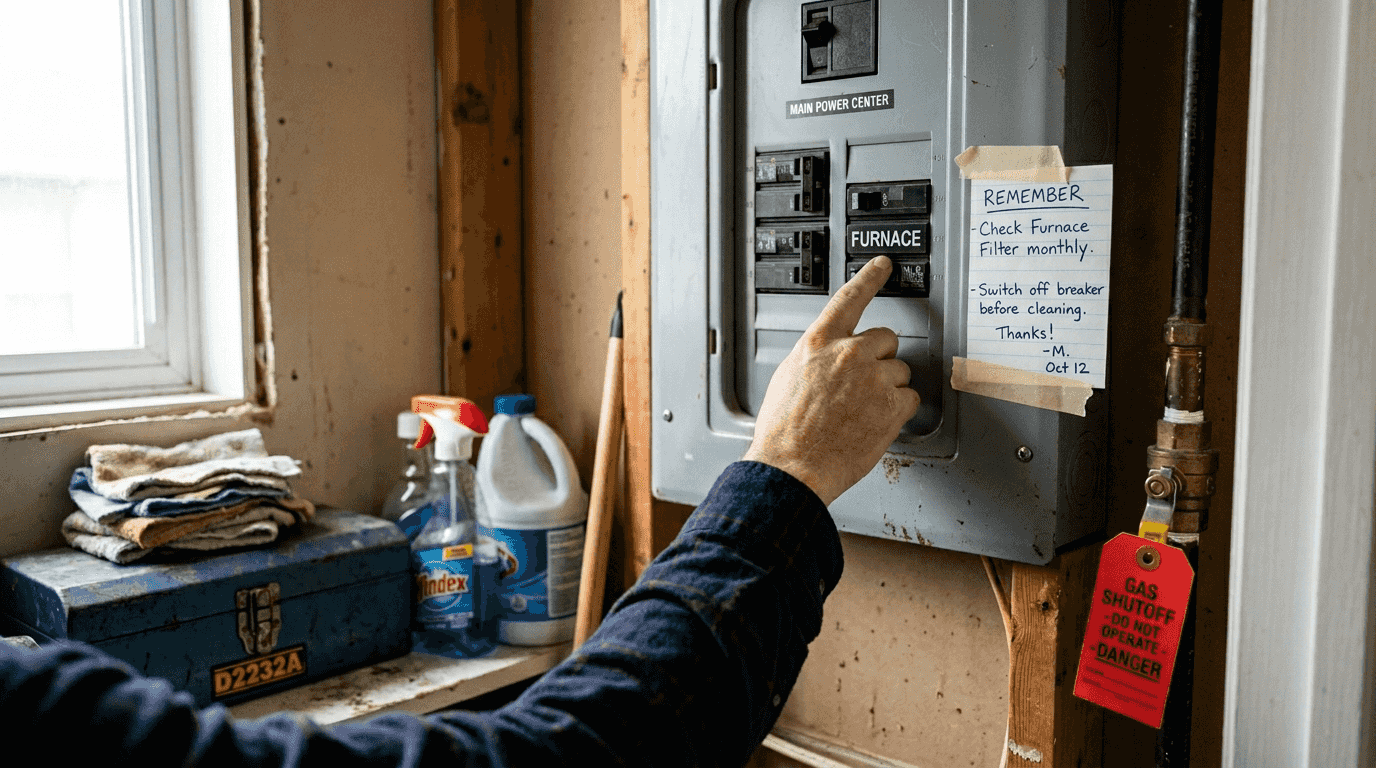
Check your furnace maintenance checklist to ensure you haven’t missed critical preparation steps. Having everything ready before starting saves time and reduces frustration.
Remove any items stored near the furnace, even if they seem harmless. Cardboard boxes, holiday decorations, and laundry can obstruct airflow or pose fire risks. Your furnace needs proper ventilation to operate safely.
Step by step furnace maintenance process
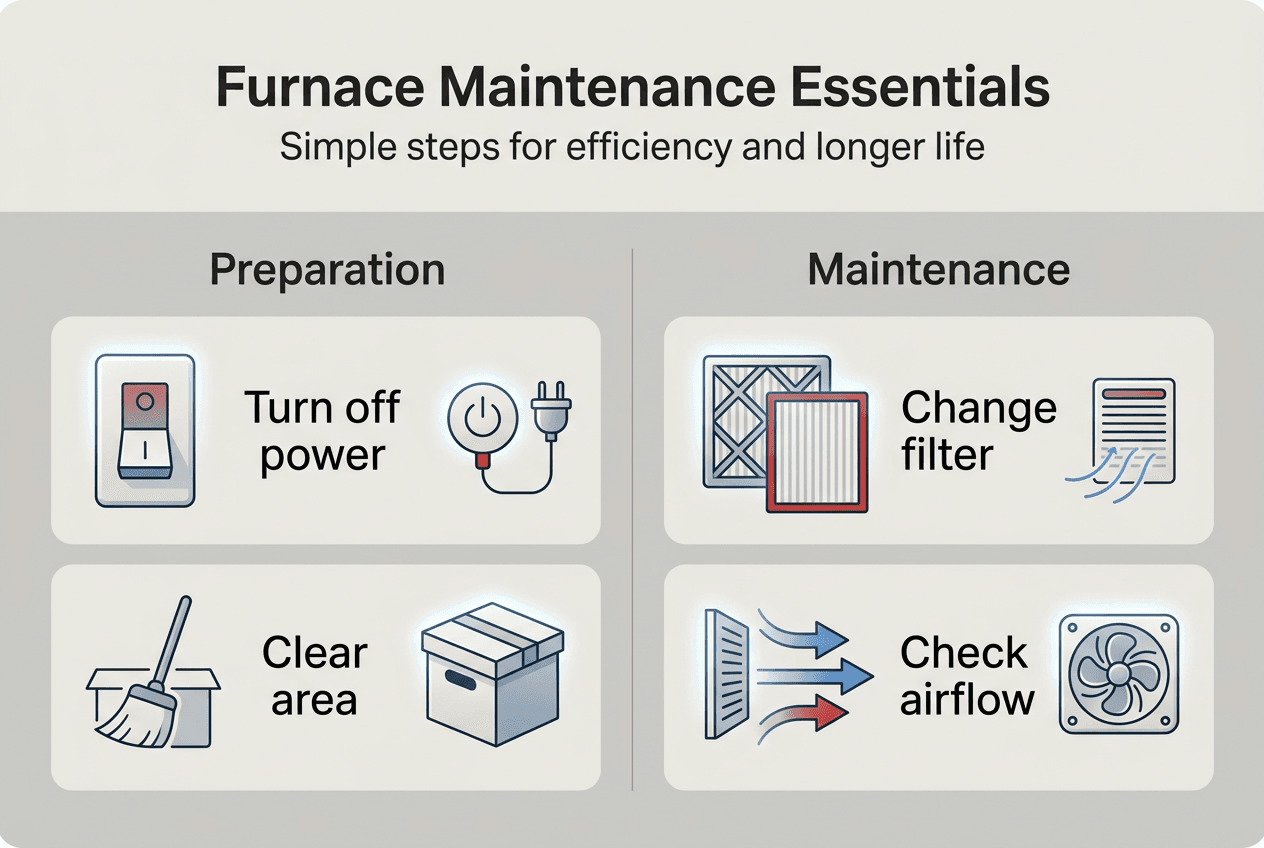
Now that you’re prepared, follow these systematic steps to maintain your furnace properly. Each task builds on the previous one, creating a thorough maintenance routine.
- Confirm the power and gas supply are completely shut off at their respective sources.
- Remove the furnace access panel using your screwdriver, setting screws aside where they won’t roll away.
- Locate the filter compartment, typically near the blower motor or return air duct.
- Slide out the old filter, noting the airflow direction arrow printed on its frame.
- Insert the new filter with arrows pointing toward the furnace, ensuring a snug fit.
- Use your shop vacuum to clean visible dust from the blower compartment and surrounding areas.
- Inspect the blower motor and fan blades for excessive dirt or damage.
- Check the burner assembly through the viewing window if your model has one.
- Examine all visible wiring for fraying, corrosion, or loose connections.
- Replace the access panel and secure all screws firmly.
- Restore gas supply first, then electrical power.
- Set your thermostat to call for heat and observe the startup sequence.
Pro Tip: When changing your filter, note the airflow direction indicated on the frame. Installing it backwards reduces efficiency significantly and can damage your system.
Common mistakes to avoid:
- Forcing components that don’t slide easily, which may indicate misalignment
- Ignoring unusual sounds during startup that signal mechanical problems
- Skipping the blower compartment because it looks clean from the outside
- Using the wrong filter size, leaving gaps that allow dust bypass
Your thermostat plays a crucial role in furnace efficiency. Verify it displays the correct temperature and responds when you adjust settings. If readings seem inaccurate, the thermostat may need calibration or replacement.
Watch for these warning signs during your inspection:
- Yellow or flickering burner flames instead of steady blue
- Excessive rust or corrosion on metal components
- Unusual odours when the furnace operates
- Moisture or water stains near the unit
If you notice any concerning issues, stop immediately and contact professional furnace maintenance services rather than attempting repairs beyond basic cleaning and filter changes.
Document your maintenance with the date and any observations. This record helps track patterns and provides valuable information for technicians during professional inspections.
Professional inspection and troubleshooting
While homeowner maintenance handles routine tasks, professional furnace inspections should be conducted annually to identify potential issues and ensure safe operation. Technicians have specialised tools and training to detect problems invisible to homeowners.
Professional inspections typically include:
- Heat exchanger examination for cracks or deterioration
- Gas line pressure testing and leak detection
- Electrical component testing and connection verification
- Combustion analysis to optimise fuel efficiency
- Flue and venting system inspection
- Safety control testing including limit switches
This comparison shows what you can handle versus what requires expertise:
| Maintenance Task | Homeowner DIY | Professional Service |
|---|---|---|
| Filter replacement | Yes | Optional |
| Visual cleaning | Yes | More thorough |
| Heat exchanger inspection | No | Yes, required |
| Gas line testing | No | Yes, required |
| Combustion adjustment | No | Yes, required |
| Safety control testing | No | Yes, required |
Recognise these signs that demand immediate professional attention:
- Persistent gas odours near the furnace
- Frequent cycling on and off
- Uneven heating throughout your home
- Sudden increases in energy bills
- Strange banging, squealing, or grinding noises
- Visible soot accumulation around the unit
Carbon monoxide leaks represent the most serious hazard. This colourless, odourless gas can be fatal. Install carbon monoxide detectors near sleeping areas and test them monthly. If an alarm sounds, evacuate immediately and call emergency services.
Schedule your annual furnace inspection in September or early October. This timing allows repairs before cold weather arrives and avoids the rush when everyone’s furnace suddenly needs attention in November.
Pro Tip: Keep your furnace maintenance records organised. Showing a history of regular care can improve resale value and may be required for warranty claims.
Professional technicians catch issues early, when repairs cost less. A small crack in the heat exchanger detected during inspection might cost a few hundred dollars to address. That same crack ignored until it causes a complete failure could mean thousands in emergency replacement during a cold snap.
Don’t attempt repairs involving gas lines, electrical components, or internal mechanisms unless you have proper training. The risks far outweigh any potential savings. Durham Region has strict codes for furnace work, and unlicensed repairs can void warranties or create liability issues.
Trusted furnace maintenance services in Durham Region
Keeping your furnace in peak condition requires both your regular attention and professional expertise. When you need thorough maintenance, safety inspections, or unexpected repairs, local specialists understand Durham Region’s climate challenges and building requirements.
Experienced technicians provide comprehensive furnace maintenance services that go beyond basic cleaning. They optimise your system’s performance, verify safe operation, and catch potential problems before they disrupt your comfort. Professional inspections ensure compliance with local codes and manufacturer specifications.
Scheduling regular service extends your furnace’s lifespan and maintains efficiency year after year. When problems arise, prompt furnace repair services restore warmth quickly, minimising discomfort and preventing secondary damage from frozen pipes or moisture issues.
Flexible appointment options work around your schedule, and straightforward pricing eliminates surprises. Contact furnace experts who prioritise your family’s comfort and safety throughout every season.
Common questions about furnace maintenance
How often should I clean or change my furnace filter?
Replace standard filters every one to three months depending on usage, pets, and air quality. Check monthly and change when visibly dirty. High efficiency filters may last longer but require the same monitoring schedule.
What signs indicate my furnace needs professional service?
Yellow flames, unusual noises, frequent cycling, inconsistent heating, or sudden bill increases all warrant professional inspection. Gas odours or carbon monoxide detector alarms require immediate emergency service.
Is it safe to perform furnace maintenance myself?
Homeowners can safely handle filter changes, basic cleaning, and visual inspections. Leave gas line work, electrical repairs, heat exchanger inspection, and combustion adjustments to licensed professionals.
Can regular maintenance reduce my heating bills?
Yes, maintained furnaces operate up to 15% more efficiently than neglected systems. Improved efficiency directly lowers fuel consumption and monthly costs while providing more consistent comfort.
What should I avoid storing near my furnace?
Never store flammable materials including paint, gasoline, cleaning supplies, wood, cardboard, or fabric within one metre of your furnace. These items pose serious fire hazards and can obstruct necessary airflow.
