


Many homeowners assume all HVAC technicians possess equal qualifications, but this misconception can lead to serious safety hazards and costly repairs. In Ontario, specific certifications are legally mandated for heating, cooling, and refrigeration work, ensuring technicians meet rigorous training standards. Understanding these certifications helps Durham Region homeowners make informed decisions when selecting HVAC service providers. This guide explains what HVAC certifications mean, why they matter for your home’s safety and efficiency, and how to verify technician credentials before hiring.
Table of Contents
- Mandatory HVAC Certifications In Ontario And Durham Region
- How HVAC Certifications Enhance Safety And Protect Your Home
- The Proven Benefits Of Hiring Certified HVAC Technicians
- Navigating HVAC Certifications For Modern Systems And Technologies
- Find Certified HVAC Services In Durham Region With Red Seal Mechanical
- FAQ
Key takeaways
| Point | Details |
|---|---|
| Legal compliance | Ontario law requires specific HVAC certifications including 313A, TSSA gas licences, and ODP for all residential work |
| Enhanced safety | Certified technicians follow strict safety codes that prevent gas leaks, carbon monoxide exposure, and refrigerant mishandling |
| Superior service quality | Certified professionals complete 20.6% more work with fewer callbacks and deliver measurable efficiency improvements |
| Modern system expertise | Current certifications demonstrate knowledge of emerging technologies like heat pumps and A2L refrigerants |
| Financial protection | Proper certification protects home warranties and insurance coverage while reducing long term repair costs |
Mandatory HVAC certifications in Ontario and Durham Region
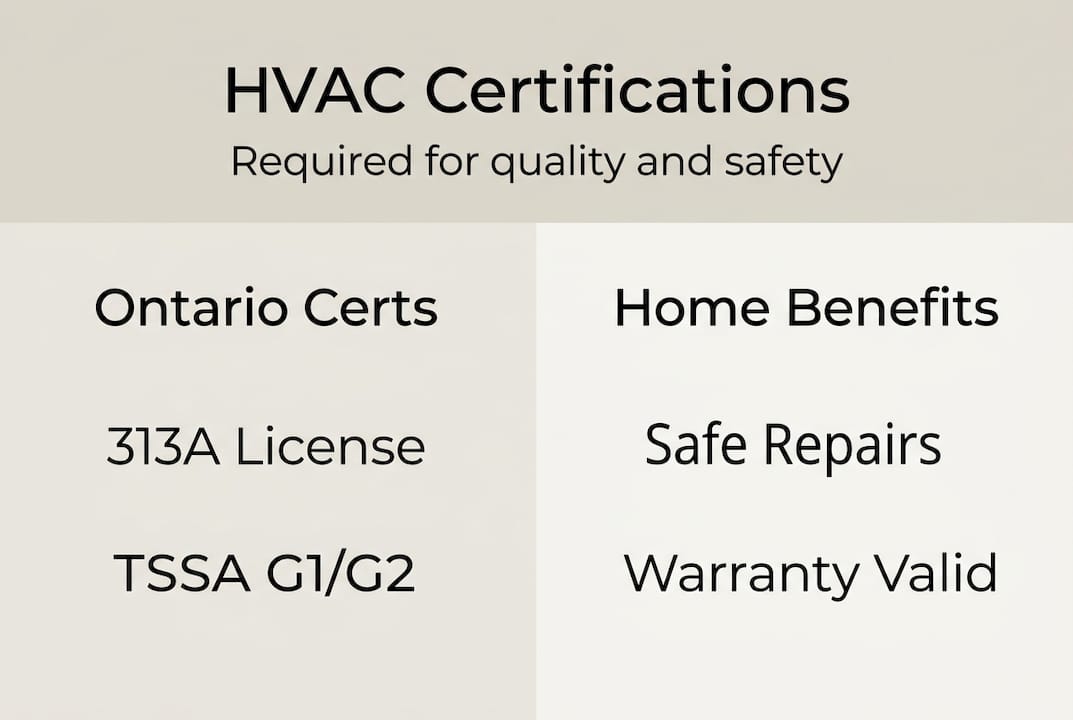
Ontario law establishes clear certification requirements for HVAC technicians working on residential systems. The 313A Refrigeration and Air Conditioning Systems Mechanic certification requires 8280 hours of on the job training combined with 720 hours of technical instruction. This comprehensive programme ensures technicians understand system design, installation protocols, and troubleshooting procedures for modern HVAC equipment.
Gas related work demands additional credentials through the Technical Standards and Safety Authority. The TSSA G1 licence permits technicians to install and service natural gas appliances in residential settings. The G2 licence covers more complex commercial applications and specialized equipment. Durham Region homeowners should verify their technician holds the appropriate gas licence for the specific work being performed.
Refrigerant handling requires the Ozone Depletion Prevention certificate, which demonstrates proper training in environmental regulations and safe refrigerant management. This certification becomes increasingly important as the industry transitions to newer refrigerant types with lower global warming potential. Technicians must understand proper recovery, recycling, and disposal procedures to protect both the environment and system performance.
Uncertified HVAC work violates Ontario regulations and exposes homeowners to significant risks. Provincial authorities can issue fines and stop work orders for non compliant installations or repairs. Red Seal Mechanical maintains all required certifications and stays current with evolving industry standards to serve Durham Region homeowners safely and legally.
The certification process includes both theoretical knowledge and practical skill assessment. Candidates must demonstrate competency in electrical systems, mechanical components, safety protocols, and customer service. This rigorous evaluation ensures only qualified professionals receive credentials to work on your home’s critical heating and cooling systems.
Key certifications Durham Region homeowners should verify:
- 313A Red Seal certification for refrigeration and air conditioning work
- TSSA G1 or G2 Gas Technician licence for furnace and gas appliance service
- ODP certificate for refrigerant handling and environmental compliance
- Current registration with Skilled Trades Ontario
- Valid liability insurance and workplace safety training
How HVAC certifications enhance safety and protect your home
Certified technicians follow established safety codes that directly protect your household from serious hazards. Gas leaks, carbon monoxide exposure, and refrigerant mishandling represent life threatening risks when HVAC systems are improperly installed or serviced. Certified professionals reduce these risks by adhering to strict protocols for testing, inspection, and quality assurance at every service stage.
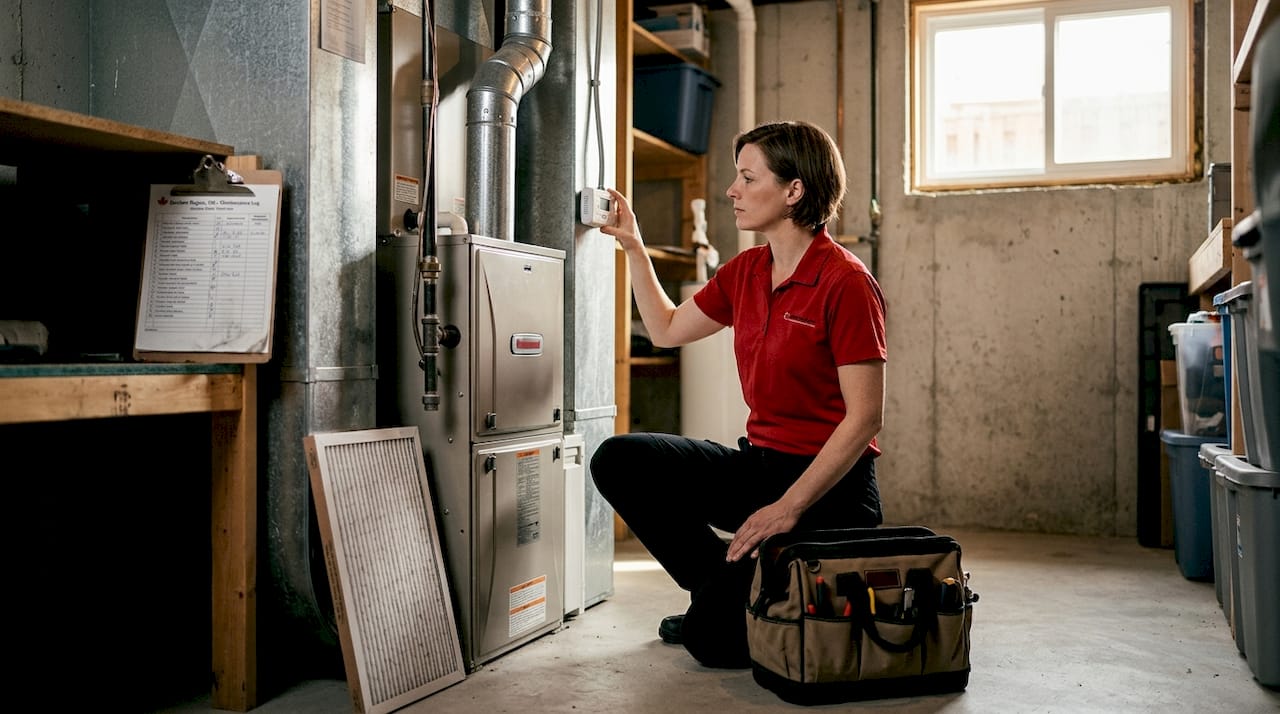
Insurance companies and equipment manufacturers require certified technicians for warranty coverage. Uncertified work can void your home insurance policy, leaving you financially vulnerable if system failures cause property damage. Manufacturers similarly refuse warranty claims when uncertified technicians perform installations or repairs, potentially costing thousands in replacement expenses.
Carbon monoxide detection and prevention form critical components of certified technician training. Improperly installed furnaces or blocked venting can create deadly CO buildup in living spaces. Certified technicians test combustion efficiency, inspect heat exchangers for cracks, and verify proper venting to ensure safe operation throughout the heating season.
Refrigerant systems operate under high pressure and require precise handling to prevent leaks and system damage. Certified technicians understand proper charging procedures, leak detection methods, and recovery protocols. Improper refrigerant handling reduces system efficiency, increases operating costs, and can release harmful chemicals into your home environment.
Pro Tip: Request copies of certification documents before allowing any technician to work on your HVAC system. Legitimate professionals willingly provide proof of credentials and explain their qualifications for the specific work being performed.
“The difference between certified and uncertified HVAC work often remains invisible until a safety incident or system failure occurs. By that point, homeowners face emergency repairs, insurance complications, and potential health risks that proper certification would have prevented.”
Electrical safety represents another critical area where certification matters significantly. HVAC systems integrate complex electrical components requiring proper wiring, grounding, and circuit protection. Certified technicians understand electrical codes and safety procedures that prevent fires, shocks, and equipment damage. The importance of proper HVAC installation extends beyond immediate function to long term safety and reliability.
Durham Region homeowners benefit from Ontario’s strict certification requirements by receiving consistent, professional service that meets or exceeds national standards. These regulations exist specifically to protect consumers from the serious consequences of substandard HVAC work. Prioritising certified technicians provides peace of mind that your home’s heating and cooling systems operate safely and efficiently.
The proven benefits of hiring certified HVAC technicians
Research demonstrates certified technicians deliver measurably superior outcomes compared to uncertified workers. Certified professionals complete 20.6% more work per service call while generating fewer callbacks for recurring issues. This efficiency translates directly to lower costs and less disruption for homeowners managing HVAC maintenance and repairs.
Proper maintenance by certified technicians extends system lifespan significantly. Studies show professionally maintained HVAC systems reduce failure rates by 95% compared to neglected equipment. This preventive approach saves thousands in premature replacement costs while ensuring consistent comfort throughout seasonal temperature extremes.
Energy efficiency improvements represent another quantifiable benefit of certified technician service. Properly tuned systems consume less electricity and natural gas while delivering better temperature control and air quality. Monthly utility savings accumulate over years, often offsetting service costs through reduced operating expenses.
| Outcome Measure | Certified Technician | Uncertified Worker |
|---|---|---|
| Work completion rate | 20.6% higher | Baseline |
| Callback frequency | 40% fewer | Standard |
| System failure reduction | 95% with maintenance | Variable |
| Energy efficiency gain | 15 to 25% improvement | Minimal to none |
| Average system lifespan | 15 to 20 years | 10 to 15 years |
Certified technicians bring diagnostic expertise that identifies problems before they escalate into expensive failures. Advanced training enables professionals to recognise subtle performance indicators that untrained workers miss entirely. Early detection prevents minor issues from damaging other system components, reducing overall repair costs substantially.
Routine furnace maintenance performed by certified technicians catches safety hazards and efficiency problems during scheduled inspections. Annual tune ups cost far less than emergency repairs and provide opportunities to address wear before breakdowns occur. This proactive approach maximises equipment value while minimising unexpected expenses.
Homeowners should verify technician certifications through these specific steps:
- Request certification numbers and verify them directly with Skilled Trades Ontario and TSSA
- Ask for proof of current liability insurance and workplace safety training
- Confirm the technician’s experience with your specific equipment brand and model
- Check online reviews and references from other Durham Region homeowners
- Ensure the company provides written estimates and warranty information before work begins
Pro Tip: Establish a relationship with one certified HVAC company for all your heating and cooling needs. Consistent service from professionals familiar with your equipment history improves diagnostic accuracy and enables better long term system management.
The quality difference becomes especially apparent when addressing common HVAC problems that require both technical knowledge and practical experience. Certified technicians combine theoretical understanding with hands on problem solving skills developed through rigorous training programmes. This combination produces reliable solutions rather than temporary fixes that leave underlying issues unresolved.
Navigating HVAC certifications for modern systems and technologies
The HVAC industry continues evolving rapidly with new refrigerants, heat pump technologies, and smart control systems requiring updated technical knowledge. Traditional experience alone no longer suffices for proper installation and service of modern equipment. Current certifications demonstrate expertise in emerging technologies that older trained technicians may not possess without continuing education.
A2L refrigerants represent a significant industry shift driven by environmental regulations and global warming concerns. These mildly flammable refrigerants require specialized handling procedures and safety protocols beyond traditional refrigerant training. Certified technicians receive updated instruction on A2L characteristics, leak detection methods, and proper charging techniques essential for safe system operation.
Heat pump installations have increased dramatically across Ontario as homeowners seek efficient heating alternatives. These systems operate differently from traditional furnaces and require specific knowledge of refrigeration cycles, defrost controls, and balance point calculations. Certification programmes now include comprehensive heat pump training that experience based learning cannot replicate effectively.
| Capability Area | Certified Technician | Uncertified Worker |
|---|---|---|
| A2L refrigerant handling | Trained on safety protocols and regulations | May lack current knowledge |
| Heat pump diagnostics | Understands complex refrigeration cycles | Limited to basic troubleshooting |
| Smart thermostat integration | Certified in digital controls and programming | Trial and error approach |
| Building code compliance | Current on 2026 Ontario requirements | May reference outdated standards |
| Warranty service authorisation | Manufacturer approved for warranty work | Often excluded from warranty coverage |
Smart thermostats and zoning systems integrate digital controls with mechanical equipment in ways that require both HVAC and electronic expertise. Certified training programmes address these integrated systems comprehensively, ensuring technicians can properly configure, troubleshoot, and optimise advanced control features. Understanding modern HVAC system requirements separates qualified professionals from those relying solely on mechanical experience.
Homeowners should ask potential service providers these specific questions to confirm relevant certification:
- What training have you completed on A2L refrigerants and current environmental regulations?
- Are you certified to service heat pump systems and perform efficiency testing?
- Do you maintain manufacturer certifications for the specific equipment brands in my home?
- When did you last complete continuing education courses on modern HVAC technologies?
- Can you provide documentation of your current 313A, TSSA, and ODP certifications?
The complexity of modern HVAC diagnostics requires specialized tools and testing equipment that certified technicians use routinely. Digital manifolds, refrigerant analysers, and combustion testers provide precise measurements essential for proper system evaluation. Uncertified workers often lack both the equipment and training to interpret diagnostic data accurately, leading to misdiagnosis and ineffective repairs.
Manufacturers increasingly require certified technicians for warranty service and installation approval. Equipment installed by uncertified workers may void factory warranties immediately, eliminating valuable protection against defects and premature failures. This requirement reflects manufacturers’ recognition that proper installation and service directly impact equipment performance and longevity.
Find certified HVAC services in Durham Region with Red Seal Mechanical
Red Seal Mechanical Services provides fully certified HVAC expertise to Durham Region homeowners who value safety, quality, and reliable performance. Our technicians maintain current 313A Red Seal certification, TSSA gas licences, and ODP credentials, ensuring every installation and repair meets Ontario’s strict legal requirements. We specialise in modern equipment including high efficiency furnaces, air conditioning systems, and heat pump technologies that demand up to date technical knowledge.
Whether you need professional AC installation for summer comfort, expert furnace repair during winter emergencies, or comprehensive furnace maintenance to prevent breakdowns, our certified team delivers solutions that protect your investment and family safety. We combine technical excellence with honest, transparent service that builds lasting relationships throughout Bowmanville and surrounding communities. Contact Red Seal Mechanical today to experience the difference certified professionals make for your home comfort systems.
FAQ
What certifications should I verify before hiring an HVAC technician?
Look for 313A Red Seal certification for refrigeration and air conditioning work, TSSA G1 or G2 gas licences for furnace service, and ODP certification for refrigerant handling. Confirm these credentials are current and issued by Skilled Trades Ontario and the Technical Standards and Safety Authority. Request certification numbers and verify them directly with issuing authorities before allowing work to proceed.
How do HVAC certifications improve my home’s safety and system reliability?
Certified technicians follow strict safety codes that prevent gas leaks, carbon monoxide exposure, and refrigerant mishandling. Their training includes proper testing procedures, code compliance verification, and quality assurance protocols that uncertified workers may skip. Certified work protects your home insurance coverage and equipment warranties while reducing risks of system failures and safety incidents.
Can uncertified technicians perform HVAC repairs legally in Ontario?
Uncertified work on refrigeration systems, gas appliances, and refrigerant handling violates Ontario law. Provincial authorities can issue fines and stop work orders for non compliant service. Using uncertified technicians voids home insurance policies and equipment warranties, leaving you financially responsible for any resulting damage or failures.
What should I ask an HVAC technician to confirm their certification and expertise?
Request copies of their 313A Red Seal certificate and TSSA G1 or G2 gas licence before work begins. Ask about their experience with modern technologies like heat pumps and A2L refrigerants specific to your equipment. Confirm they hold current ODP certification for refrigerant work and maintain familiarity with 2026 Ontario building codes and safety regulations. Verify their liability insurance and check references from other Durham Region homeowners.
