


Most Durham Region homeowners assume that buying a bigger or newer HVAC system is the fastest path to lower energy bills. That assumption costs money. Real efficiency gains come from proper sizing, smart upgrades, and consistent maintenance, and some of those changes cost almost nothing. This guide walks you through the efficiency ratings that actually matter, how to size your system correctly, the top strategies to cut energy waste, and a practical seasonal checklist you can start using today.
Table of Contents
- Why HVAC energy efficiency matters in Durham homes
- Understanding HVAC efficiency ratings: SEER2, AFUE, HSPF2 explained
- Correct HVAC sizing: Why bigger isn’t better
- Top strategies to boost your HVAC energy efficiency
- When to repair or replace your HVAC for maximum savings
- Practical application: Keeping your home efficient year-round
- Get expert help improving your HVAC efficiency
- Frequently asked questions
Key Takeaways
| Point | Details |
|---|---|
| Evaluate main ratings | Know SEER2, AFUE, and HSPF2 before purchasing or upgrading HVAC equipment. |
| Size systems correctly | Professional system sizing prevents energy waste, common in Ontario homes. |
| Use efficiency upgrades | Smart thermostats, tune-ups, and ENERGY STAR appliances add up to substantial savings. |
| Replace aging systems | Update furnaces after 15 years and air conditioners after 10 for maximum energy savings. |
| Follow maintenance routines | Seasonal checklists and pro service visits keep HVAC running efficiently all year. |
Why HVAC energy efficiency matters in Durham homes
Heating and cooling are not minor line items on your energy bill. 53% of home energy use in Canada goes directly to heating and cooling. For a typical Durham Region household, that means your HVAC system is the single largest driver of your monthly utility costs.
Durham’s climate makes this even more pressing. Winters here are genuinely cold, summers bring real humidity, and your system runs hard in both seasons. A poorly performing furnace or air conditioner does not just waste money. It creates uneven temperatures, drafty rooms, and a home that never quite feels right.
Here is what inefficiency actually looks like in practice:
- Rooms that are too hot or too cold despite the thermostat being set correctly
- Energy bills that creep up year over year without any obvious cause
- A system that runs constantly but never seems to catch up
- Excess humidity in summer or dry, stale air in winter
These are not just comfort issues. They are signals that your system is working harder than it needs to. Addressing them is the first step toward improving indoor comfort and reducing waste. If you are already noticing these patterns, it is worth reviewing common HVAC problems that Durham homeowners run into.
Understanding HVAC efficiency ratings: SEER2, AFUE, HSPF2 explained
Efficiency ratings are the language of HVAC performance. Once you understand them, comparing equipment becomes straightforward.
SEER2 (Seasonal Energy Efficiency Ratio 2) measures how efficiently an air conditioner cools your home over an entire season. The higher the number, the less electricity it uses per unit of cooling. AFUE (Annual Fuel Utilisation Efficiency) applies to furnaces and measures what percentage of fuel actually becomes heat in your home. A 96% AFUE furnace converts 96 cents of every dollar of gas into usable heat. HSPF2 (Heating Seasonal Performance Factor 2) does the same job for heat pumps in heating mode.
The “2” suffix on SEER2 and HSPF2 matters. New testing standards introduced stricter real-world conditions, so a SEER2 rating is a more honest benchmark than the old SEER number. Do not compare them directly.
Here is a practical comparison for Durham homeowners:
| System type | Minimum rating | Best value range | Top tier |
|---|---|---|---|
| Air conditioner (SEER2) | 13.4 | 15 to 17 | 20+ |
| Furnace (AFUE) | 80% | 92 to 96% | 98% |
| Heat pump (HSPF2) | 7.5 | 9 to 10 | 11+ |
Mid-tier 15 to 17 SEER2 offers the best value, delivering roughly 12% savings over minimum-rated equipment without the premium price of top-tier units. For furnaces, jumping from 80% to 95% AFUE can cut your heating fuel costs significantly over a Durham winter.
Pro Tip: When shopping for new equipment, ask your installer for the SEER2 and AFUE numbers specifically. Some retailers still advertise old SEER ratings, which can make equipment look more efficient than it actually is under current standards.
For a plain-language breakdown of all the numbers and terms you will encounter, the HVAC ratings terminology guide is a useful reference.
Correct HVAC sizing: Why bigger isn’t better
This is where most homeowners get misled. A larger furnace or air conditioner does not heat or cool your home better. It actually performs worse.
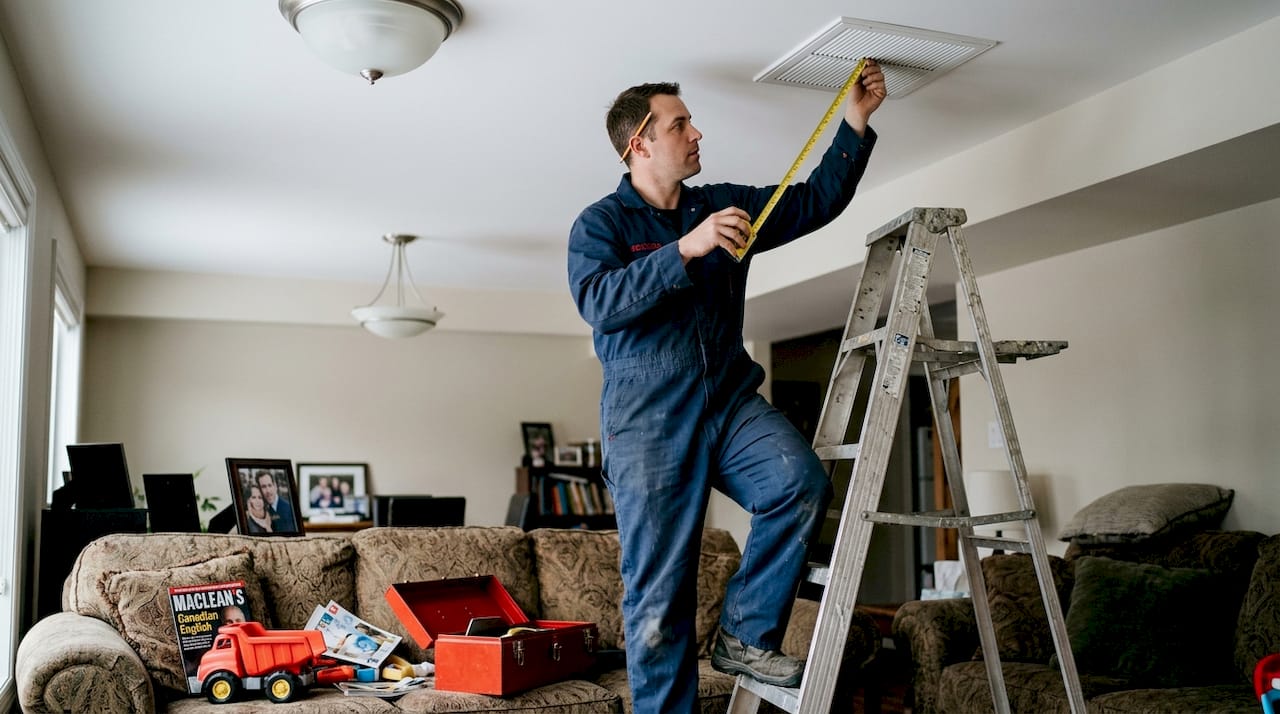
When a system is oversized, it reaches the target temperature too quickly and shuts off before completing a full cycle. This is called short-cycling, and it is expensive. Oversizing wastes 15 to 30% energy and is required to be avoided under current building codes, which mandate a Manual J load calculation for new installs.
A Manual J calculation is the industry standard method for determining exactly how much heating and cooling capacity your home actually needs. It accounts for:
- Square footage and ceiling height of every room
- Insulation levels in walls, attic, and basement
- Window size, type, and orientation
- Air infiltration (how leaky the building envelope is)
- Number of occupants and typical heat-generating appliances
- Local climate data specific to Durham Region
Skipping this step is common and costly. Studies suggest over half of residential HVAC installs are oversized, often because contractors default to “bigger is safer.” It is not. An oversized system also struggles to control humidity properly, which is a real comfort problem in Durham summers.
Pro Tip: Before any new installation, ask your contractor directly: “Will you be doing a Manual J load calculation?” If the answer is no or vague, that is a red flag. Proper sizing is not optional; it is the foundation of an efficient system.
Short-cycling and uneven temperatures are also among the issues with oversized systems that we see regularly in Durham homes.
Top strategies to boost your HVAC energy efficiency
You do not need to replace your entire system to see meaningful savings. Several targeted strategies deliver strong results on their own.
Smart thermostats, zoning, and maintenance can save 10% or more on energy bills, and ENERGY STAR equipment upgrades save an average of $140 per year. Here is where to focus:
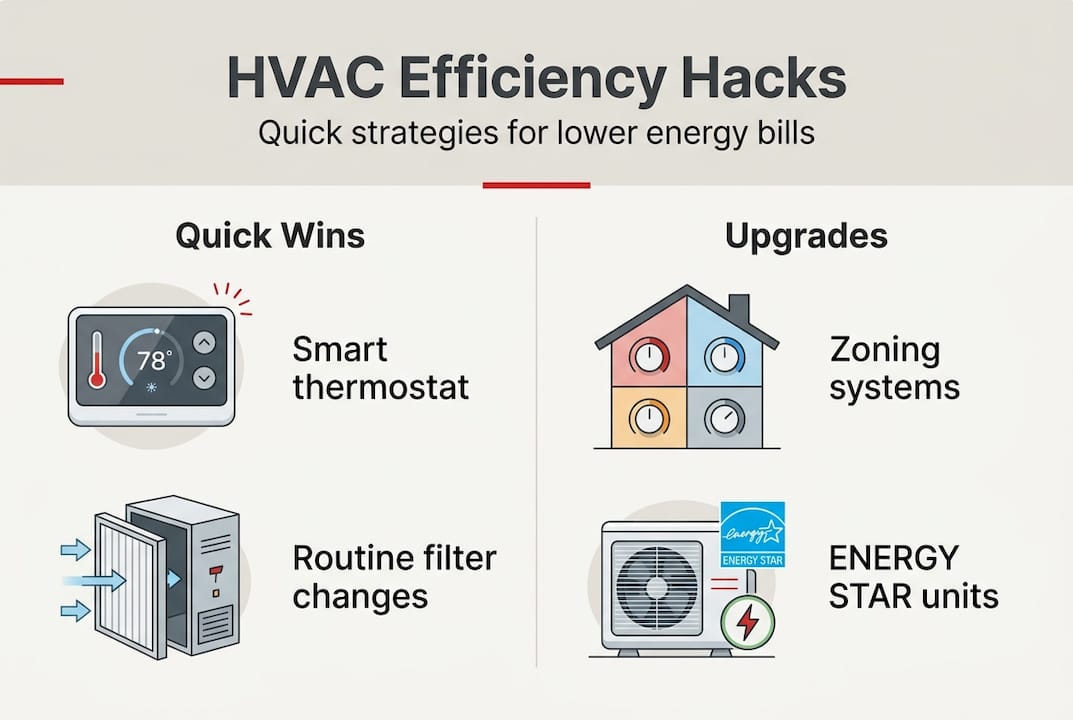
| Strategy | Estimated annual saving | Difficulty |
|---|---|---|
| Smart thermostat | $50 to $100 | Easy |
| Duct sealing | $80 to $150 | Moderate |
| ENERGY STAR upgrade | $140+ | Requires install |
| Annual tune-up | $100 to $200 | Easy (book a pro) |
| Attic insulation top-up | $150 to $300 | Moderate |
Here are the most impactful actions you can take right now:
- Install a smart thermostat. Set it to lower temperatures overnight and when the house is empty. Even a 2-degree setback saves measurable energy.
- Seal your ductwork. Leaky ducts can lose 20 to 30% of conditioned air before it reaches the room. Mastic sealant or foil tape applied to joints makes a real difference.
- Add ceiling fans. Running fans in reverse during winter pushes warm air down from the ceiling. In summer, they allow you to raise the thermostat by 2 to 4 degrees without losing comfort.
- Check and replace filters regularly. A clogged filter forces your system to work harder. Check monthly, replace every 1 to 3 months depending on your household.
- Book an annual tune-up. A professional service catches small problems before they become expensive ones and keeps your system running at rated efficiency.
For a deeper look at what you can do between service visits, the maintenance tips for efficiency guide covers the full routine. You can also book an annual HVAC tune-up to keep your system performing at its best. During summer months, these air conditioning tips are worth reviewing before the heat arrives.
When to repair or replace your HVAC for maximum savings
At some point, maintaining an old system costs more than replacing it. Knowing when you have crossed that line saves you from throwing money at a lost cause.
General age guidelines for Durham homeowners:
- Furnace over 15 years old: Efficiency has likely degraded significantly, and repair costs are climbing
- Air conditioner over 10 years old: Refrigerant, compressor, and coil wear reduce performance noticeably
- Heat pump over 12 to 15 years: Efficiency drops and cold-climate performance suffers
Older systems over 10 to 15 years cost more to run, and high-efficiency upgrades typically pay back in 5 to 12 years in Durham’s climate. That is a strong return, especially with rising energy costs.
Watch for these warning signs that your system is wasting energy:
- Unusual noises during startup or shutdown
- Bills increasing even though usage habits have not changed
- Rooms that are consistently too warm or too cold
- The system running almost continuously to maintain temperature
- Frequent repair calls in the past two years
For Ontario homeowners, cold-climate heat pumps are worth serious consideration. Modern units operate efficiently down to minus 25 degrees Celsius, making them viable as primary heating sources here. A hybrid system, pairing a heat pump with a gas furnace backup, gives you the best of both worlds: heat pump efficiency for most of the season, with gas backup for the coldest days.
If you are weighing repair against replacement, professional repair savings outlines when a targeted repair still makes financial sense.
Practical application: Keeping your home efficient year-round
Knowing what to do is one thing. Building it into a routine is what actually produces lasting savings.
Smart settings and proper maintenance add $140 to $260 per year in savings when applied consistently. Here is a simple seasonal checklist to keep you on track.
Spring (before cooling season):
- Replace the furnace filter and inspect the air conditioner’s outdoor unit
- Clear debris from around the outdoor unit and check that vents are open and unblocked
- Test your smart thermostat’s cooling programme and update seasonal schedules
- Book a professional air conditioning tune-up before peak demand
- Check window and door seals for gaps that let conditioned air escape
Fall (before heating season):
- Replace the filter again and inspect the furnace burner and heat exchanger visually
- Test the furnace before the first cold snap, not during it
- Adjust thermostat schedules for heating mode and lower overnight setpoints
- Check attic insulation and add more if needed before winter
- Bleed baseboard radiators if you have a hot water system
Year-round habits that compound over time:
- Monitor your energy bills monthly. A sudden increase often signals a system problem before it becomes a breakdown.
- Keep interior vents open and unblocked. Closing vents in unused rooms does not save energy; it creates pressure imbalances that reduce efficiency.
- Use exhaust fans in kitchens and bathrooms to remove excess humidity, which reduces the load on your air conditioner.
For the full routine, the routine efficiency maintenance guide walks through each step in detail.
Get expert help improving your HVAC efficiency
At Red Seal Mechanical Services, we have been helping Durham Region homeowners get more from their HVAC systems since 2012. Whether you need a proper Manual J sizing assessment before a new install, a tune-up to restore your current system’s performance, or honest advice on whether repair or replacement makes more sense for your home, we are here to help. If you are thinking about a new furnace, our guide to understanding the installation process walks you through exactly what to expect. Ready to upgrade? Our furnace replacement in Durham guide covers your options, and our AC installation services are available for homeowners planning ahead for summer. Contact us today for straightforward advice from a local team that knows Durham homes.
Frequently asked questions
What is the most important HVAC efficiency rating to check?
For air conditioners, look for SEER2, AFUE, HSPF2 depending on the system type. Higher numbers always mean better efficiency and lower operating costs.
How do I know if my HVAC system is oversized or undersized?
Frequent short-cycling, uneven room temperatures, and high bills are the clearest signs. Ask your installer for a Manual J load calculation to confirm the right size for your home.
How often should I replace my HVAC system?
Replace your furnace after 15 years and your air conditioner after 10 years. Older systems cost significantly more to run and are less reliable.
Does routine maintenance really save energy on HVAC?
Yes. Smart thermostat use and tune-ups consistently deliver 10% or more in annual energy savings when applied together.
