


Nothing disrupts a hot Durham summer faster than an air conditioner that suddenly stops working. You flip the thermostat, hear nothing, and watch the temperature climb while repair costs loom. The good news is that regular maintenance prevents 80% of common AC problems, and many fixes are surprisingly simple for motivated homeowners. This guide walks you through practical DIY repairs that save money and restore comfort fast.
Table of Contents
- Understanding Your Air Conditioning System
- Preparing To Repair Your Air Conditioner: Tools And Safety
- Step-By-Step Common Air Conditioning Repairs
- Troubleshooting And When To Call A Professional
- Get Professional Air Conditioning Services In Durham Region
- What Are The Most Common Reasons An Air Conditioner Stops Working?
- How Often Should I Replace Or Clean My Air Filters To Keep My AC Efficient?
- What Safety Precautions Should I Take Before Attempting Air Conditioning Repairs?
- Can I Add Refrigerant To My Air Conditioner Myself?
- How Can I Tell If My Air Conditioner Needs Professional Repair Or Replacement?
Key takeaways
| Point | Details |
|---|---|
| Preventive maintenance | Regular maintenance prevents about 80% of common AC problems during summer |
| Top failure causes | Dirty filters and clogged condenser coils account for most AC breakdowns |
| Simple fixes first | Checking thermostat settings and circuit breakers solves many issues without professional help |
| Know your limits | Electrical problems and refrigerant leaks require professional diagnosis for safety |
| Early intervention | Spotting issues early speeds repairs and prevents expensive system damage |
Understanding your air conditioning system
Before grabbing tools, you need to understand how your AC actually works. Most homes use split systems with separate indoor and outdoor units working together.
Your indoor unit houses the evaporator coil and blower fan. The evaporator coil absorbs heat from your home’s air while the blower pushes cooled air through your ducts. Meanwhile, the outdoor unit contains the compressor, condenser coil, and condenser fan. The compressor pumps refrigerant through the system, the condenser coil releases absorbed heat outside, and the fan helps dissipate that heat into the surrounding air.
Residential air conditioning equipment consists of two sections creating what experts call a split HVAC system. Refrigerant cycles continuously between these units, absorbing indoor heat and releasing it outdoors. Understanding what is HVAC helps you recognise which component might be causing problems.
Here are the essential parts you should know:
- Evaporator coil: Located indoors, absorbs heat from your home
- Blower fan: Circulates air across the evaporator coil and through ducts
- Compressor: Pressurises refrigerant and pumps it through the system
- Condenser coil: Releases absorbed heat to outdoor air
- Condenser fan: Moves air across the condenser coil for heat dissipation
- Refrigerant lines: Connect indoor and outdoor units, carrying refrigerant
- Thermostat: Controls system operation based on temperature settings
When one component fails, the entire system struggles. That rattling outdoor unit might indicate a failing fan motor. Weak airflow often points to a clogged filter or struggling blower. Recognising these connections helps you diagnose problems faster.
Preparing to repair your air conditioner: tools and safety
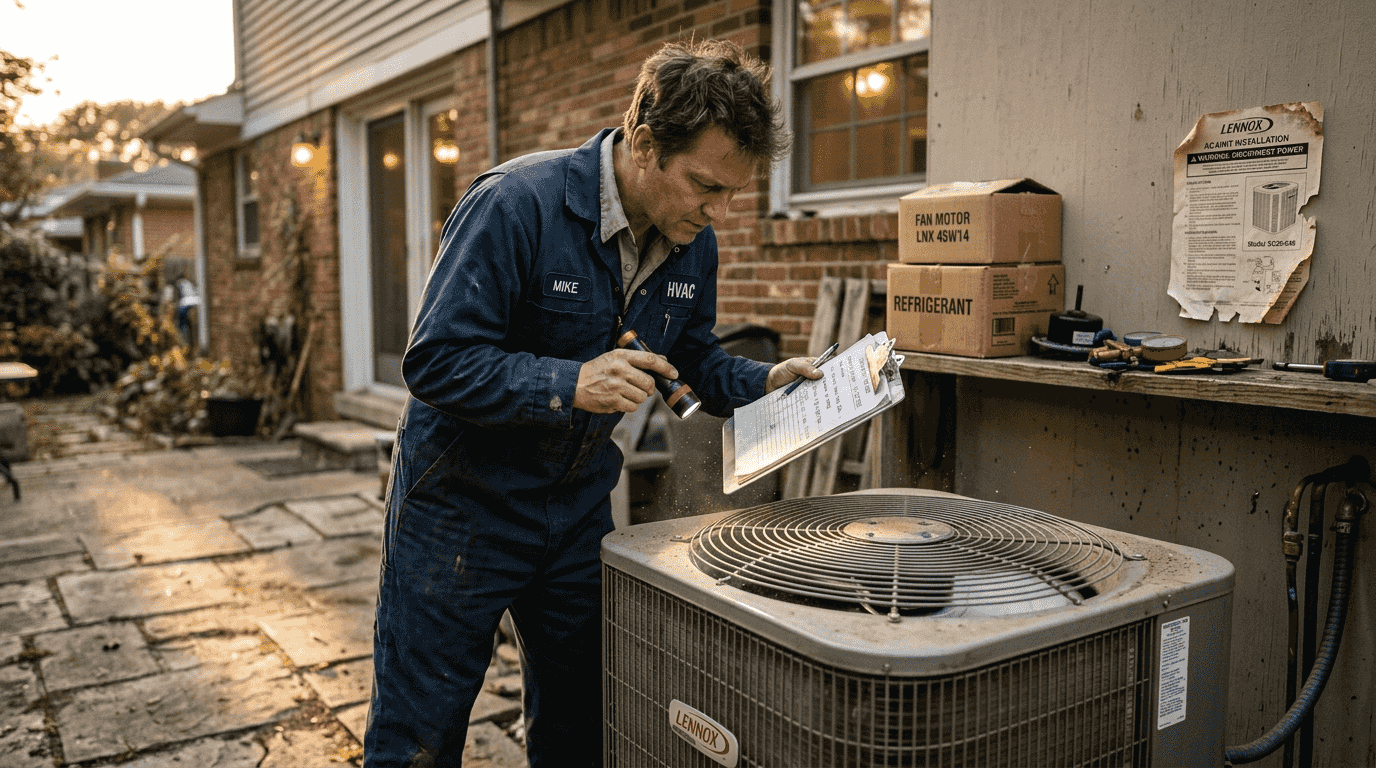
Safety comes first with any AC repair. Electricity and refrigerant create serious hazards when mishandled.
Always shut off power to your AC unit at the breaker panel before touching anything. Most outdoor units also have a disconnect box nearby for added safety. Never skip this step, even for quick inspections.
Gather these essential tools before starting:
- Screwdrivers (flathead and Phillips)
- Adjustable wrench or socket set
- Digital multimeter for testing electrical connections
- Coil cleaner spray or garden hose with spray nozzle
- Replacement air filters matching your system size
- Flashlight for inspecting dark areas
- Protective gloves and safety eyewear
If you notice burning smells, electrical sparking, or unusual grinding noises, turn off your AC immediately and call a professional. These symptoms indicate problems beyond DIY scope and create safety risks.
Keep your manufacturer’s manual accessible during repairs. It contains model-specific diagrams, part numbers, and troubleshooting steps tailored to your exact unit. Lost your manual? Most manufacturers offer PDF downloads on their websites using your model number.
Pro tip: Take photos with your phone before disconnecting any wires or removing panels. These reference shots help you reassemble everything correctly and save frustration later.
Understanding why tune up air conditioners regularly helps you appreciate preventive maintenance. Professional tune-ups catch issues before they become emergencies, but basic upkeep falls to you between service visits.
Step-by-step common air conditioning repairs
Most AC problems stem from neglected maintenance rather than complex mechanical failures. Follow these steps in order to address the most common issues.
-
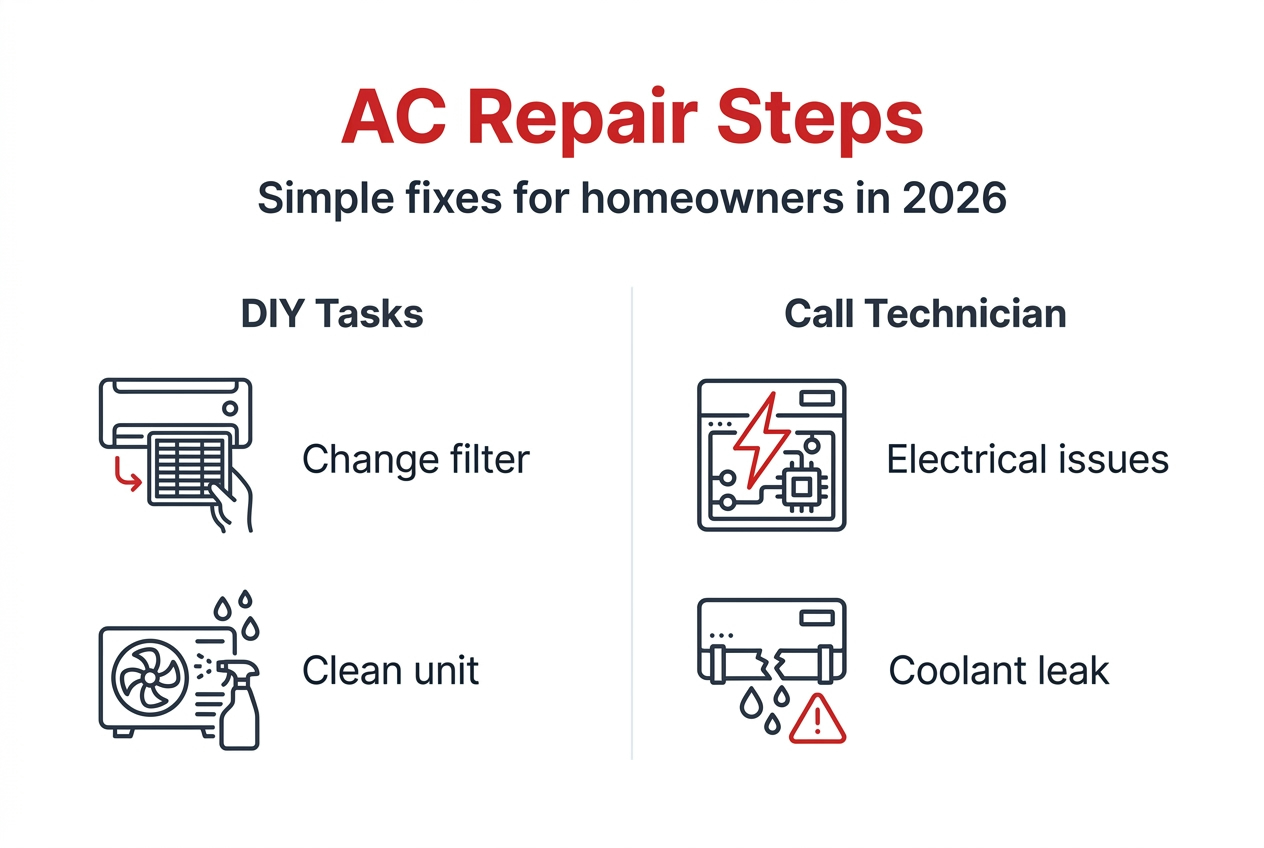
Check and replace air filters regularly. Dirty filters restrict airflow, forcing your system to work harder and potentially overheat. Remove the filter from your return air grille, hold it up to light, and replace it if you cannot see through it clearly. Most homes need new filters every one to three months during cooling season.
-
Verify thermostat settings and batteries. Set your thermostat to cool mode, lower the temperature setting below current room temperature, and listen for the system to start. Replace batteries annually even if the display works, as weak batteries cause erratic operation.
-
Inspect and clean outdoor condenser coils. Turn off power, remove the protective grille, and spray the coils with a garden hose from inside out to push debris away. Avoid pressure washers that damage delicate fins. Bent fins restrict airflow, so straighten them carefully with a fin comb if needed.
-
Check circuit breakers and fuses. Look for tripped breakers in your electrical panel and reset them. If a breaker trips repeatedly, you have an electrical problem requiring professional diagnosis.
-
Look for visible leaks or obstructions. Examine refrigerant lines for oil stains indicating leaks. Clear vegetation, leaves, and debris from around the outdoor unit, maintaining at least 60 centimetres of clearance on all sides for proper airflow.
Pro tip: Schedule bi-annual maintenance prevents 80% of common AC problems and catches issues early. Professional technicians test refrigerant levels, electrical connections, and component wear that homeowners cannot safely assess.
Consider professional AC maintenance services for comprehensive system checks. While DIY efforts handle routine upkeep, trained technicians spot subtle problems before they escalate into expensive repairs or complete system failure requiring AC installation.
Troubleshooting and when to call a professional
Some AC problems signal deeper issues requiring professional expertise. Knowing when to stop DIY attempts protects both you and your equipment.
Electrical issues frequently cause AC problems and demand professional diagnosis. Faulty capacitors, failing contactors, or damaged wiring create fire hazards when mishandled. Refrigerant leaks also require certified technicians with proper equipment and environmental handling certifications.
Here are warning signs demanding professional help:
- Refrigerant leaks indicated by ice buildup on lines or hissing sounds
- Compressor failure shown by clicking sounds without startup
- Electrical problems like frequently tripped breakers or burning odours
- Complete system failure with no power despite working breakers
- Unusual grinding, squealing, or banging noises from indoor or outdoor units
This table clarifies which issues you can tackle versus those needing experts:
| Minor issues (DIY) | Serious problems (Professional) |
|---|---|
| Dirty air filters | Refrigerant leaks or low levels |
| Clogged condenser coils | Compressor or motor failure |
| Tripped single breaker | Repeated electrical trips |
| Thermostat battery replacement | Faulty capacitors or contactors |
| Debris around outdoor unit | Frozen evaporator coils |
| Weak airflow from dirty filter | No airflow despite clean filter |
Attempting complex repairs without training often worsens problems and voids warranties. Modern AC systems use precise refrigerant charges and sophisticated electronics that require specialised diagnostic tools.
Professional air condition repair services bring expertise that prevents costly mistakes. Technicians quickly diagnose root causes rather than treating symptoms, saving you time and money in the long run.
Regular professional inspections complement your DIY maintenance efforts. Annual AC maintenance services catch wear patterns and emerging problems invisible to untrained eyes, extending your system’s lifespan and maintaining peak efficiency.
Get professional air conditioning services in Durham Region
While DIY maintenance handles routine upkeep, professional services ensure your system runs safely and efficiently for years. Expert technicians bring diagnostic tools, refrigerant handling certifications, and experience that prevent expensive mistakes.
Red Seal Mechanical Services has served Durham Region homeowners since 2012 with comprehensive air condition repair solutions. Our certified technicians quickly diagnose complex problems and provide honest recommendations tailored to your budget.
Regular professional AC maintenance services extend system lifespan, boost efficiency, and prevent summer breakdowns when you need cooling most. Local experts understand Durham’s climate challenges and respond quickly when problems arise.
Ready to keep your home comfortable all summer? Contact Red Seal Mechanical Services today for expert AC installation, repair, and maintenance you can trust.
What are the most common reasons an air conditioner stops working?
Dirty air filters top the list of AC failures because they restrict airflow and force systems to work harder. Clogged condenser coils follow closely, as accumulated debris prevents proper heat release outdoors. Thermostat malfunctions and electrical issues like tripped breakers or failing capacitors also contribute significantly to system breakdowns. Low refrigerant levels from leaks reduce cooling capacity and eventually damage compressors.
Regular filter cleaning and seasonal condenser maintenance prevent most of these failures. Catching problems early through routine inspections stops minor issues from escalating into complete system breakdowns requiring expensive repairs or replacement.
How often should I replace or clean my air filters to keep my AC efficient?
HVAC filters last three to 12 months depending on usage patterns and environmental factors. Homes with pets, allergies, or high dust levels need monthly filter changes during cooling season. Standard households typically replace filters every three months for optimal performance.
Check filters monthly by holding them to light. Replace immediately if you cannot see through them clearly. Clean filters maintain proper airflow, reduce energy consumption, and prevent system strain that shortens equipment lifespan. Professional air filtration services help homeowners choose optimal filter types for their specific needs.
What safety precautions should I take before attempting air conditioning repairs?
Always turn off power to your AC unit at the breaker panel before any inspection or repair work. Most outdoor units also have a nearby disconnect box providing additional safety. Never bypass this critical step, even for quick visual inspections.
Stop work immediately if burning smells, electrical sparking, or grinding noises appear during repairs. These symptoms indicate serious problems requiring professional diagnosis. Wear protective gloves and safety eyewear when handling coils, electrical components, or chemical cleaners to prevent injuries.
Can I add refrigerant to my air conditioner myself?
No, refrigerant handling requires professional certification and specialised equipment. Environmental regulations strictly control refrigerant sales and use because improper handling harms the atmosphere. Low refrigerant always indicates a leak requiring professional repair, not just a simple top-up.
Adding refrigerant without fixing the underlying leak wastes money and damages the environment. Certified technicians locate leaks, repair them properly, evacuate moisture from the system, and recharge with precisely measured refrigerant amounts. Attempting DIY refrigerant work risks equipment damage, personal injury, and legal penalties.
How can I tell if my air conditioner needs professional repair or replacement?
Age plays a crucial role in this decision. Systems over 15 years old with frequent breakdowns typically cost more to maintain than replace, especially considering efficiency improvements in modern units. Calculate annual repair costs over the past three years and compare against replacement estimates.
Rising energy bills despite normal usage suggest declining efficiency worth addressing. If repair estimates exceed 50% of replacement cost, or if your system uses obsolete refrigerant requiring expensive conversions, replacement often makes better financial sense. Professional assessments compare repair versus replacement economics specific to your situation and budget.
